

Ports in Amsterdam: 7 Cruise Terminals and Harbours
You've arrived at Amsterdam Centraal with a rolling suitcase, a carry-on digging into your shoulder, and a ship to catch. The waterfront is right outside, so the terminal must be obvious. Then you open your travel documents and find a berth name that doesn't match the port label on your map.
That's the first thing to understand about ports in Amsterdam: the name can mean an ocean-cruise terminal, a river-cruise berth, the coastal gateway at IJmuiden, or a former harbour district you'd visit rather than board from. They aren't interchangeable, especially when you're carrying luggage or watching an all-aboard deadline.
Start with your ship's exact terminal and berth, not “Amsterdam port.” An embarkation day requires a dependable transfer and accessible documents. A port day gives you room to explore. A return day depends on where your bags will go before your train, flight, or hotel check-in.
- Boarding a ship: Follow the final cruise-line instructions, including the check-in window.
- Going ashore: Choose an outing with a straightforward return route.
- Finishing your cruise: Solve luggage storage before planning waterfront walks.
The terminal, approach route, ferry landings, and harbour neighbourhoods below each serve a different purpose.
Table of Contents
- 1. Passenger Terminal Amsterdam (Amsterdam Cruise Terminal)
- 2. Port of IJmuiden and the North Sea Canal Approach
- 3. Oostelijk Havengebied (Eastern Docklands) including Java and KNSM Islands
- 4. Centraal Station Waterfront and IJ Ferry Terminals
- 5. NDSM Wharf (NDSM-werf)
- 6. Houthavens and Westerdok Harbour Area
- 7. IJhaven (Ijhaven Harbour)
- Amsterdam Port Areas at a Glance
- Choosing Your Amsterdam Port Day Plan
1. Passenger Terminal Amsterdam (Amsterdam Cruise Terminal)
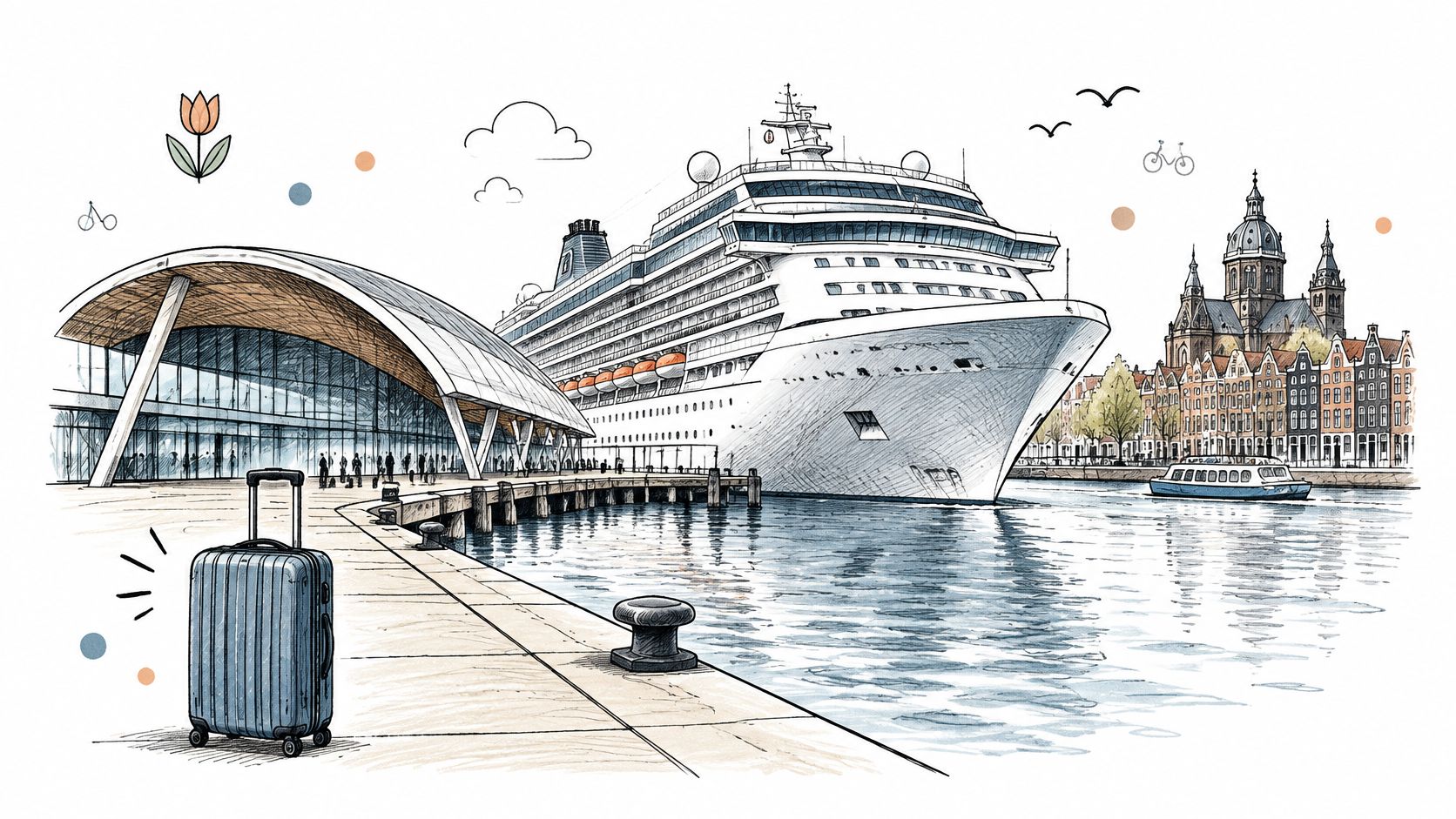
Passenger Terminal Amsterdam, usually shortened to PTA, is the central ocean-cruise terminal, not a universal boarding address for every cruise sold as departing from Amsterdam. River-cruise passengers should follow their assigned quay and vessel instructions instead of automatically heading here.
PTA's position near Centraal makes a train arrival practical, but walking with suitcases is different from walking with a daypack. Take a taxi when heavy luggage, rain, or limited mobility would make the waterfront approach uncomfortable, and use the terminal name from your documents as the destination.
Keep the boarding essentials with you
Say you're staying in central Amsterdam before a Baltic cruise. Leave your large bags with the cruise line only when its luggage acceptance opens, then keep your passport, boarding documents, medication, phone, and charger in your carry-on.
- Prepare bag identification: Attach the cruise line's luggage label and a separate contact tag. Keep your home address concealed rather than displayed openly.
- Separate immediate needs: Carry a rain layer, essential toiletries, and anything you'll need before your suitcase reaches the cabin.
- Respect the check-in window: An early arrival doesn't guarantee immediate terminal access or boarding.
Amsterdam's terminal arrangements are changing. The city's cruise visitor guidance describes a planned reduction in ocean-cruise calls at PTA to 100 annually by 2026, so an older guide isn't proof of your ship's berth.
The same distinction between a convenient city arrival and an actual boarding location matters in our Split cruise port guide. Your final cruise documents take priority over a generic map pin.
2. Port of IJmuiden and the North Sea Canal Approach
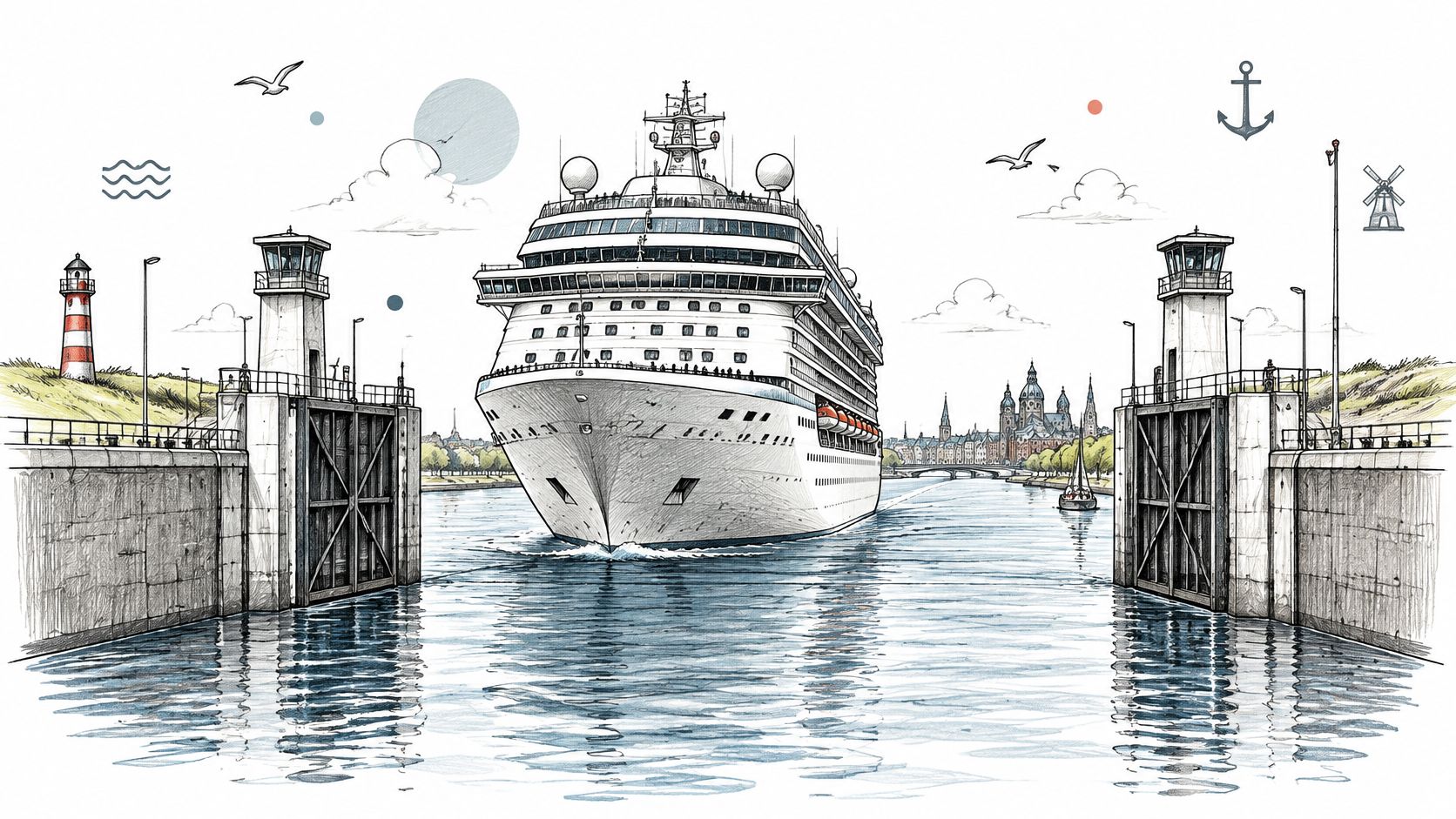
IJmuiden creates the most consequential location mix-up for cruise passengers. A ship docking at IJmuiden isn't docking beside Amsterdam Centraal, even when the itinerary markets the destination as Amsterdam.
For ships continuing inland, the North Sea Canal provides the connection to the city. The Amsterdam City Archives records its formal inauguration on 1 November 1876, establishing the direct maritime route through IJmuiden that remains fundamental to Amsterdam's seaport access.
Transfer rule: If your documents name IJmuiden, arrange transport to that terminal. Don't take a train to central Amsterdam on the assumption that the ship will be nearby.
A typical mistake is booking a central hotel for convenience, then discovering that embarkation requires an onward coastal transfer. Keep the hotel if it suits your sightseeing, but arrange the ship transfer separately and make sure the driver has the actual terminal address.
Separate scenic transit from transfer planning
On a ship heading into Amsterdam, the canal approach can be part of the experience. Ask onboard staff when you're likely to enter the canal, then keep a windproof layer and camera accessible rather than packed away.
Don't schedule a fixed-time city activity around an expected lock passage or docking estimate. Wait for the ship's confirmed clearance and disembarkation instructions before treating your shore time as available.
For motion comfort, prepare for the open-water crossing, not just the sheltered approach. Keep your usual motion-sickness supplies in your carry-on, and ask a pharmacist about suitable medication if needed.
Our Piraeus and Athens port guide addresses the same planning problem: the destination name and the passenger terminal aren't necessarily the same place.
3. Oostelijk Havengebied (Eastern Docklands) including Java and KNSM Islands
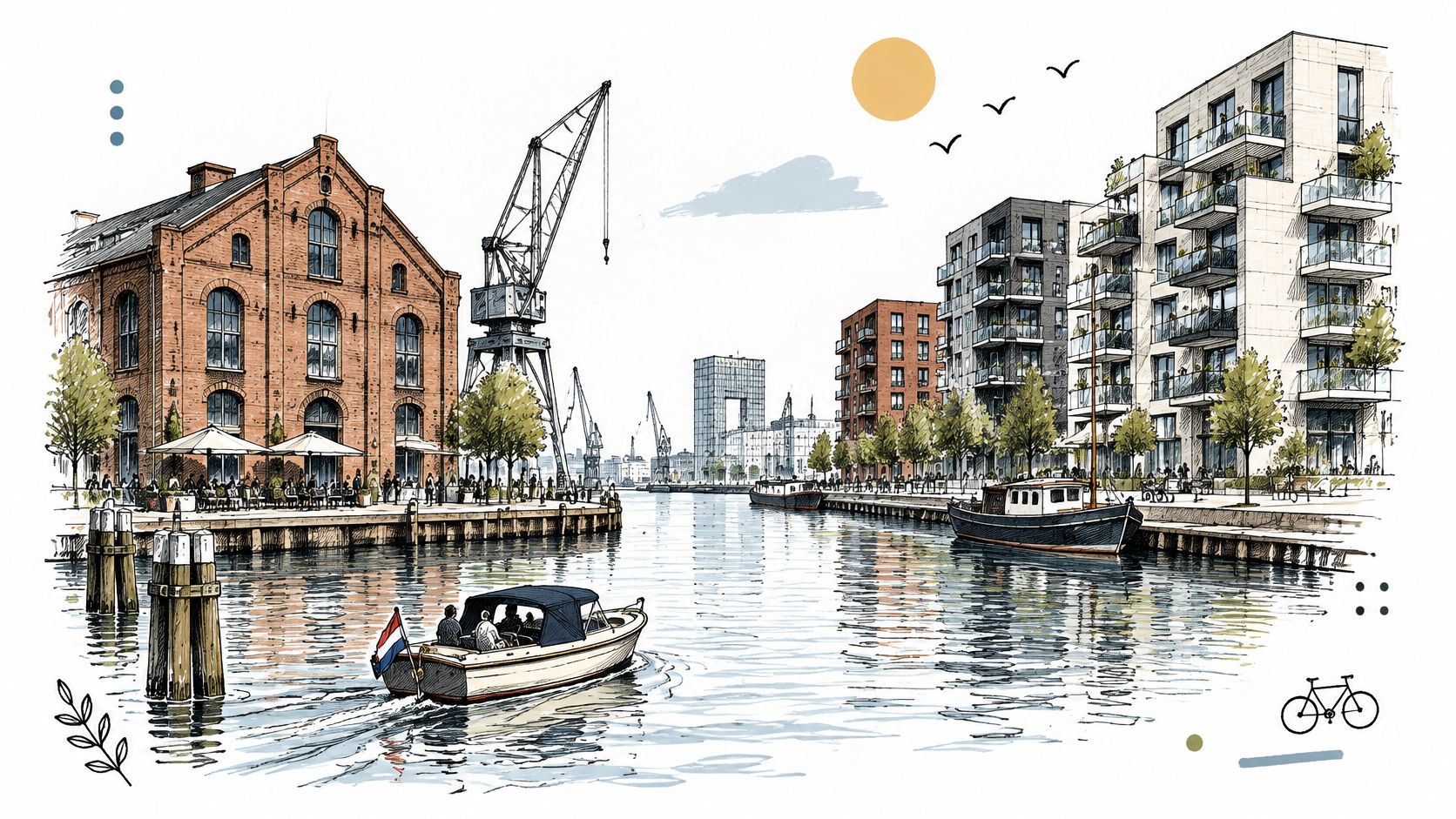
Choose the Eastern Docklands when you want a waterfront outing without building your entire day around museum reservations. Java Island and KNSM Island offer residential streets, broad water views, and former port surroundings that feel different from the historic canal centre.
This is a neighbourhood visit, not a substitute cruise terminal. Its appeal is seeing how Amsterdam uses former shipping land for housing, workspaces, restaurants, and public waterfront routes.
Make the walk manageable
For a couple staying near PTA before embarkation, a Docklands walk works best after leaving luggage at the hotel. Follow a deliberate route toward Java Island or KNSM Island, stop for a meal if opening hours suit, and retrace or pre-plan your return rather than wandering indefinitely along the water.
- Carry a small day bag: Take your phone, payment card, water, and a packable rain layer.
- Choose a destination: Pin a particular café, waterfront stretch, or island entrance before leaving.
- Protect your boarding time: Set a turnaround alarm that includes the journey back and terminal formalities.
Architecture enthusiasts will get more from this district than travelers looking for a dense run of headline attractions. Warehouse conversions, residential blocks, bridges, and changing views across the harbour are the point.
A taxi can be sensible if you're tired or carrying bags, but it removes the main benefit of a leisurely waterfront route. Public transport is useful when its stops match your intended walk; check the actual boarding and return stops rather than assuming every waterfront tram goes where you need.
Keep large luggage out of this outing. Rolling a suitcase through a residential harbour district makes an enjoyable stroll into a transfer problem.
4. Centraal Station Waterfront and IJ Ferry Terminals
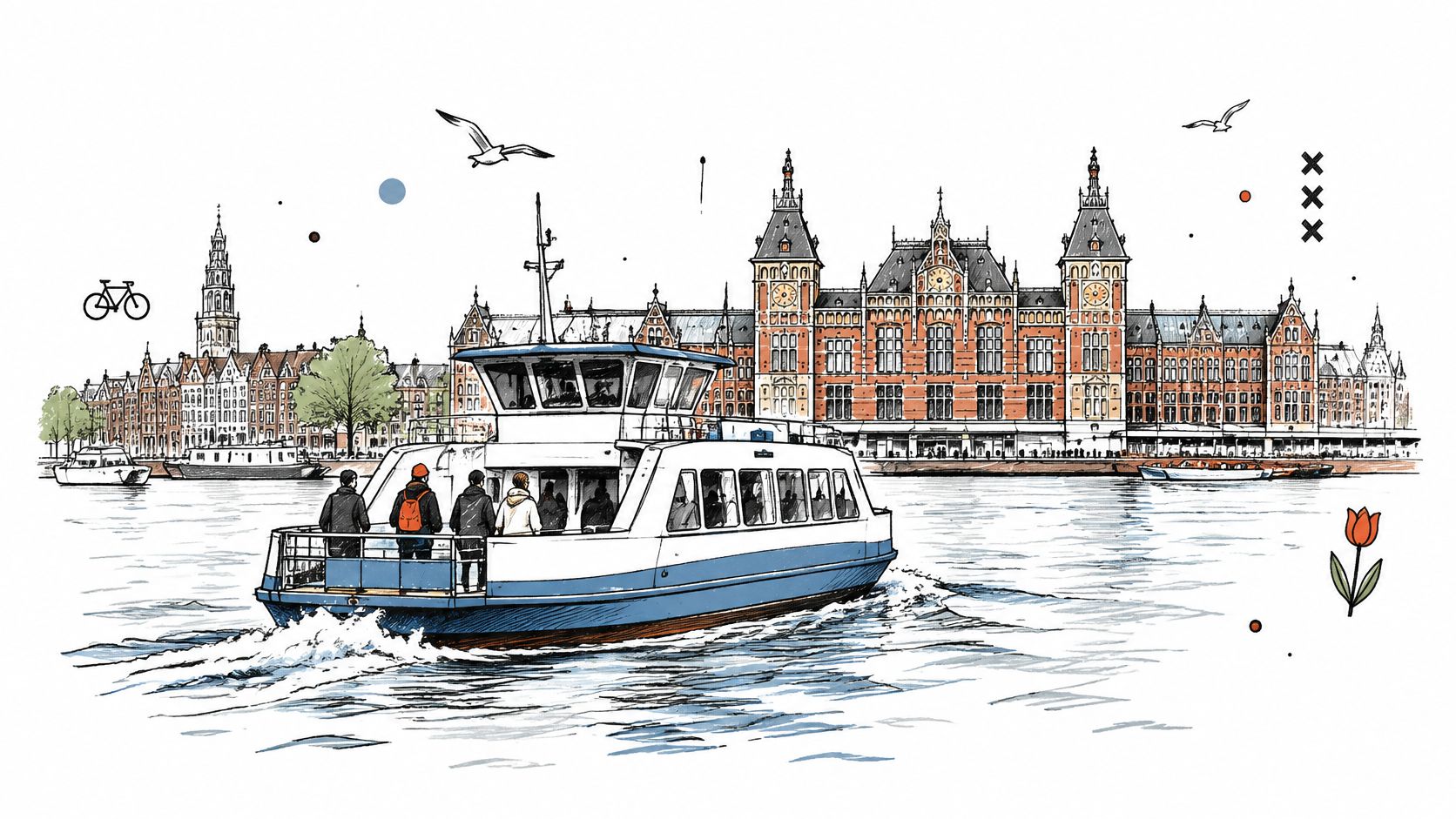
The IJ-facing side of Amsterdam Centraal is a useful orientation point, but it isn't a single cruise departure area. Train passengers, ferry users, cyclists, and visitors heading to river-cruise quays all converge around the waterfront.
GVB ferries connect this side of the station with Amsterdam-Noord. Check the destination displayed at the landing before joining the boarding crowd, particularly if you're heading to NDSM rather than crossing to the opposite bank.
For a cruiser with a flexible afternoon, a ferry journey can combine transport with harbour views. For someone approaching an all-aboard deadline, it adds a connection that walking along the ship's side of the IJ would avoid.
A short crossing still creates a return dependency. Plan for the ferry you miss, not only the ferry you hope to catch.
Use the station as a transport hub
Say you disembark in Amsterdam and have a later train. Your first task is deciding where your suitcase will stay, not choosing the prettiest ferry route. Confirm a suitable storage arrangement and its collection hours before crossing the water.
Keep your cruise keycard, identification, phone, and payment card secured in a zipped pocket or bag. Save the terminal location and a screenshot of your return route so you aren't relying entirely on a live connection.
Before leaving, check GVB's current departure information, your destination landing, and the route back to the ship. Don't confuse a ferry's arrival at Centraal with arrival at PTA; the final waterfront transfer still matters.
The broader lesson also applies in our Casablanca cruise port guide: reaching the city's transport hub doesn't mean you've reached the gangway.
5. NDSM Wharf (NDSM-werf)
NDSM Wharf is the choice for industrial character and contemporary culture, rather than classic canal-house scenery. The former shipyard on the north bank of the IJ now accommodates creative workspaces, cultural venues, hospitality businesses, and events among its surviving industrial structures.
Come here because you want to explore the shipyard setting, visit a specific venue, or settle into a waterfront meal. Don't cross just to tick off another port location if you're already short of shore time.
Choose a reason to cross
A useful port-day plan is to select a venue or exhibition, confirm its opening arrangements, and build a walk around it. That gives the visit a clear purpose without assuming every large industrial building is open to casual visitors.
- Check the programme: Events can change access, atmosphere, and how busy the wharf feels.
- Wear stable shoes: Industrial paving and uneven surfaces aren't a good match for delicate footwear or awkward rolling bags.
- Travel light: Leave your main luggage aboard or with your accommodation and carry only your day essentials.
For a family, an open-ended wander may work less well than a named attraction followed by a meal. For photographers or travelers interested in adaptive reuse, the shipyard structures and waterfront spaces can be enough to justify the trip.
The trade-off is the return journey. You're across the IJ, so ferry boarding, the crossing, and the onward trip to your terminal all belong in your plan.
Set your departure point before you start exploring. Save the correct ferry landing on your phone, note an alternative return option, and turn back while you still have room for a missed departure or an unexpectedly busy boarding queue.
6. Houthavens and Westerdok Harbour Area
Westerdok and Houthavens suit travelers who'd rather walk beside the water than queue for a major attraction. These western harbour areas combine visible basins, residential waterfronts, houseboats, and the changing uses of Amsterdam's former working-port land.
Treat Westerdok and Houthavens as connected possibilities, not one compact attraction. Westerdok is the more natural starting point from the station side of the centre, while continuing toward Houthavens makes the outing more substantial.
For example, a couple with luggage stored at their hotel could walk through Westerdok, continue toward the western waterfront, and return through the Jordaan for lunch. That's a better fit for a relaxed pre-cruise stay than for the final stretch before boarding.
Luggage judgment: A quiet waterfront is still an awkward place to drag a large suitcase. Store the bag first, even if the route looks flat on your map.
Plan a route rather than a destination pin
Choose the streets and waterside paths you want to follow, then identify where you'll turn toward the Jordaan or return to Centraal. A map pin labelled Houthavens can leave you farther into the district than you intended.
Carry a light, wind-resistant layer where you can reach it. An exposed harbour walk can feel different from sheltered shopping streets, and digging through a packed suitcase defeats the purpose of traveling light.
Cycling works for confident riders who are comfortable navigating local bicycle traffic. It's a poor first experiment when you're balancing luggage, checking directions, and watching a ship deadline.
This district rewards an unhurried pace. If your available time is uncertain, shorten the walk around Westerdok rather than pushing farther west and depending on a last-minute ride back.
7. IJhaven (Ijhaven Harbour)
IJhaven works best as a flexible waterfront pause, especially when you're staying or boarding on the eastern side of central Amsterdam. The former harbour basin sits within the city's redeveloped eastern waterfront, with housing, workspaces, promenades, and moorings around the water.
It overlaps geographically with the wider Eastern Docklands experience, but its practical role is different. Choose the broader district for a neighbourhood outing; choose a stretch beside IJhaven when you want fresh air and harbour views without committing to a larger excursion.
Say you've checked into a nearby hotel before embarkation. Leave the cases there, take a compact day bag, and follow an out-and-back waterfront route that keeps your return simple.
Enjoy the view without confusing it with terminal access
Public waterfront paths don't necessarily continue into passenger-only or operational areas. Stay on signed public routes, and don't assume that being able to see a ship means you can walk directly to its boarding entrance.
The modern cruise waterfront also includes infrastructure passengers may barely notice. Cruise Port Amsterdam's shore-power terms describe PTA's system commissioned in June 2025, capable of supplying up to 16 MW to connected ocean-going cruise ships.
That's meaningful berth infrastructure, but it doesn't change your check-in arrangements or turn every nearby promenade into terminal access. Follow the passenger entrance specified by your cruise line.
Keep a compact rain layer in the outside pocket of your bag and save your hotel or terminal location before walking. If you're exploring before luggage collection or boarding, use an out-and-back route rather than betting on a connecting waterfront path you haven't checked.
Amsterdam Port Areas at a Glance
| Item | Best For | Transit Access | Main Drawback |
|---|---|---|---|
| Passenger Terminal Amsterdam (Amsterdam Cruise Terminal) | Cruise embarkation and disembarkation | Near Amsterdam Centraal, with train, tram, and taxi connections | Crowded at peak times, with limited dining and shopping |
| Port of IJmuiden and the North Sea Canal Approach | Sheltered ship passage between the North Sea and Amsterdam | Cruise ships pass through the IJmuiden locks and North Sea Canal | Lock, traffic, and weather delays can affect schedules |
| Oostelijk Havengebied (Eastern Docklands) including Java and KNSM Islands | Exploring waterfront redevelopment and modern architecture | Tram and ferry connections; close to the cruise terminal | Fewer tourist amenities and direct transit options than central areas |
| Centraal Station Waterfront and IJ Ferry Terminals | Free, scenic ferry trips to Amsterdam-Noord | Direct access from Centraal Station; frequent free ferries | Ferries can be crowded, and routes or schedules may change |
| NDSM Wharf (NDSM-werf) | Industrial heritage, arts, and cultural events | Free ferry from Centraal Station | Uneven walking surfaces and limited late-night transport |
| Houthavens and Westerdok Harbour Area | Quiet waterfront walks and maritime history | Reachable by tram or bicycle from the centre | Fewer dining and transport options than central districts |
| IJhaven (Ijhaven Harbour) | Modern waterfront views and a quieter walk | Connected to the Eastern Docklands and city centre by public transport | Limited tourist infrastructure and exposed, windy promenades |
Choosing Your Amsterdam Port Day Plan
The best Amsterdam cruise plan starts with a confirmed berth and an honest assessment of your luggage. A central terminal, a coastal embarkation point, and a waterfront neighbourhood require different decisions, even when they all appear under Amsterdam in your itinerary.
On embarkation day, keep the plan deliberately simple. If your ship uses PTA, choose a transfer that matches your bags and mobility, then arrive within the assigned check-in window. If it uses IJmuiden, arrange the onward transfer explicitly rather than assuming central Amsterdam is your final destination.
Match the outing to the day
- Before boarding: Stay near your confirmed terminal or accommodation, and keep documents and medication with you.
- During a port call: Choose the Eastern Docklands or IJhaven for a waterfront walk, or cross to NDSM when you have enough flexibility for the return connection.
- After disembarkation: Confirm luggage storage and collection arrangements before planning Westerdok, Houthavens, or a ferry outing.
Don't confuse the ship's sailing time with the passenger all-aboard deadline. Use the deadline given onboard, account for the full return route, and leave room for a missed connection. A taxi can solve some delays, but it shouldn't be the foundation of a tightly packed itinerary.
Environmental choices deserve the same practical clarity. Cruise Port Amsterdam's shore-power guidance explains the terminal's electrification, but shore power addresses a ship's time alongside, not the entire voyage or passengers' onward journeys. Walking when practical and avoiding unnecessary transfers remain useful choices, without treating any single technology as a complete solution.
Pack for both the harbour and the cabin. Nordmoose's cruise fans, cabin organizers, seasickness patches, and clotheslines offer options for airflow, accessible storage, travel comfort, and drying lightweight items once you're aboard. Keep immediate travel essentials in your carry-on and cabin setup items together so unpacking doesn't become a search through every bag.
Before you travel, open your final cruise documents, save the exact terminal location, and confirm the check-in or all-aboard time. Then choose a harbour area that fits around those commitments, not the other way around.
We offer compact cruise accessories for cabin airflow, storage, lighting, clothes drying, and travel comfort. Visit Nordmoose to choose the essentials for your Amsterdam departure, then pack them around your confirmed terminal transfer and carry-on needs.