

8 Cruise Cabin Hacks for Small Staterooms in 2026
It's your first afternoon at sea. Your cabin feels warm, a wet swimsuit is dripping over the balcony chair, and the bathroom sink is already covered with toothbrushes, sunscreen, and chargers. You haven't unpacked your checked bag because it hasn't arrived yet.
That's the normal starting point in a small stateroom. Counters are short, airflow is uneven, and there's rarely a good place to dry anything. You don't need a suitcase full of gadgets to fix it. A few compact, rechargeable, magnetic tools handle most of the friction if you set them up in the first hour.
These eight cruise cabin hacks each start with a specific problem, like a dark walk to the bathroom or damp towels with nowhere to go. Each one gives you a setup step, a real use case, and a known limitation so you can decide what earns space in your carry-on. The scale is why this matters. The 2026 State of the Cruise Industry Presentation reports 34.64 million passengers in 2024, so these small cabin problems repeat millions of times a year.
Table of Contents
- 1. Magnetic Rechargeable Cabin Fans
- 2. Magnetic Cabin Organizers for Vertical Storage
- 3. Rechargeable Magnetic Night Lights
- 4. Magnetic Clothesline for Drying in the Cabin
- 5. Non-Drowsy Seasickness Patches
- 6. Packing a Carry-On for Embarkation and Cabin Delivery
- 7. Trackable Luggage Tags for Faster Recovery
- 8. Using Cabin Layout and Hangers for Storage
- Cruise Cabin Hacks at a Glance
- Pack Smarter and Settle In Faster on Your Next Cruise
1. Magnetic Rechargeable Cabin Fans
Warm air pools near the bed in inside cabins, and the thermostat rarely fixes it fast enough. A magnetic rechargeable fan moves that air without eating counter space. Set it up by pressing the base flat to a wall or ceiling panel near the bed, then aiming it across the pillows, not straight at your face.
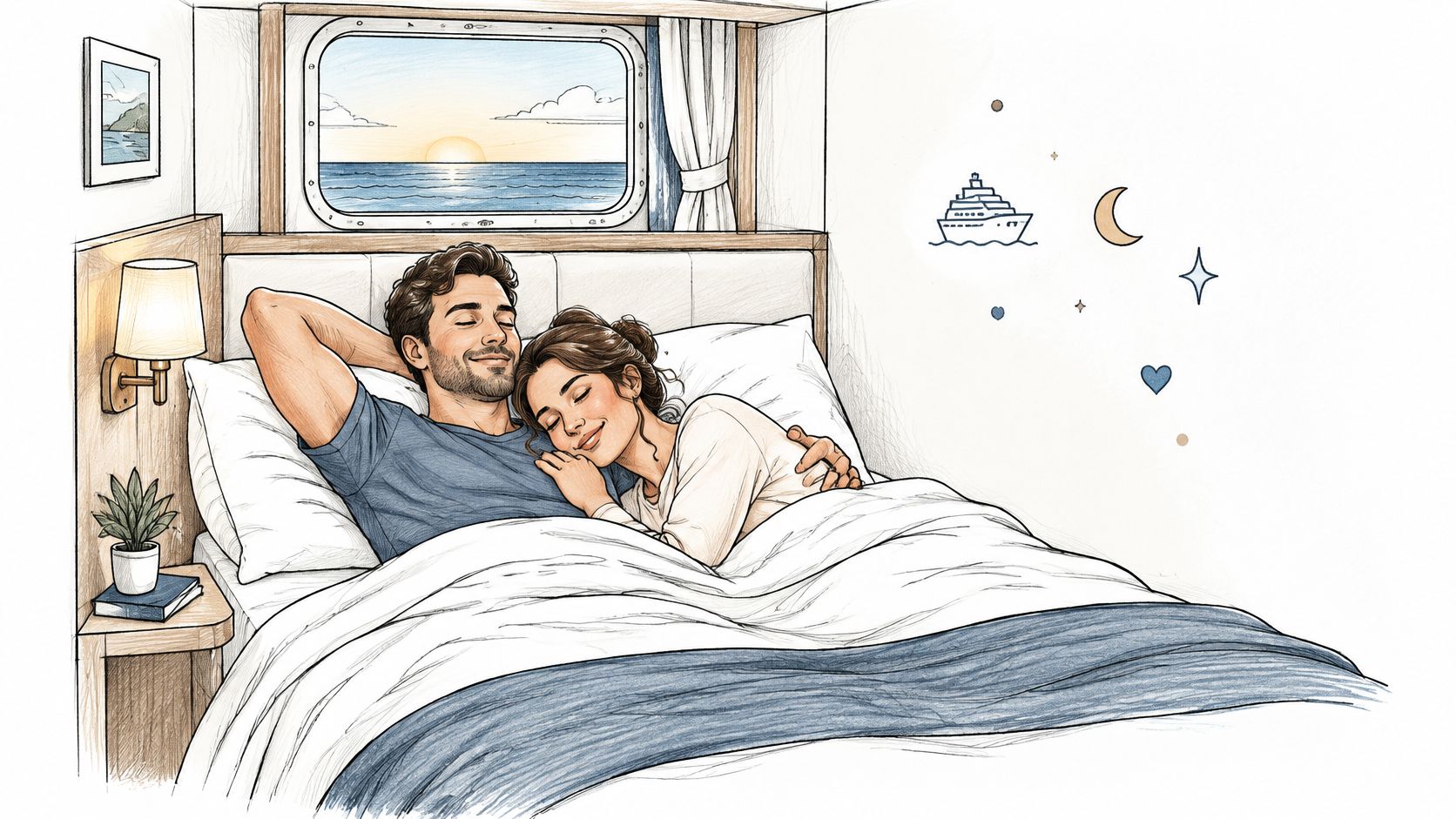
Say a couple in an inside cabin on a Caribbean sailing mounts the fan on the wall beside the bed. They run it on low all night for steady airflow, then move it to the ceiling panel in the afternoon when the cabin heats up after a port day. The Magnetic Fan for Cruise Ship Cabin is thinner than a book, attaches to most stateroom walls and ceilings, and runs 4-12 hours per charge depending on speed.
Boarding Day Checks
- Test the surface first: Magnets only hold on ferromagnetic panels, and painted or covered walls can reduce grip.
- Charge before you sail: Keep the USB-C cable in your carry-on and follow the steps for how to charge a rechargeable fan the night before.
- Start low at night: Higher speeds cool faster but add noise you may not want while sleeping.
The limitation is policy, not just physics. Rules on personal electrical items vary by line, and a fan that's fine on one ship can get questioned on another. Confirm your line's current rules before you pack, even for a battery-powered model.
2. Magnetic Cabin Organizers for Vertical Storage
The bathroom sink disappears fast when two people share it. A magnetic organizer moves toiletries, sunglasses, and chargers onto the wall instead. You're using space that's otherwise empty, and everything stays visible when you're rushing to dinner.
Set it up on boarding day before you unpack anything else. Press the magnets to a flat metal wall or door, tug down firmly to test the hold, then load the heaviest items in the lowest pockets. Pack the organizer in your carry-on so it's ready in the first hour.
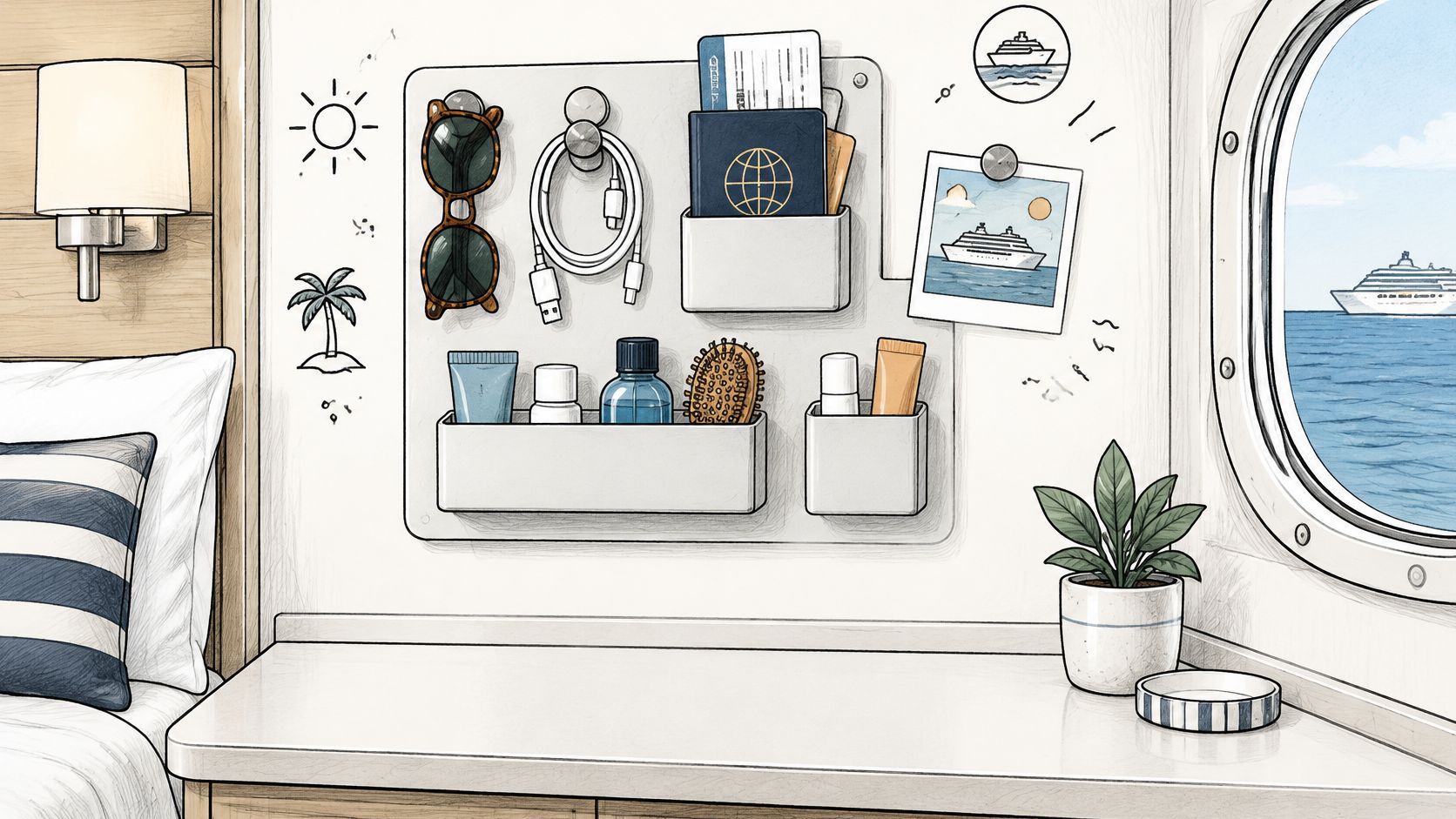
A solo traveler can mount one inside the bathroom door for toiletries and a small first aid kit. A couple does better with one near the cabin entrance for sunglasses, key cards, and boarding documents, the items you grab every time you leave. Put daily items at eye level and leave rarely used items in the suitcase under the bed.
Practical rule: Load the organizer, then wait ten minutes before you walk away. A weak hold shows up fast under weight, usually with slow sliding before a fall.
The trade-off is capacity. These pockets handle small flat items well and bulky bottles badly. Overload one pocket and the whole organizer peels away from the wall, so split heavy items across pockets or keep them in a drawer.
3. Rechargeable Magnetic Night Lights
Inside cabins go fully dark at night. The overhead light wakes everyone, and your phone screen is worse. A low-glare magnetic night light gives you just enough light to reach the bathroom without either problem.
Place it low on the wall or door frame along the path from bed to bathroom. Low placement lights the floor where you step, not the bed where your partner sleeps. Turn it on before you get into bed so you're not hunting for a switch in the dark.
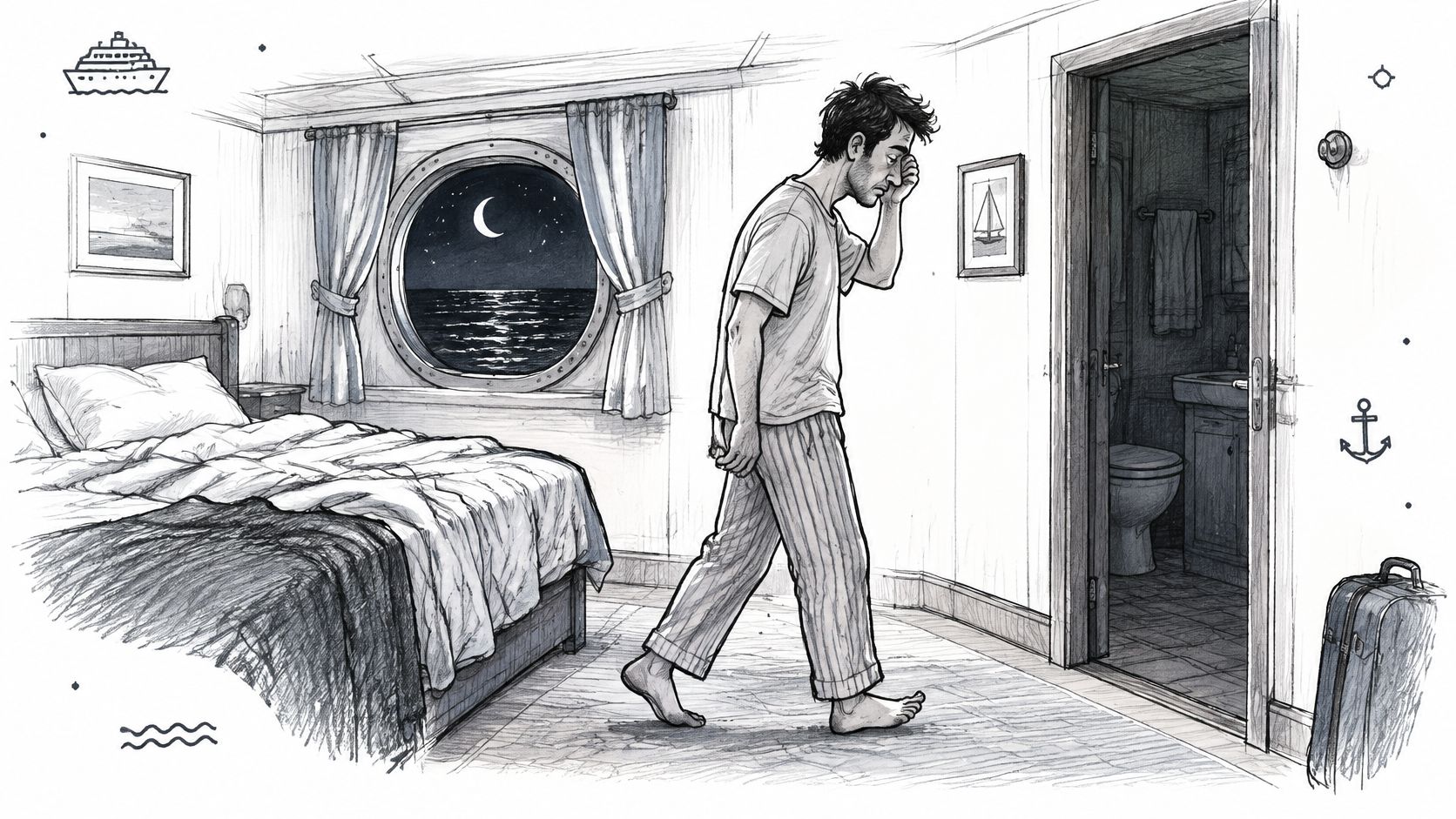
Say you're traveling with a young child who needs the bathroom at night. A light by the bathroom door lets the child find the way without waking the whole cabin. In rough seas, that same light helps you judge the doorway and the bathroom threshold while the floor moves under you.
This matters beyond convenience for travelers who are unsteady or have reduced vision. Guidance on cruising with mobility aids notes that accessible inventory is limited, with approximately 3%-5% of staterooms on ships operating from U.S. ports designed to meet ADA standards. A night light helps in a standard cabin, but it doesn't replace booking the right accessible cabin when you need doorway width or turning space.
Charge the light on the first night and check the battery before sea days. The limitation is placement. Put it too high or aim it toward the bed and it becomes the thing keeping you awake.
4. Magnetic Clothesline for Drying in the Cabin
Wet swimwear ends up on the balcony chair, the desk chair, or the bed. All three spread dampness where you sit and sleep. A magnetic clothesline gives it a dedicated spot inside the cabin.
Attach the magnets to two metal points with clear wall space between them, then connect the line. Wring out each item in the shower first and lay a towel underneath to catch drips. The video below shows the basic setup sequence before you hang anything.
After a pool day, hang a swimsuit and rash guard on the line and point your cabin fan at them. Moving air does most of the drying work, and lightweight items are usually ready by morning. A family can run swim shorts and kids' swimwear overnight the same way, as long as the line isn't overloaded.
What the Line Handles Well
- Swimwear and rash guards: Light, quick to dry, and the core use case.
- Small hand-washed items: Underwear and lightweight tops wrung out well first.
- Heavy beach towels: Send these to the bathroom rack instead, since their weight pulls magnets sideways.
That's the known limitation. The line is built for lightweight items only, and a soaked towel creates enough force to slide a magnet down a painted wall. Keep heavy items off it and the setup holds fine all week.
5. Non-Drowsy Seasickness Patches
Queueing for the tender boat is the wrong time to discover you're motion sensitive. Seasickness patches go on before the ship moves, which is the whole point. Prevention works better than chasing nausea once it starts.
Wash and dry the skin where the label tells you to apply it, press the patch flat, and don't cut it. Wash your hands after handling it and avoid touching your eyes. The detailed breakdown of how seasick patches work covers timing if you're deciding between patches and tablets.
A traveler who gets seasick might apply a patch before sailaway and keep it through a three-day sea itinerary. Another might use one just for a small-boat excursion before a port stop, where the motion is sharper than on the ship itself. Both cases share the same setup rule. Apply at the timing the manufacturer recommends, usually before departure, not after symptoms build.
Medical check first: The CDC guidance on motion sickness medicines warns that commonly used medicines can cause drowsiness and recommends discussing medication choice with a healthcare professional.
That warning is the limitation. Talk to a doctor first if you're pregnant, have glaucoma, or take other medications. A patch also isn't a substitute for basics like facing the horizon, keeping the cabin cool, and skipping heavy meals before rough water.
6. Packing a Carry-On for Embarkation and Cabin Delivery
Your checked bag often reaches the cabin hours after you do. If your swimsuit, medication, and phone charger are in that bag, your first afternoon is mostly waiting. A properly packed carry-on covers the first 24 hours on its own.
Pack it as a standalone kit, not an overflow bag. Prescription medications and important documents go in it, never in checked luggage. Add swimwear, sunscreen, chargers, and a change of clothes for each person.
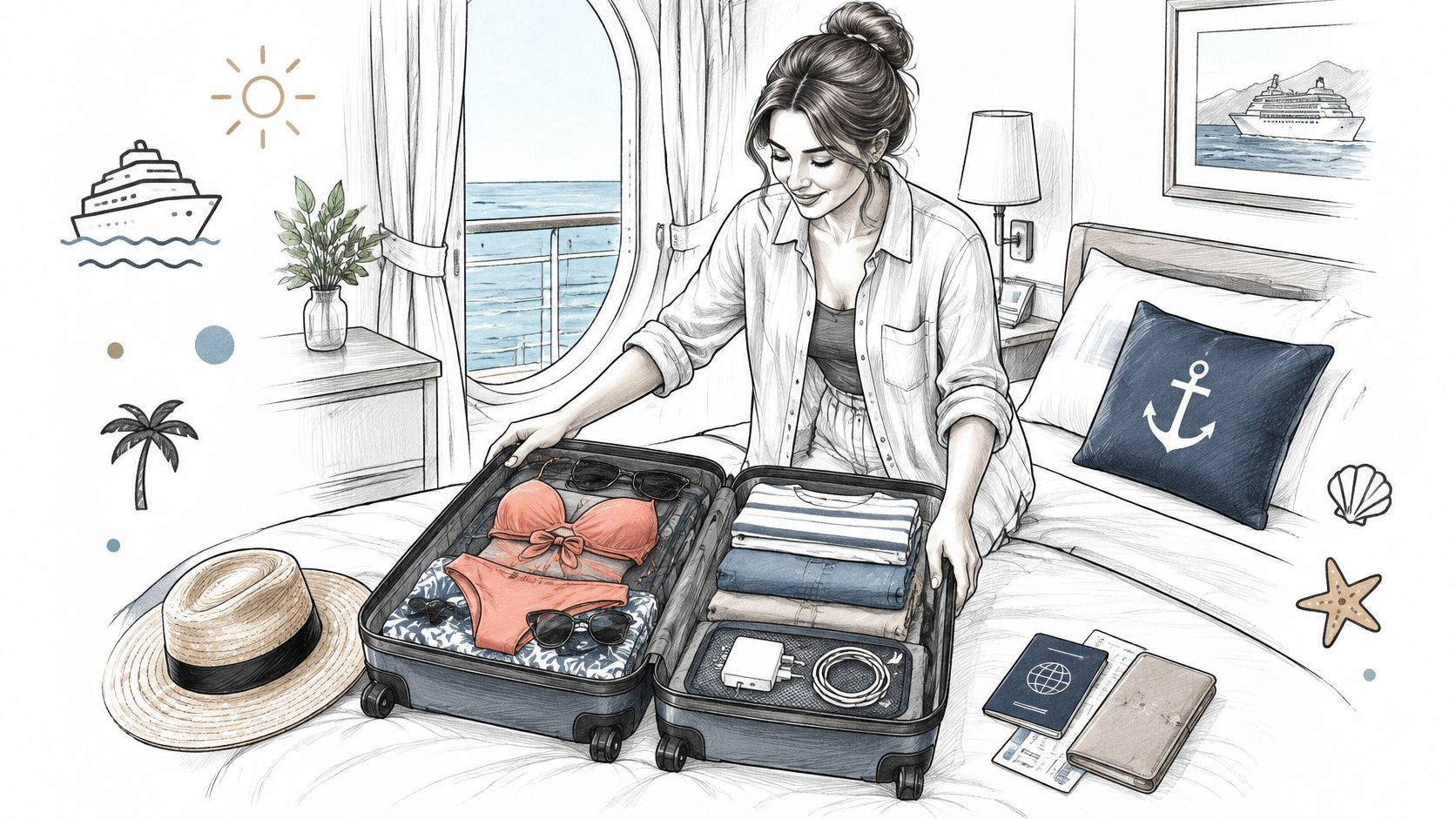
Say your bags don't arrive until after dinner. You've still had your pool afternoon because your swimsuit and sunscreen were with you. A family packing a change of clothes per child avoids the worst version of this problem, which is tired kids stuck in travel clothes all evening.
Carry-On Setup Details
- Packing cubes by person: Each traveler finds their own clothes without unpacking the whole bag.
- A bright, unique tag: It speeds up spotting your bag in a terminal crowd.
- A photo of every checked bag: Crew and terminal staff identify luggage faster from a picture than a description.
The trade-off is carrying weight through embarkation lines. Keep the carry-on to genuine first-day needs and it stays manageable. Load it like a second suitcase and you'll resent it by the security checkpoint.
7. Trackable Luggage Tags for Faster Recovery
Cruise luggage moves through airports, terminals, ship corridors, and cabin delivery in one day. When a bag goes missing, the hard part is knowing which step lost it. A Bluetooth or GPS tracker inside the bag answers that question quickly.
Register the tracker in its app and test it at home before the trip. Follow the trackable cruise luggage tag setup guide for pairing and placement. Put the tracker inside a handle loop or a secure interior strap, not clipped outside where it can be knocked off or removed.
Say you check the app before boarding and see your suitcase is still at the airport. You can alert the airline and the cruise line before sailaway instead of waiting at your cabin door all evening. After disembarkation, the same check tells you whether your bag is near the terminal exit or still on the ship side.
A tracker shortens the search. It doesn't move the bag, and it can't override terminal or ship procedures for releasing luggage.
Privacy is the main limitation to manage. Turn off location sharing with anyone you don't trust, review the app settings before you travel, and keep the identification on the tag minimal. A contact number is enough. Your full home address invites a different problem than the one you're solving.
8. Using Cabin Layout and Hangers for Storage
The cabin already has more storage than it looks like. Under-bed space, closet rails, drawers, and the back of the door do most of the work if you unpack with a plan. This hack costs nothing, which makes it the one I'd do before buying anything.
Start with the most-used items. Everyday clothes go in drawers and on hangers, and you should ask your cabin steward for extra hangers early in the trip while it's easy. Nest empty suitcases inside each other and slide them under the bed, then use one open case under the bed as a laundry collector.
A couple might hang a lightweight organizer on the bathroom door for toiletries and small items, freeing the closet for clothes. Spare shoes go in a bag under the bed so only the pair you're wearing today sits out. Keep the walkway between bed and bathroom completely clear, especially at night when the ship is moving.
Policy is the constraint here. Coverage of Norwegian Cruise Line's cabin policy changes shows that Norwegian prohibits all cabin-door decorations, including magnetic ones, while other lines allow some decorations under fire-safety and attachment conditions. Door setups that work on one line can be removed on another, and over-door hooks risk damaging the finish on any ship. Check your line's rules before you rely on the door for storage, and keep anything you hang inside the cabin, clear of the corridor.
Cruise Cabin Hacks at a Glance
| Item | Best For | Setup Needed | Main Limitation | Who Benefits Most |
|---|---|---|---|---|
| Magnetic Rechargeable Cabin Fans | Improving airflow in warm or stuffy cabins | Charge the fan and attach it to a metal surface | Moves air but does not cool it; requires a suitable metal surface | Travelers who want more airflow without using counter space |
| Magnetic Cabin Organizers for Vertical Storage | Keeping small essentials organized in limited cabin space | Attach the organizer to a metal surface and test its magnet | Limited capacity; heavy items may make it slip or fall | Travelers sharing a small cabin or short on counter space |
| Rechargeable Magnetic Night Lights | Navigating a dark cabin without disturbing a roommate | Charge the light and mount it near the floor on a metal surface | Provides guidance lighting, not full room illumination | Families with children and travelers who get up at night |
| Magnetic Clothesline for Drying in the Cabin | Drying swimwear and lightweight garments | Attach the line to suitable metal surfaces | Not suited to heavy items; drying depends on cabin conditions | Travelers who swim or bring lightweight wet clothing |
| Non-Drowsy Seasickness Patches | Managing motion discomfort without repeatedly taking pills | Apply according to the product label before travel | Effectiveness varies; may irritate skin and may not suit everyone | Travelers seeking a wearable option for motion discomfort |
| Packing a Carry-On for Embarkation and Cabin Delivery | Keeping first-day essentials accessible before luggage arrives | Pack medications, documents, chargers, and other essentials | Limited space requires careful choices | Travelers who want essentials on hand or are concerned about delayed bags |
| Trackable Luggage Tags for Faster Recovery | Locating luggage during transfers and delivery | Attach the tracker, set it up in its app, and review privacy settings | Tracking depends on the technology and may require charging or battery replacement | Travelers who want help locating bags and peace of mind |
| Using Cabin Layout and Hangers for Storage | Making better use of built-in cabin storage | Arrange items in drawers, under the bed, and on closet rails or hooks | Storage may still be limited, and some organizers may not fit | Travelers who want to reduce clutter without bringing extra furniture |
Pack Smarter and Settle In Faster on Your Next Cruise
Turn these cruise cabin hacks into a boarding-day routine and the cabin works from the first night. Pack the carry-on first, with medication, documents, swimwear, and chargers you control directly. That single step removes most embarkation stress, because your first afternoon no longer depends on when checked bags reach your deck.
Spend the first hour on mounts. Test each magnet on a flat metal surface, load it, and watch for sliding before you trust it. Set the fan near the bed, put daily items in the organizer at eye level, and stretch the drying line where drips land on a towel, not on bedding. Do this before sailaway drinks and you won't be reorganizing in the dark later.
Set up night lights before the first evening, low on the wall along the bed to bathroom path. Charge every rechargeable item that night so batteries start the itinerary full. Keep the walkway clear of suitcases from day one, since a clear floor matters more in rough seas than any storage gain from leaving a bag out.
Three checks protect the whole system. Confirm your cruise line's current rules on personal electrical items, door attachments, and decorations shortly before departure, because policies differ by operator and change over time. Verify that your cabin walls are magnetic before you build your packing list around magnetic mounts. Check medical suitability with a doctor before using seasickness patches, especially if you're pregnant, have glaucoma, or take other medication.
If you want to start with the two most-used tools, Nordmoose lists the Magnetic Clothesline for Cruise Ship Cabin at $15.95 USD, and its Sea Sickness Patches for Cruise are buy 2, get 1 free. Start with the problem that bothers you most, whether that's damp swimwear or a warm cabin, and add the rest on your next sailing. Small staterooms reward preparation more than they punish size.
Nordmoose builds cruise-specific accessories for exactly these problems, including magnetic fans, cabin organizers, night lights, drying lines, and seasickness patches sized for carry-on packing. Browse the full range before your next sailing and pick the tools that match your cabin type and itinerary. Start your packing list today at Nordmoose.