

How Do Seasick Patches Work: The Science for Cruisers
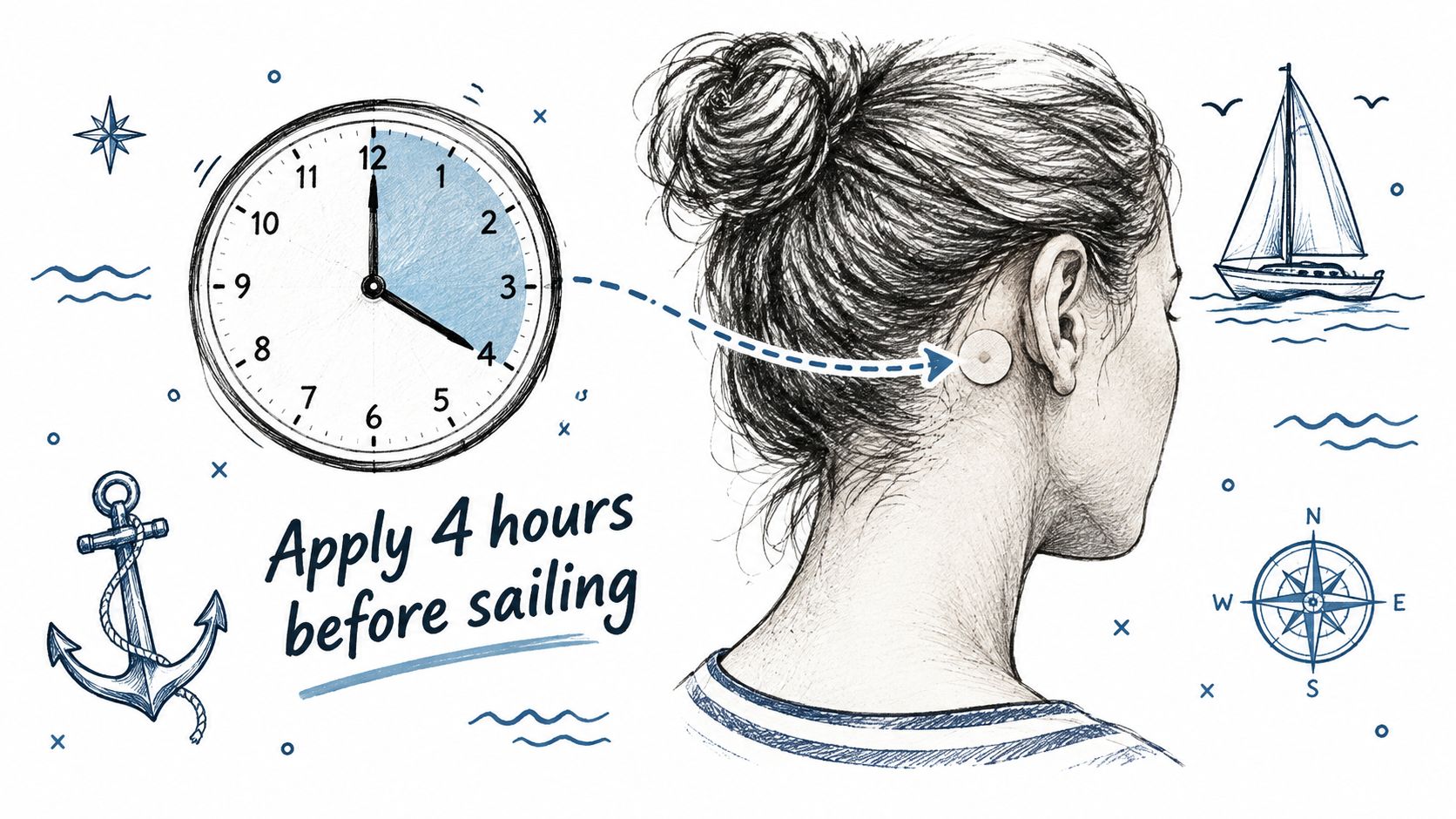
A seasick patch delivers a steady dose of medicine through the skin behind your ear for up to 72 hours, but it needs to be applied at least 4 hours before you need its full preventive effect. It isn't an instant fix for nausea that has already started.
You may be reading this with a cruise reservation open on your phone, wondering whether to put a patch in your suitcase or apply one before leaving home. Perhaps you've watched calm passengers enjoy the view while someone nearby turns pale as the ship leaves the harbor. That contrast can make seasickness feel unpredictable, but the patch itself follows a fairly orderly process.
The most important detail is timing. A patch is a preventive delivery system, not a rescue treatment that switches off nausea the moment you feel the first wave. Once you understand what happens between application and effect, the instructions make much more sense.
Table of Contents
- Why Seasick Patches Feel Like Magic But Aren't
- The Science Behind Nausea and Vestibular Conflict
- How the Patch Delivers Relief Through the Skin
- The Critical Timing Why Apply Before You Sail
- Are Non-Drowsy Patches Safe and Effective for You?
- Your Complete Seasickness Strategy for Cruise Season
Why Seasick Patches Feel Like Magic But Aren't
A first-time cruiser may apply a patch in the boarding line, step onto the ship, and expect protection before the harbor fades behind them. If the water turns rough soon afterward, nausea can arrive before the medicine has had enough time to take effect.
The patch may be working as designed. Scopolamine must move through the skin, enter the bloodstream, and reach the nervous system at a useful level. That sequence creates a timing gap between putting on the patch and feeling its full preventive benefit. The gap is easy to miss because the patch looks simple, almost like a small sticker that should work immediately.
Practical rule: Put application on your pre-cruise checklist, rather than waiting for the first sign of nausea.
The prescription Transderm Scōp system releases approximately 1 milligram of scopolamine over 3 days instead of delivering the full amount at once. Measurable blood concentrations generally appear within 4 hours, while average peak concentrations occur at about 24 hours, according to the FDA prescribing information for Transderm Scōp. The medicine therefore builds gradually. Early application gives the delivery system time to establish exposure before motion becomes a problem.
A common boarding-day scenario
Suppose your ship departs in the afternoon. Applying a prescription patch in the morning allows scopolamine to begin entering your system before the vessel reaches open water. Applying it after lunch, once you already feel unwell, leaves less time for exposure to build while the ship's movement is already provoking symptoms.
The patch does not stop the vessel from rolling or pitching. It reduces nervous-system signaling involved in nausea and vomiting, so the brain may process those motion signals with less disruption. You can still notice the ship moving, but that movement is less likely to trigger the complete nausea response.
The difference between prevention and rescue use also explains the patch's convenience. A single system is labeled for use for up to 72 hours, which can cover embarkation, sea days, and excursions without repeated oral doses. Convenience can support consistent use, but it does not replace correct placement, early application, or medical screening.
What the patch can and can't promise
A properly used patch is an evidence-supported option for preventing motion sickness. It cannot guarantee that every traveler will feel completely normal, and the available evidence does not establish it as universally better than other treatments. The Cochrane review of scopolamine for motion sickness found that scopolamine worked better than placebo, but did not establish clear superiority over antihistamines.
The practical takeaway is reassuring. You are choosing a medicine delivery method that works gradually and continuously, then fitting it into a plan suited to your health and itinerary. Its value comes from using it early and realistically, not from expecting a magic sticker to erase motion after nausea has begun.
The Science Behind Nausea and Vestibular Conflict
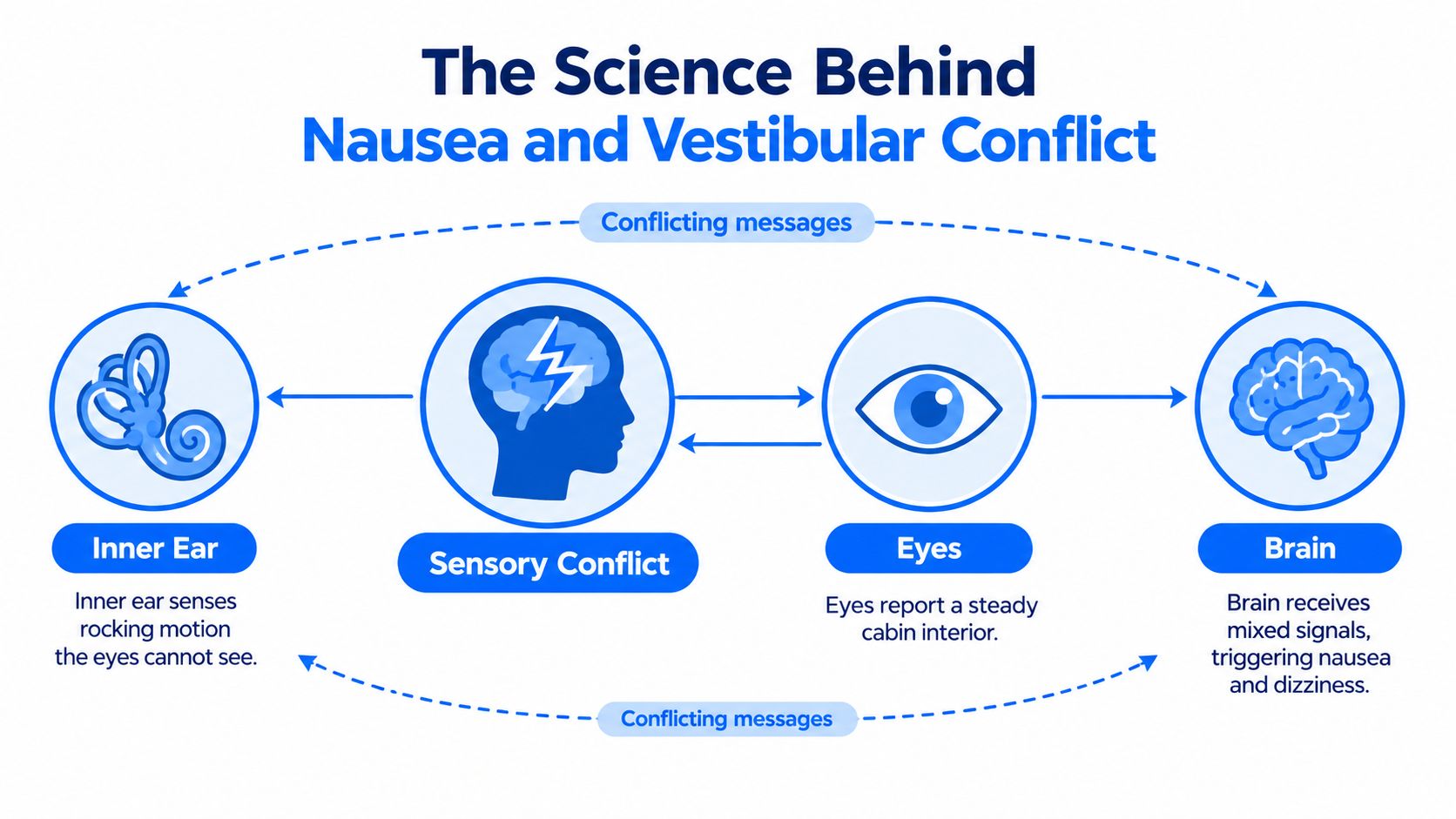
Seasickness begins with a disagreement among your sensory systems. Your inner ear detects movement through the fluid-filled structures of the vestibular system, while your eyes may be focused on a cabin wall, a book, or a screen that appears stationary. Your body adds information about balance and posture, and the brain has to reconcile all of these messages.
When the signals don't match, the brain receives something like a confusing email thread with contradictory updates. The inner ear reports rolling and pitching, while the eyes report a stable room. That mismatch can produce dizziness, sweating, nausea, and vomiting.
Why the brain reacts through the stomach
Motion sickness isn't caused by a stomach problem alone. The digestive symptoms are part of a broader response coordinated by the brain after it receives conflicting motion information. The brain communicates with areas involved in nausea and vomiting, and the body may also respond with changes such as sweating, increased saliva, or dizziness.
You can reduce the conflict by changing what you look at and where you spend time on a ship. Looking toward the horizon can give the eyes a motion reference that better matches the inner ear. Fresh air and a position with less noticeable movement may also help, but these measures don't change the fact that a patch works through medication.
Scopolamine is an antimuscarinic, also called an anticholinergic medicine. It competitively blocks muscarinic acetylcholine receptors in the central nervous system. In plain language, it dampens cholinergic signaling involved in the pathway from vestibular motion signals toward brain regions that coordinate nausea and vomiting.
Damping the signal, not shutting down the brain
The patch doesn't make the ship stop moving, and it doesn't remove every sensation of motion. Its role is closer to turning down the volume on a troublesome signal. The brain can still receive information from the balance system, but the signaling that helps drive nausea and vomiting is reduced.
That is also why “non-drowsy” can be a confusing description. Compared with some antihistamine regimens, scopolamine was less likely to cause drowsiness, blurred vision, or dizziness in the trials summarized by Cochrane. Those effects remain possible, however, because blocking muscarinic signaling can affect more than nausea pathways.
If you're unsure whether what you bought is a drug patch or a non-drug adhesive or acupressure product, check the active ingredients and instructions. For example, Sea Sickness Patches for Cruise are described in the product information as all-natural patches for travel support, with a waterproof design and non-drowsy positioning. That category should not automatically be treated as interchangeable with prescription transdermal scopolamine, because the ingredients, mechanism, and evidence can differ.
For a broader explanation of why some travelers feel ill and others don't, see whether you'll get seasick on a cruise ship. The central idea remains simple: the patch targets a motion-related signaling pathway, while practical ship habits can reduce the sensory mismatch that starts the problem.
How the Patch Delivers Relief Through the Skin
You place the patch behind your ear before boarding, then wonder why it does not stop every sensation at once. The medicine must cross the skin, enter the bloodstream, and reach the nervous system. A patch creates that supply gradually, so its effect develops over time rather than arriving like a swallowed tablet.
The prescription scopolamine system has an initial priming release and a rate-controlling membrane. Together, these parts begin delivery and help maintain relatively stable drug levels during extended use, according to the FDA label for the scopolamine transdermal system.

The delivery process in plain language
The patch works like a small reservoir with a controlled outlet. It does not release all its medicine as soon as it touches your skin. The sequence has several stages:
- Application begins contact. Apply the patch to clean, dry, hairless skin behind one ear. That location gives the adhesive a stable surface and matches the prescription system's instructions.
- Scopolamine crosses the skin. The medicine moves through the skin layers gradually. The patch controls the release rate, limiting how quickly scopolamine enters circulation.
- Blood levels build over time. Measurable concentrations generally appear within 4 hours, while average peak concentrations occur at about 24 hours, according to the FDA labeling. This delay explains why feeling movement soon after application does not necessarily mean the patch has failed.
- The nervous system receives sustained exposure. Scopolamine blocks muscarinic signaling associated with vestibular motion pathways. That reduces signals that can contribute to nausea and vomiting.
The area behind the ear is part of the product's directions. The medicine does not work because the patch sits over a special “seasickness nerve.” It must still pass through the skin and circulate through the body before producing its effect.
Placement habits that matter
Follow the instructions supplied with the product you use. For the FDA-approved scopolamine system, apply it to hairless skin behind one ear. Avoid irritated or damaged skin, and never cut the patch to change its dose or release pattern.
Wash your hands after handling it. Scopolamine transferred from your fingers to an eye can cause pupil dilation and blurred vision. If that happens, follow the product instructions and seek medical advice if the symptoms concern you.
The system is designed to remain in place for up to 72 hours. For longer coverage, the CDC's motion-sickness guidance in the FDA label advises removing the old patch before applying a replacement behind the opposite ear. The application process is simple, but the medicine still needs time to build its effect.
The Critical Timing Why Apply Before You Sail
The four-hour rule is the practical heart of the answer to “how do seasick patches work.” The patch has to start delivering scopolamine before the ship's motion creates a strong nausea response. Applying it after symptoms begin asks a preventive system to act like a rapid rescue medicine.
Build the timing into your travel plan
Start with the moment you expect meaningful motion, not merely the time you arrive at the terminal. If you know the ship will leave in the afternoon, count backward at least 4 hours and apply the prescription patch by that point. Some travelers choose an earlier application time because it is easier to remember before the rush of luggage, check-in, and boarding.
A practical schedule looks like this:
- Before departure day: Confirm that scopolamine is appropriate for you and review the label with your clinician or pharmacist.
- At least 4 hours before motion: Apply the patch behind one ear as directed.
- During the early part of the trip: Don't assume the patch has failed if you feel movement before its effect has fully developed.
- At the 72-hour point: Remove the old patch before using a replacement, and follow the product instructions for continued coverage.
The FDA-reviewed clinical evidence for the transdermal system describes studies involving 195 adults exposed at sea or in controlled motion environments. In those studies, the system was associated with a 75% reduction in the incidence of motion-induced nausea and vomiting. Those findings support preventive use, but they don't turn the patch into an immediate treatment after nausea is established.
Comparing the main approaches
A prescription patch favors travelers who value continuous delivery and don't want to remember repeated oral doses. Oral antihistamines may be another evidence-supported choice, but Cochrane found no clear evidence that scopolamine is superior to antihistamines. Some people also use non-drug approaches such as acupressure products, though their mechanism and evidence aren't the same as a medicine patch.
| Option | Main practical feature | Important limitation |
|---|---|---|
| Prescription scopolamine patch | Sustained transdermal delivery for up to 72 hours | Requires advance application and medical screening |
| Oral motion-sickness medicine | A familiar option that can be taken according to its label | May require repeat dosing and can cause drowsiness |
| Acupressure or other non-drug product | Doesn't expose the traveler to scopolamine | It isn't pharmacologically equivalent to a prescription patch |
For more detail about how non-drowsy products fit into cruise preparation, read this guide to a non-drowsy motion sickness patch. Whatever option you choose, don't wait until the deck is moving and your stomach has already turned. Prevention works best when it starts before the trigger becomes intense.
Are Non-Drowsy Patches Safe and Effective for You?
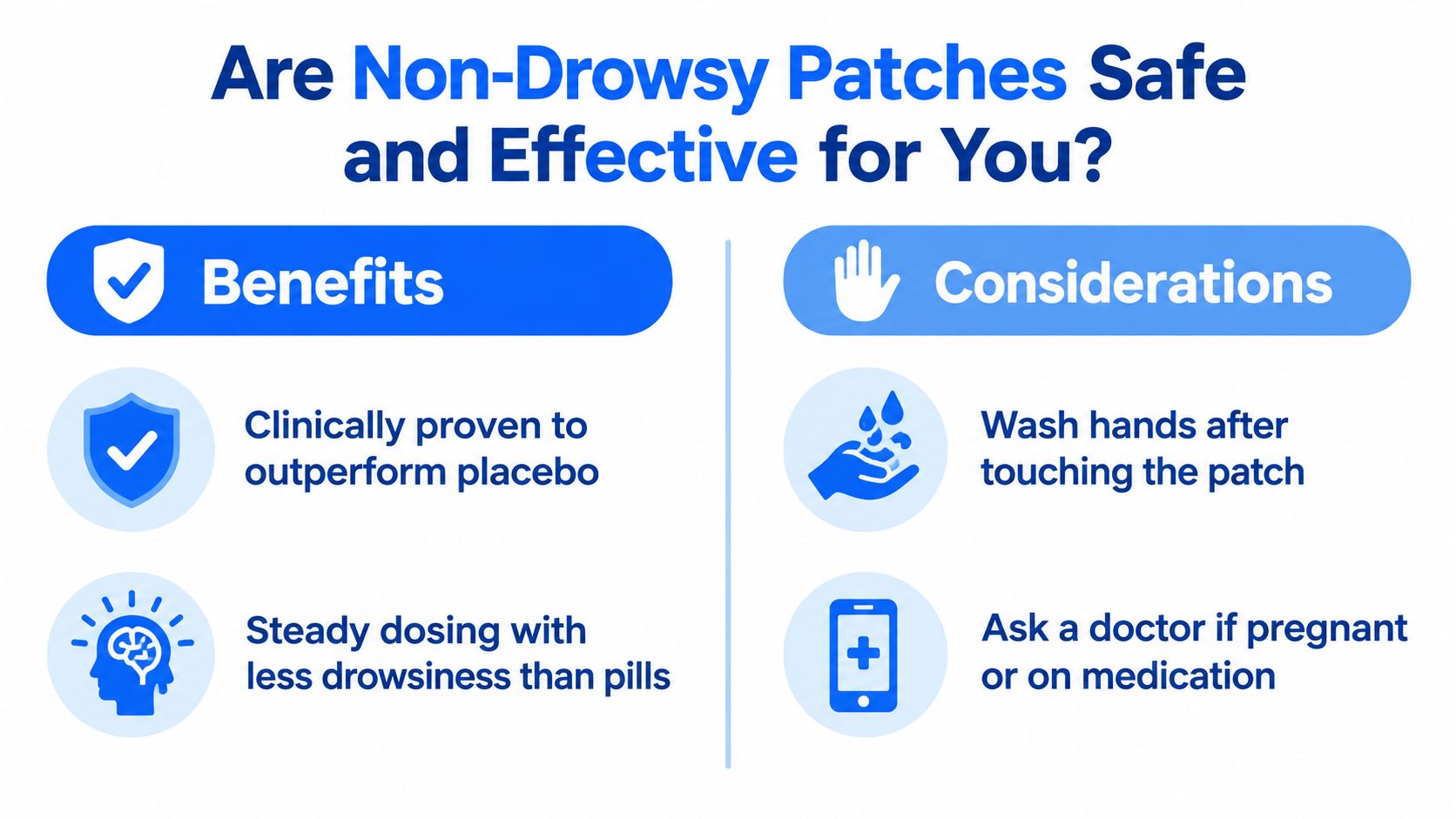
“Non-drowsy” should mean less likely to cause sleepiness than some alternatives, not “free of side effects.” Scopolamine is an active antimuscarinic medicine, and its effects can include dry mouth, drowsiness, blurred vision, dizziness, pupil dilation, increased heart rate, reduced sweating, and changes in motor function.
Clinical evidence supports effectiveness against placebo. The 2022 Cochrane review examined 14 randomized controlled studies and found scopolamine more effective than placebo for preventing motion-sickness symptoms, including nausea and vomiting. It didn't establish that scopolamine was better than antihistamines or combinations containing scopolamine and ephedrine, so personal suitability matters more than marketing language.
Side effects deserve practical attention
Dry mouth may be inconvenient on a warm ship, but blurred vision or reduced alertness can affect everyday decisions. Don't assume you can drive, operate equipment, swim, or take part in a demanding excursion just because a product is described as non-drowsy. Read the label and notice how your body responds before taking on activities that require clear vision and coordination.
The FDA label also reports adverse effects that help explain why touching the patch matters. The reviewed information describes dry mouth in roughly 50% to 60% of users, drowsiness in up to 20%, and allergic contact dermatitis in about 10%. Those figures come from the FDA prescribing information for scopolamine, and individual experiences can differ.
Safety check: Wash your hands after application, keep the patch away from your eyes, and don't cut the system.
Who should pause before using one
The CDC advises against scopolamine for people with glaucoma or people at risk of prostatic urinary retention. Muscarinic blockade can reduce secretions and alter smooth-muscle function, which is why these conditions require particular caution.
Before travel, discuss the patch with a healthcare professional if you're pregnant, nursing, taking other medicines, or managing a condition that could interact with an antimuscarinic drug. A pharmacist or prescriber can help distinguish a prescription scopolamine system from a non-drug patch and can review whether another approach is more appropriate.
If you develop concerning vision changes, severe confusion, difficulty urinating, an allergic reaction, or symptoms that feel unusually intense, remove the patch and seek medical advice. Don't apply another one because the first feels uncomfortable or seems less effective. The system's controlled-release structure is part of its design, and changing it can change the exposure.
Your Complete Seasickness Strategy for Cruise Season
A comfortable cruise plan starts before the ship moves. If a clinician has determined that prescription scopolamine is suitable, apply it to clean, hairless skin behind one ear at least 4 hours before expected motion. Keep the patch intact, wash your hands afterward, and remember that the system is designed for up to 72 hours, not indefinite use.
Then reduce the workload on your balance system. Spend time where you can see the horizon, take breaks from reading or looking down at a screen, and use fresh air when it helps. Rest and hydration can support general comfort, but neither replaces medical advice or correct patch timing.
Keep the cabin from adding to the problem
Small organizational choices can make the first day less frantic. Put medicines, water, sunglasses, and travel documents where you can reach them without unpacking every bag. Keep the patch instructions and your clinician's advice accessible rather than buried in luggage.
Families can also plan for ordinary cabin discomforts. Wet swimwear and towels create clutter in a compact room, so a Magnetic Clothesline for Cruise Ship Cabin can provide a portable way to hang lightweight garments from metal cabin panels. It addresses drying and organization, not the medical cause of seasickness, but reducing cabin friction can make rest easier.
Use this cruise guide to what to do for seasickness as a practical checklist, then adapt the plan to your own history. If you have been severely ill on boats before, speak with a healthcare professional before departure rather than experimenting for the first time on embarkation day.
The core plan is straightforward:
- Choose deliberately: Know whether your product is prescription scopolamine or a non-drug travel patch.
- Apply early: Give transdermal medicine the required time to build exposure.
- Protect your eyes: Wash your hands and avoid transferring medication by touch.
- Watch your response: Non-drowsy doesn't mean side-effect-free.
- Prepare the room: Keep comfort items, water, and clothing organized so you can rest when the sea becomes rough.
That approach turns the patch from something you hope will work into one carefully managed part of your cruise preparation.
Nordmoose offers cruise-focused travel accessories, including non-drowsy travel patches and compact cabin solutions for organization and drying clothes. Visit Nordmoose to review the available options and prepare the items you'll want within reach before sailing.