

SeaPass Card Holder: How to Choose the Right One
You're packing for your cruise, and a simple question has turned into a shopping decision: where do you put the card you'll need all day? A neck lanyard looks convenient until you lean over a buffet, while a tightly sealed pouch looks secure until a crew member needs to inspect the card. The right SeaPass card holder should make those everyday moments easier, not add another thing to manage.
Table of Contents
- What a SeaPass Card Holder Does and Which Style Fits
- Materials and Card Fit That Protect Contactless Access
- How to Carry Your Card from Embarkation to Disembarkation
- What to Do If You Lose Your SeaPass Card
- Cruise Line Rules to Check Before You Sail
- Choose Your Holder Before Your Next Sailing
What a SeaPass Card Holder Does and Which Style Fits
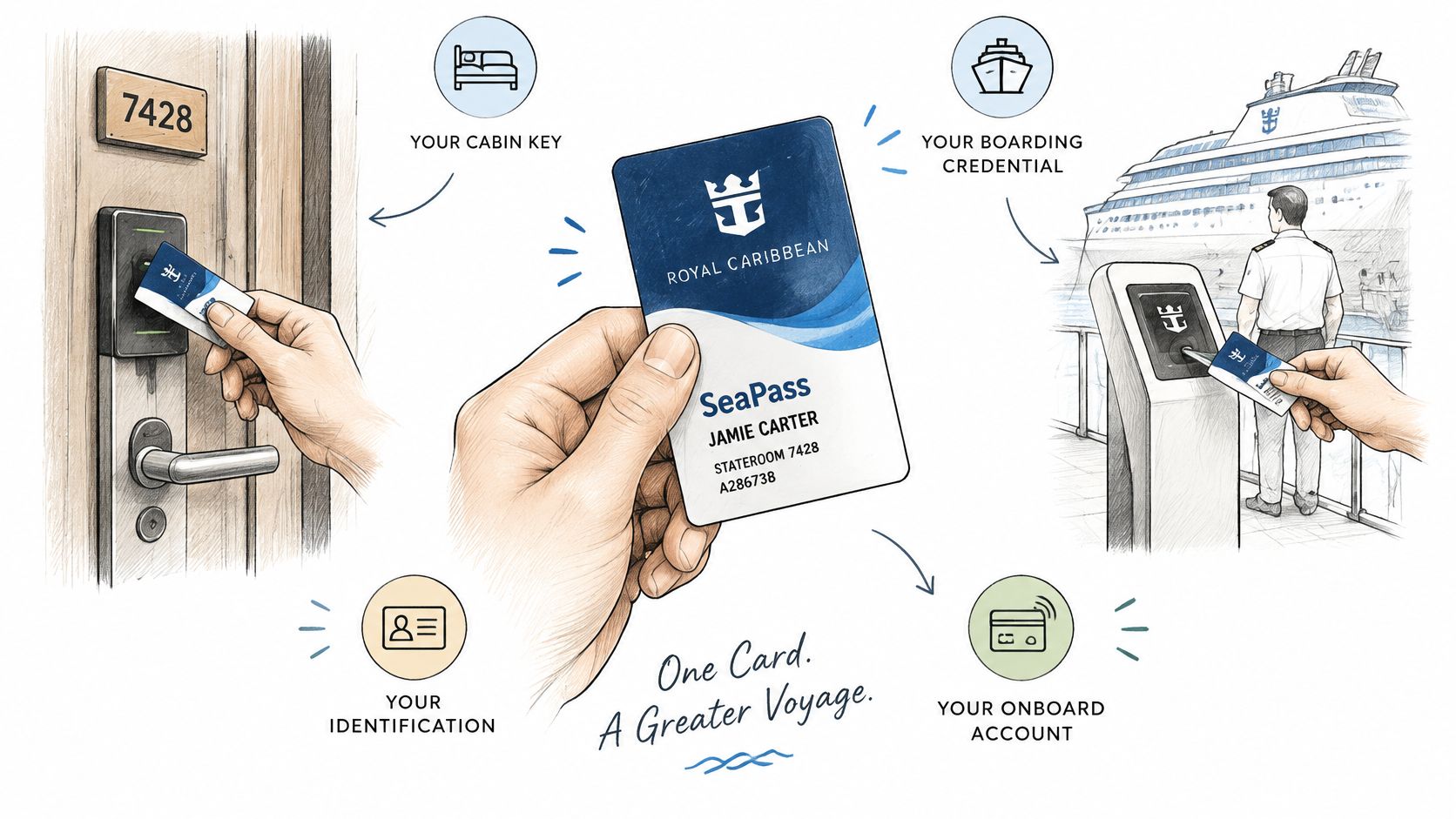
The SeaPass card is Royal Caribbean's cruise keycard, combining cabin access, a boarding credential, passenger identification, and an onboard expense account. A holder keeps that credential accessible while reducing accidental loss, bending, and surface wear.
At the cabin door, you need to present the card without wrestling with a closure. At the bar, you may need to hand it to a crew member. At the gangway, staff need to identify you and process your departure or return, so a holder that hides the printed face can become an obstacle.
The stakes are more than convenience. As Cruzely's explanation of onboard spending describes, cruise keycards connect purchases such as drinks, dining upgrades, shopping, casino transactions, spa services, and excursions to an onboard account settled at the end of the voyage. Treat yours like an access credential with spending privileges, rather than a disposable room key.
Holder styles by use case
The protection ratings below describe sensible designs, not guarantees. An open sleeve and a sealed pouch won't perform alike, even when both come with a lanyard.
| Style | Best for | Card access | Protection | Trade-off |
|---|---|---|---|---|
| Lanyard sleeve | Port days and quick checkpoints | Fast, card stays visible | Low with an open top, card can slip out | Dangles into buffets, railings, and pool water |
| Slim vertical sleeve | Pockets, swimwear, and shore bags | Moderate, slide out when necessary | Medium, closed edges protect the card | Harder to remove from tight pockets |
| Rigid-front badge holder | Frequent staff checks and embarkation | Fast, face shows at a glance | Medium to high against bending and abrasion | Bulkier, clip can catch fabric |
| Wrist pouch | Pool days, swimming, and excursions | Quick presentation if the reader works through it | High only with a suitable waterproof closure and secure strap | Card may need to come out for inspection |
| Phone-only setup | Guests temporarily using the SetSail Pass before card collection | Digital presentation where accepted | Phone case protects the device, not a physical credential | Battery failure, device loss, and acceptance limits interrupt use |
Match the holder to your day
For couples who spend port days walking, a slim sleeve with a positive closure fits neatly into a zippered pocket. Avoid loose sleeves that rely entirely on friction, especially if you'll repeatedly pull them from a bag.
For pool-heavy family days, choose a wrist pouch explicitly intended for immersion. A splash-resistant fabric pocket isn't a swimming pouch, and a wrist strap doesn't make its contents waterproof. Check that the closure is fully seated before entering the water.
For frequent visual checks, a rigid-front holder is the easiest starting point. Look for a clear face, a usable thumb opening, and a retaining lip that doesn't cover identifying information.
Practical rule: Choose a holder you can open while it remains attached to you. If you must remove the entire lanyard to hand over the card, the attachment is doing too much.
Materials and Card Fit That Protect Contactless Access
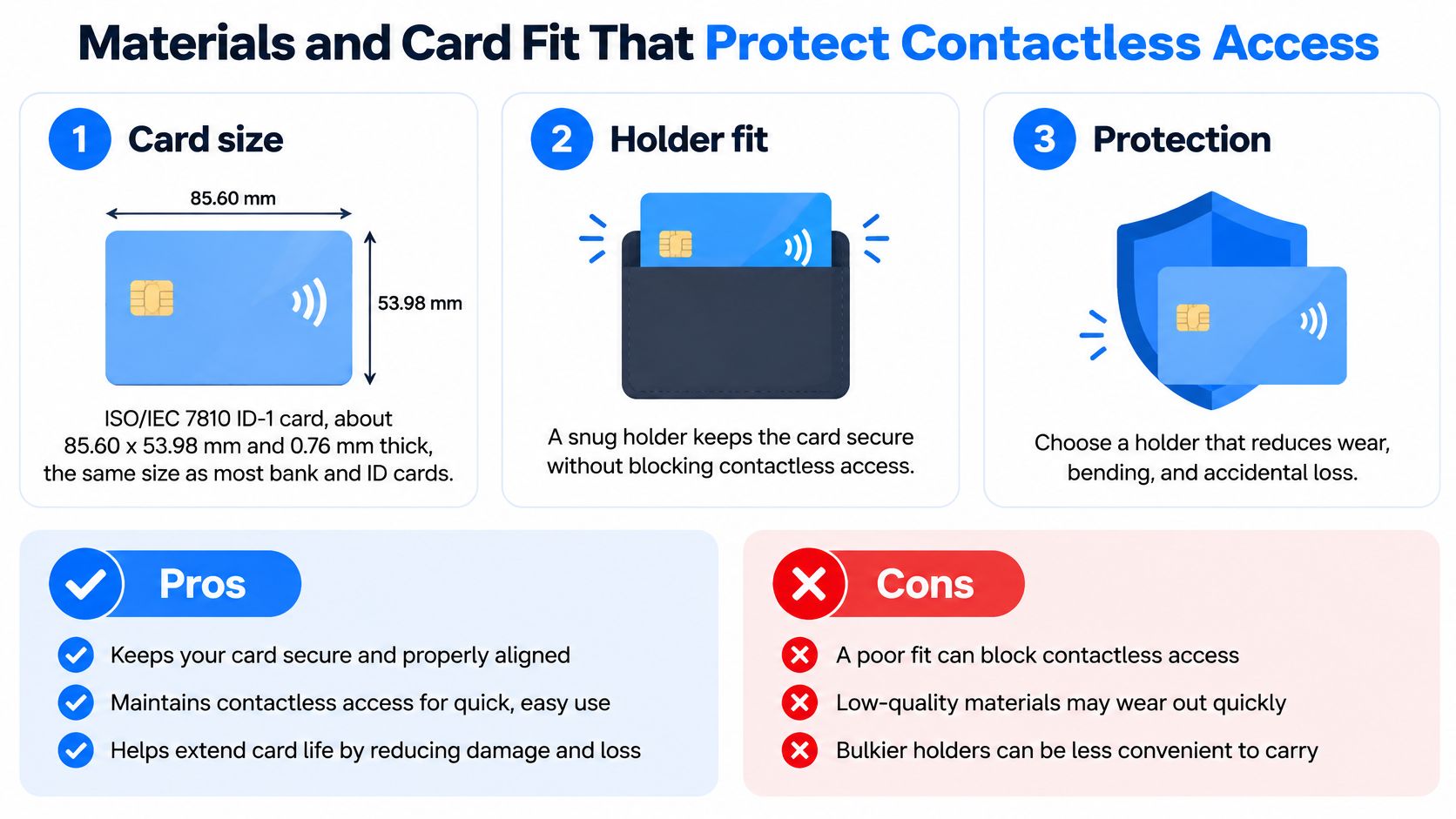
Use the standard payment-card footprint as your shopping reference, then check the holder's usable internal space rather than its outside dimensions.
Card dimensions and what they mean for a holder
The dimensional values below come from the ID-1 card-size reference, which lists approximately 85.60 × 53.98 mm (3.370 × 2.125 in) and a nominal thickness of 0.76 mm (30 mil).
| Specification | Value | What it means for the holder |
|---|---|---|
| Card size | Standard ID-1 footprint described above | Use a pocket or sleeve sized for that footprint |
| Card thickness | Standard nominal thickness described above | Slot should accept the card without forcing it |
| Corner shape | Rounded on standard cards | Rounded holder corners reduce snagging |
| Metal layer | Avoid over the card face | Conductive material can interfere with contactless taps |
| Holder fit | Clearance, not clamping | Prevents both jamming and sliding out |
A holder should leave enough clearance to withdraw the card without bowing it. Too much room is equally unhelpful: the card shouldn't escape when you bend over or lift the holder from a pocket.
This visual summarizes the fit and protection checks.
Keep conductive material away from the reader
Don't assume every ship uses identical card technology. The TilliT marine access-system product sheet describes systems using magnetic-stripe or contactless credentials, including 125 kHz and 13.56 MHz technologies, so compatibility follows the installed equipment.
A transparent polymer window or open-face design is the safest starting point for easy presentation. Avoid foil linings, metal plates, magnetic snaps, and decorative metal badges directly over the card. An RFID-blocking wallet may suit other travel documents, but blocking signals is the opposite of what you want while tapping a cabin lock.
Rigid polymer helps resist bending. Silicone provides a flexible grip, nylon works well for carrying pouches, and thin leather can be a nonmetallic option, although opaque materials require removal for visual checks. None of those material names alone establishes waterproofing.
At home, insert a spare bank-size card, close the holder, and shake it gently over a soft surface. Check retention and removal without forcing either. Once you receive your SeaPass, test it at your cabin reader before relying on through-holder taps; if it fails, remove the card and try again.
How to Carry Your Card from Embarkation to Disembarkation
Your boarding setup and your onboard setup aren't necessarily the same. According to Royal Caribbean's SeaPass guide, the mobile SetSail Pass can support onboard purchases until you collect the physical card, and guests should carry their SeaPass and government-issued identification when leaving the ship.
Use that transition to establish a routine rather than trying to manage everything from your phone.
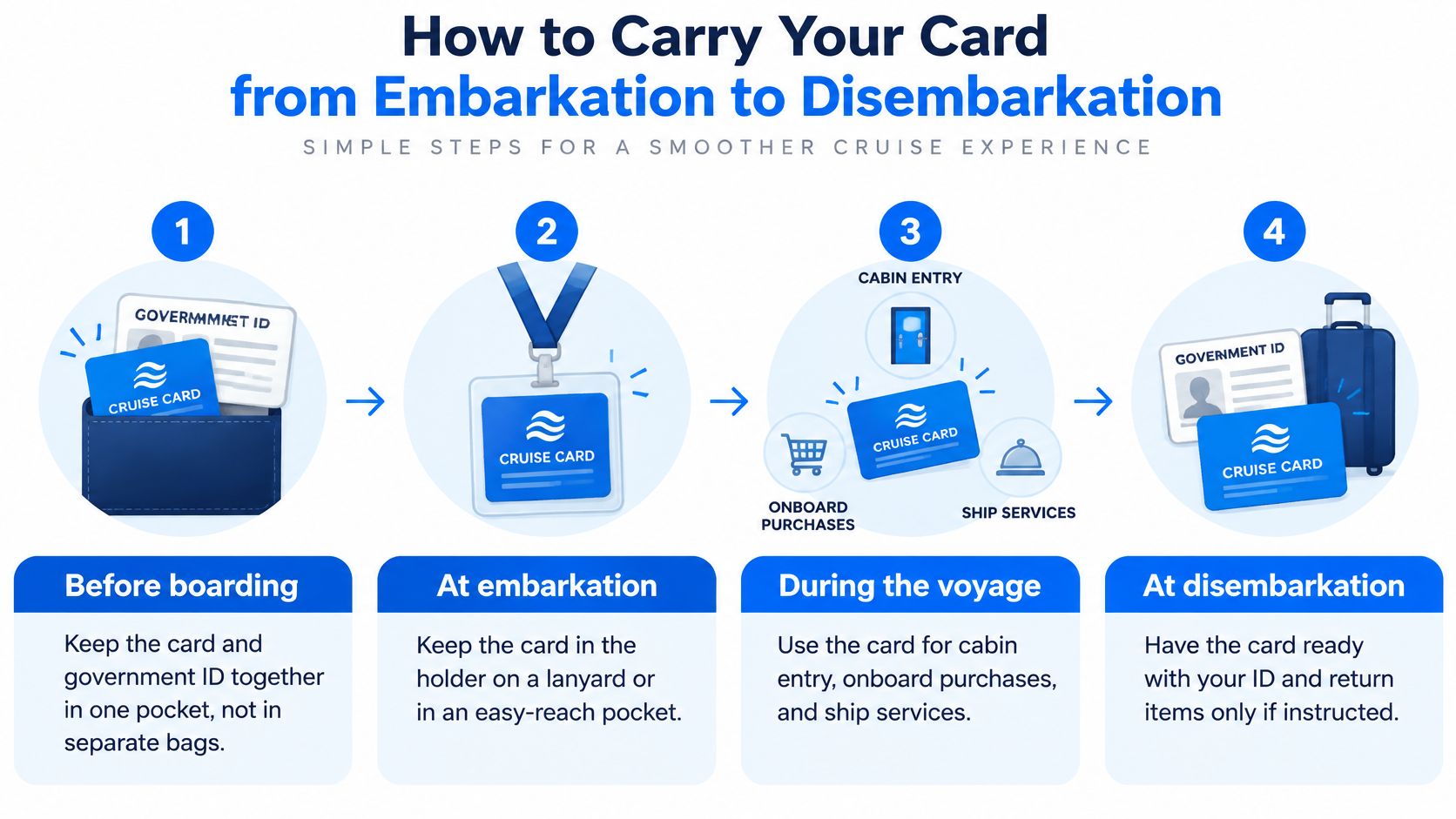
This overview shows the main handoffs during the voyage.
Build a repeatable carrying routine
- Before boarding, organize the documents you already have. Keep your boarding pass and required identification accessible in your personal bag. Your physical SeaPass may not be issued yet, so pack the empty holder where you can reach it.
- At embarkation, follow the collection instructions. Once you receive the card, place it directly into its holder rather than temporarily dropping it into a shopping bag. Remove it when staff request an unobstructed inspection.
- Choose a cabin landing spot. Keep the holder in the same designated place whenever you're inside. Our Magnetic Cruise Door Organizer uses mesh pockets for cabin storage; if you use an organizer, keep the card away from its magnetic mounting points.
- Prepare for port before joining the exit queue. Carry both required credentials on your person, but use separate secure compartments so losing the card sleeve doesn't also mean losing your identification. Don't bury either beneath towels and excursion gear.
- Decide how you'll manage swimming. Use an immersion-suitable pouch or arrange for a responsible companion to safeguard your belongings. Don't lock your only cabin-access credential inside the cabin without a reliable way back in.
- Check your card before heading out at night. Transfer the whole holder when changing clothes rather than moving the bare card. If visibility matters, compare light-up lanyard options, but judge the attachment and release mechanism before the lighting.
- Keep departure essentials out of packed luggage. Retain your card and required travel documents until staff have completed the final checks. Store or return the card only as instructed.
Plan around the actual sailing
Don't treat a working phone as your only backup. Keep it charged, but maintain access to the physical documents and credential your ship requires.
For another look at the cruise-card workflow, use the video below alongside your sailing instructions.
Confirm the current procedure in your cruise app or with the ship's staff. Port identification requirements and onboard arrangements can differ.
What to Do If You Lose Your SeaPass Card
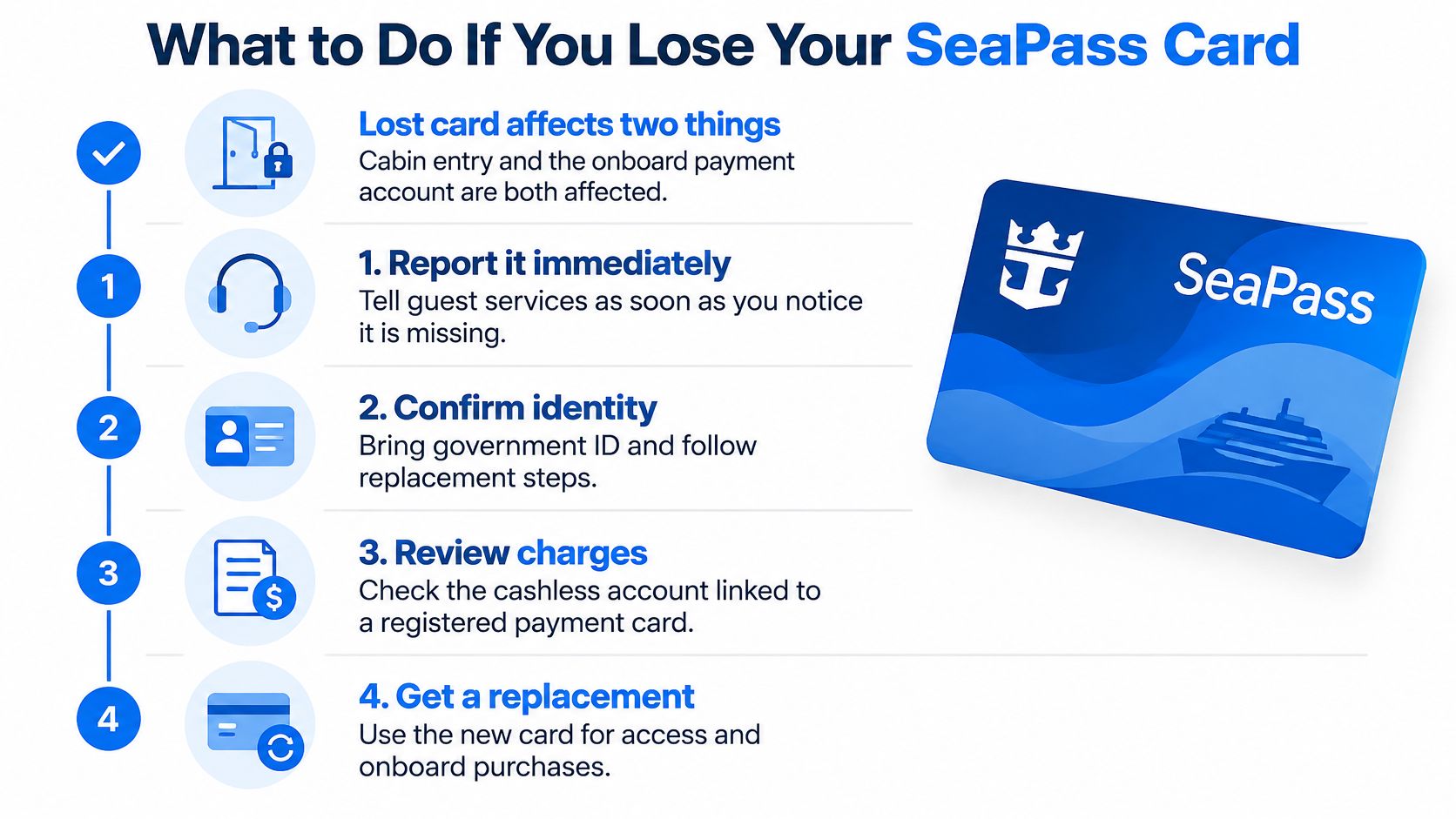
Report a missing card before you start a lengthy search. You're dealing with both cabin access and an onboard charging credential, so walking back through every lounge shouldn't be your first response.
- Contact Guest Services immediately. Ask staff to disable the missing credential and arrange a replacement. If you're ashore, notify cruise-line or port personnel and follow their instructions rather than assuming you can board without it.
- Verify your identity. Bring the government-issued identification you've kept separately. A photograph or photocopy can help explain your situation, but it isn't a guaranteed substitute for required original documents.
- Review recent account activity. Identify purchases you don't recognize and report them to Guest Services. Note the merchant or venue and the transaction details.
- Collect and check the replacement. Follow staff instructions for restoring access, then confirm the new card works. If you suspect your actual bank-card details were compromised, contact your bank as well.
Separate a missing credential from a bank-card problem
Royal Caribbean's SeaPass account guidance explains that the cashless account links to a registered payment card, daily authorizations can reduce available credit, and holds may remain for 3–5 business days or, depending on the bank, up to 30 days. An unfamiliar pending amount therefore needs checking, not an immediate assumption that someone stole money.
Freezing your bank card isn't a substitute for notifying the ship. Guest Services needs to address the lost SeaPass itself, while your bank handles concerns involving the underlying payment card.
For families, let each adult carry their own credential rather than putting every card into the same pouch. Keep booking information and relevant account notes separately, without storing complete payment-card details in an unsecured phone note. This guide to cruise ship cards can help distinguish the credentials you're managing.
A durable enclosure helps prevent accidental loss. Prompt reporting and account checks are what address unauthorized use.
An elaborate locked case can make replacement and inspection awkward without solving the financial risk. Choose secure retention with straightforward removal: report first, verify activity, then complete replacement.
Cruise Line Rules to Check Before You Sail
A holder advertised as suitable for cruises doesn't establish what your ship accepts. Nor does a phone feature available on another sailing prove that you can leave your physical credential behind.
The useful question isn't whether an accessory is popular. It's whether you can use it within your ship's access, identification, and payment procedures without delaying a check.
Ask about the credential, not just the accessory
Check your sailing instructions, cruise app, or Guest Services for these points:
- Shore return: Must you present the physical card when reboarding at each scheduled port?
- Mobile purchases: Which functions can you use through the app, and does that change after card collection?
- Identification: Which original documents must you carry ashore for your itinerary?
- Attachments: Are there restrictions relevant to your pouch, clip, lanyard, or other carrying equipment?
- Replacement: Where should you report a missing card, particularly outside normal daytime hours?
Don't punch a hole in the card unless ship staff explicitly confirm that it's appropriate. You can't judge the position of internal components by looking at the printed surface.
For families and groups, leave each traveler's name visible and assign responsibility before splitting up. An adult who leaves the pool with everyone's cards can create a problem for those staying behind, even when nothing has been lost.
Write down the recovery essentials
Keep a private note of your booking reference, the bank linked to your onboard account, the Guest Services location, and an emergency contact at home. Record useful identifiers, not passwords or complete bank-card numbers.
Check your wider packing choices against the guidance on what you can take on a cruise. A good carrying system fits the sailing's rules instead of requiring an exception at every checkpoint.
Choose Your Holder Before Your Next Sailing
For most adults, I'd start with a slim sleeve with a closure or a rigid-front holder with a polymer window. Both can offer straightforward access without the bulk of a full travel wallet.
Choose a wrist pouch when time in the water shapes your plans, but buy for its stated water-use capability, not its appearance. Choose a lanyard when you'll repeatedly present the card and don't mind wearing it; a pocket sleeve is often less intrusive during meals and relaxed evenings.
Make the decision around your itinerary
Ask yourself what you'll do:
- Water use: Will the holder stay on a dry deck chair, face splashes, or go swimming with you? Those require different levels of protection.
- Inspection frequency: Will you mostly use a pocket, or repeatedly show the printed face to staff? Prioritize visibility for the latter.
- Phone dependence: Can you continue your day if your phone stops working? Choose a setup that doesn't put every essential behind the same battery.
Avoid buying a holder just because it includes extra pockets. Carrying bank cards, cash, identification, and the SeaPass together may be tidy, but it also concentrates the consequences of losing that pouch.
Finish the packing decision
Complete the fit test before departure using a standard-size spare card, and inspect the seams, retaining tabs, strap, and closure. Practise removing the card while wearing the holder, then pack a lightweight spare if you have one.
Leave room in your personal bag for the holder before boarding. After the cruise, clean and dry it before storing it with your travel accessories, and put your identification back in its usual secure place.
The best SeaPass card holder keeps the credential secure, lets you present it promptly, and doesn't obstruct the way you need to use it.
Nordmoose offers compact cruise accessories, including magnetic cabin organizers, rechargeable lights, and fans designed around limited stateroom space. Visit Nordmoose to organize your cabin essentials alongside a practical place for your SeaPass holder before your next sailing.