

Days at the Sea on a Cruise: How to Plan Them
You're staring at an itinerary that says "at sea," and the day has no port, no meeting time, and no obvious plan. If this is your first cruise, that blank square is easy to read as a problem. Will the pool be a wall of chairs by 10:00? Will a small cabin feel airless by midafternoon? Will dinner feel rushed because you tried to do every line on the program?
A sea day is the day the ship stays underway instead of docking. Days at the sea are normal on a typical voyage, not a leftover. The useful plan is smaller than the daily program. You decide when you'll move, when you'll rest, and how you'll handle heat, clutter, and motion. Everything else can stay loose.
What follows is the shape of that day, then the choices that make repeated sea days feel comfortable in the same small room.
Table of Contents
- What a Sea Day Looks Like, Hour by Hour
- Onboard Activities Worth Planning Around
- Pacing and Scheduling Your Sea Day
- Cabin Comfort for Long Days at Sea
- Motion Comfort and Seasickness Prevention
- Indoor Health and Hygiene on Sea Days
- Packing and Pre-Sail Checklist
What a Sea Day Looks Like, Hour by Hour
Cruise Lines International Association (CLIA) reported that 34.64 million people took ocean cruises worldwide in 2024, and the average cruise length was 7.1 days. On a weeklong trip, one or two sea days are a real share of the vacation, not an edge case. Longer sailings repeat the same onboard rhythm.
Treat the timeline below as a default, not a rule. The planning move in each block is what keeps the day from turning into a queue.
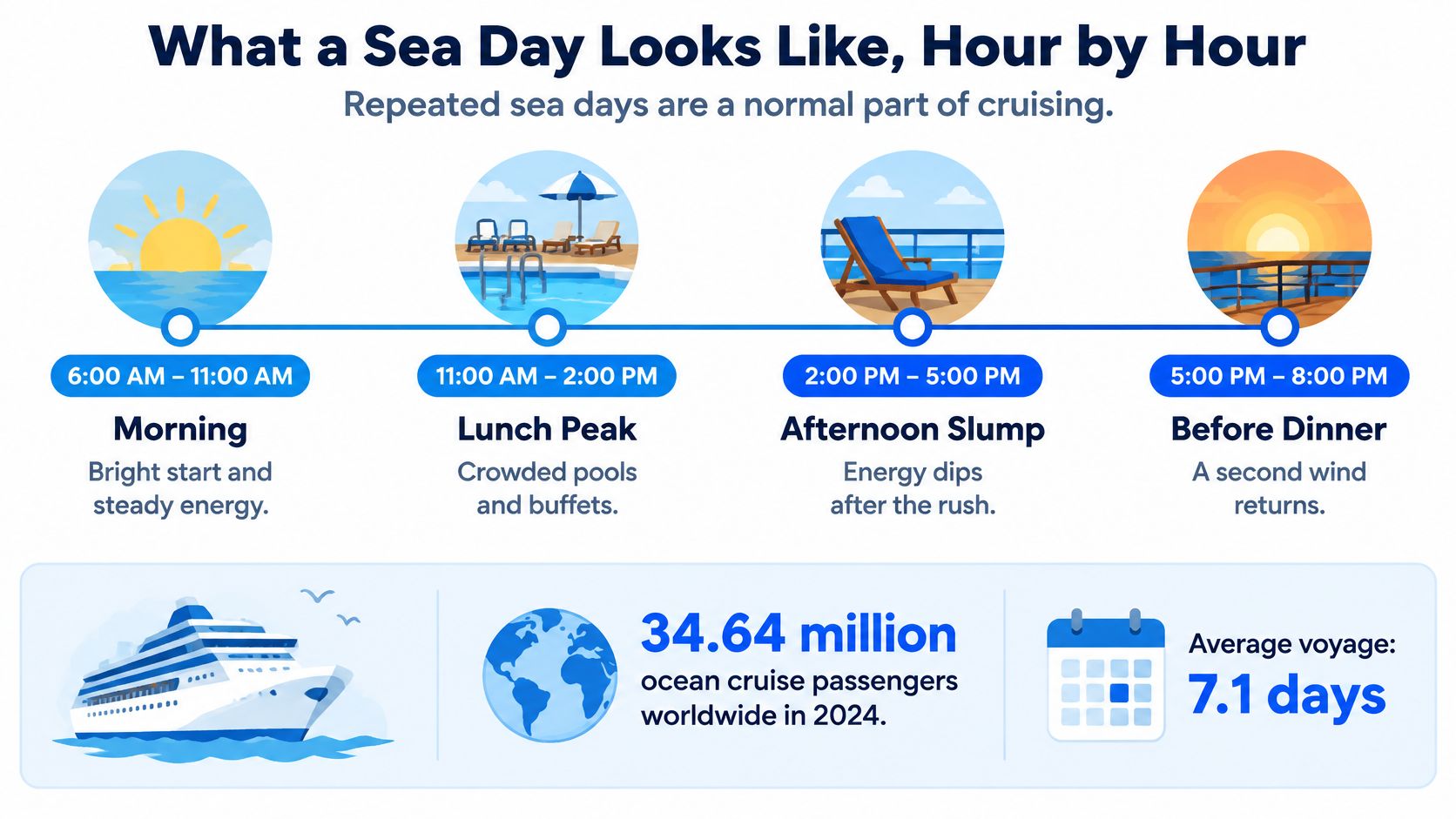
| Time block | What usually happens | Planning move |
|---|---|---|
| 7:00-10:00 | Breakfast, deck walk, first-come sessions | Eat before peak lines and claim sunny loungers early |
| 10:00-12:00 | Enrichment talks, trivia, pool laps | Book fixed-time events the night before |
| 12:00-14:00 | Lunch peak and crowded pools | Eat before the lunch peak, then leave the main deck |
| 14:00-17:00 | Rest, spa, or a quiet afternoon | Schedule one anchor activity, or protect a nap |
| 17:00-19:00 | Sunset and drinks | Use a forward or side deck, not the pool band |
| 19:00-22:00 | Dinner and main-stage shows | Arrive about 30 minutes early for show seats |
| Late night | Lounges, music, and games | Set a lights-out time to protect the next morning |
How to shift the default
A windy or rainy morning moves the 7:00 deck walk indoors. Use a covered promenade or the gym track, then take breakfast in the main dining room if it's open, because the buffet line stacks up once everyone abandons the pool. If a talk you wanted is full, don't hunt a replacement in the same hour. Keep the open block and use it for the cabin reset you'll want before evening.
A fully booked afternoon spa slot works the same way. Drop that anchor and keep the evening show. Two anchors are enough. One sits in the morning, one sits at night, and the middle stays available for weather, crowds, or a nap.
Pick two anchors for the sea day and leave the rest of the program unread until you actually want something.
Onboard Activities Worth Planning Around
A sea-day program can make every hour look spoken for, but each activity uses a different mix of time, energy, and money. Start with the cost of time, not the length of the program. Trivia, demos, tastings, and shows may overlap, and trying to fit them all in can leave little room to rest. Check the day's program for each activity's price and rules before making plans.
| Activity | Best for | Typical cost pattern | Act when |
|---|---|---|---|
| Pool and hot tubs | Relaxed sun-seekers | Included | Arrive before 10:00 for shade |
| Enrichment lectures and cooking demos | Curious, low-energy travelers | Often included, sometimes a small fee | Check the daily program the evening before |
| Trivia, games, and deck parties | Social travelers | Included | Sign up at the activity desk early |
| Spa and fitness | Recovery and self-care | Paid per treatment | Book sea-day slots at embarkation |
| Specialty dining | Special occasions | Paid surcharge | Reserve when you board |
| Main-stage shows | Evening entertainment | Included on many lines, some paid | Arrive about 30 minutes early for seats |
| Art auctions and shopping | Browsers and collectors | Paid purchases | Compare prices before the sale |
A family mix that works
For a toddler's sea day, morning pool time can be the high-energy activity, while the deck is still cool. An afternoon kids' club session gives adults a rest block, even if one parent stays nearby. Choose one evening show for a shared activity, with the option to leave if it runs long. This mix uses the ship without filling the day with paid events.
Build a different mix around the same three roles:
- One high-energy activity: A deck walk, a class, or pool time before the chairs fill.
- One restful activity: A lecture, a nap, or a quiet lounge with a view.
- One social activity: Trivia, a deck party, dinner, or a show.
“Included” does not mean it takes no planning. Pool shade goes early, so arriving later may mean giving up a shaded spot. Spa treatments and specialty dining require both money and a reservation; arrange them at embarkation rather than waiting until the day's plans are underway. Auctions and shops are optional spending. Compare a purchase with what you would pay at home, then decide whether you still want it after leaving the room.
Pacing and Scheduling Your Sea Day
A sea day works like a long flight without the seatbelt sign. You need a few fixed points, not a minute-by-minute plan. On a typical sea day, the energy curve follows the meal schedule. Morning is bright. After the lunch rush, pools and buffets are crowded and energy drops. A second wind shows up before dinner. Book the day like a port day, and you will spend the slump standing in lines.
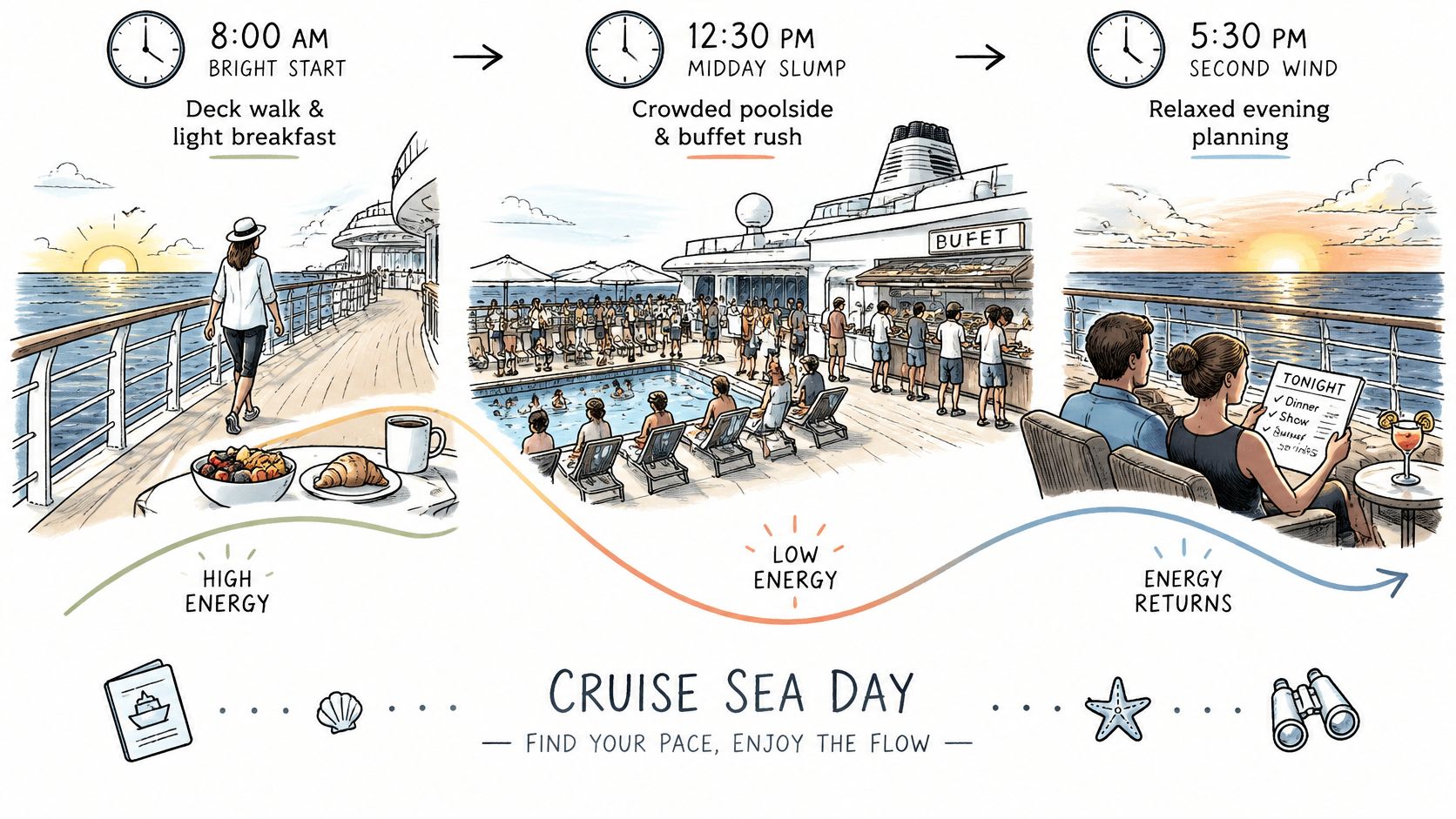
In a 2025 cruise trade survey, 57% of repeat cruisers said they value relaxing at sea during sailing days, while 56% of new-to-cruise travelers reported being not very or not at all knowledgeable about cabin types, according to the Cruise Trade News Industry Report 2025. That second number matters more than it looks. The cabin, not the activity list, is what makes or breaks a slow day. A longer itinerary turns the same small room into bedroom, dressing room, and storage for more days in a row. AAA reported that in 2025 most cruise itineraries were 6 to 8 days long. A trip that length usually holds one to three sea days. Planning them as a block is worth more than planning each hour.
Two anchors, then stop
Fix two anchors per sea day. One in the morning, one in the evening. Leave 14:00 to 17:00 flexible. The anchor is a reservation or a fixed opening time, not a whole activity block. This is the part first-timers miss: empty hours are not a failure of planning. They are the plan.
A couple who want a quiet day can book a 9:00 deck walk and a 19:30 show, then keep the afternoon open for a nap. On a seven-day cruise with two sea days, a workable load is one spa slot and one specialty dinner across those two days, plus one free morning. That is about five hours of structured time on a sea day. The rest stays open. Overbooking creates rushing. An empty program creates the "there's nothing to do" feeling. The middle is the target.
Three booking rules cover the anchors.
- Reserve scarce items at embarkation. Spa slots, specialty dining, and any show that needs a ticket go on the list before you unpack.
- Read the daily program the evening before. Talks and trivia move. A quick look at night beats a surprise at 10:00.
- Leave a 30-minute buffer between anything booked across the afternoon. The ship is long, elevators stack up, and a back-to-back pair will make you late.
Pools, buffets, and main lounges peak around lunch and again after 19:00. Open decks, the library, and forward corners are the reading seats. If the afternoon starts to feel like a chore, cancel one anchor and keep the other. That single trade keeps the day from turning into a forced march.
The walk-through below follows a relaxed sea day from breakfast through the evening show.
Cabin Comfort for Long Days at Sea
By midafternoon, a small cabin can feel warm and close, even when its thermostat looks reasonable. Comfort depends on air temperature, humidity, air speed, clothing, and what you're doing. A temperature reading alone cannot explain why a room feels stuffy.
Monitoring across nine environments on a large cruise ship recorded an average temperature of 22.3 ± 1.4°C and relative humidity of 68.2 ± 5.3%, slightly above ASHRAE and ISO target ranges, in work published by VTT. Carbon dioxide generally sat between 400 and 1,200 ppm, and estimated cabin ventilation exceeded 20 L/s per person, above a 10 L/s minimum the study treated as acceptable for comfort and disease-control considerations. Stuffiness can come from humidity, bedding, two people sharing a small room, sun on the glass, or a still corner. It does not automatically mean the ship is failing to bring in fresh air.
Ship-cabin airflow research places comfortable cabin temperatures around 24–29°C and recommends local air speed below 0.5 m/s to avoid an uncomfortable draft. Aim a breeze across the bed or sofa rather than directly at your face, and keep supply and return vents clear.
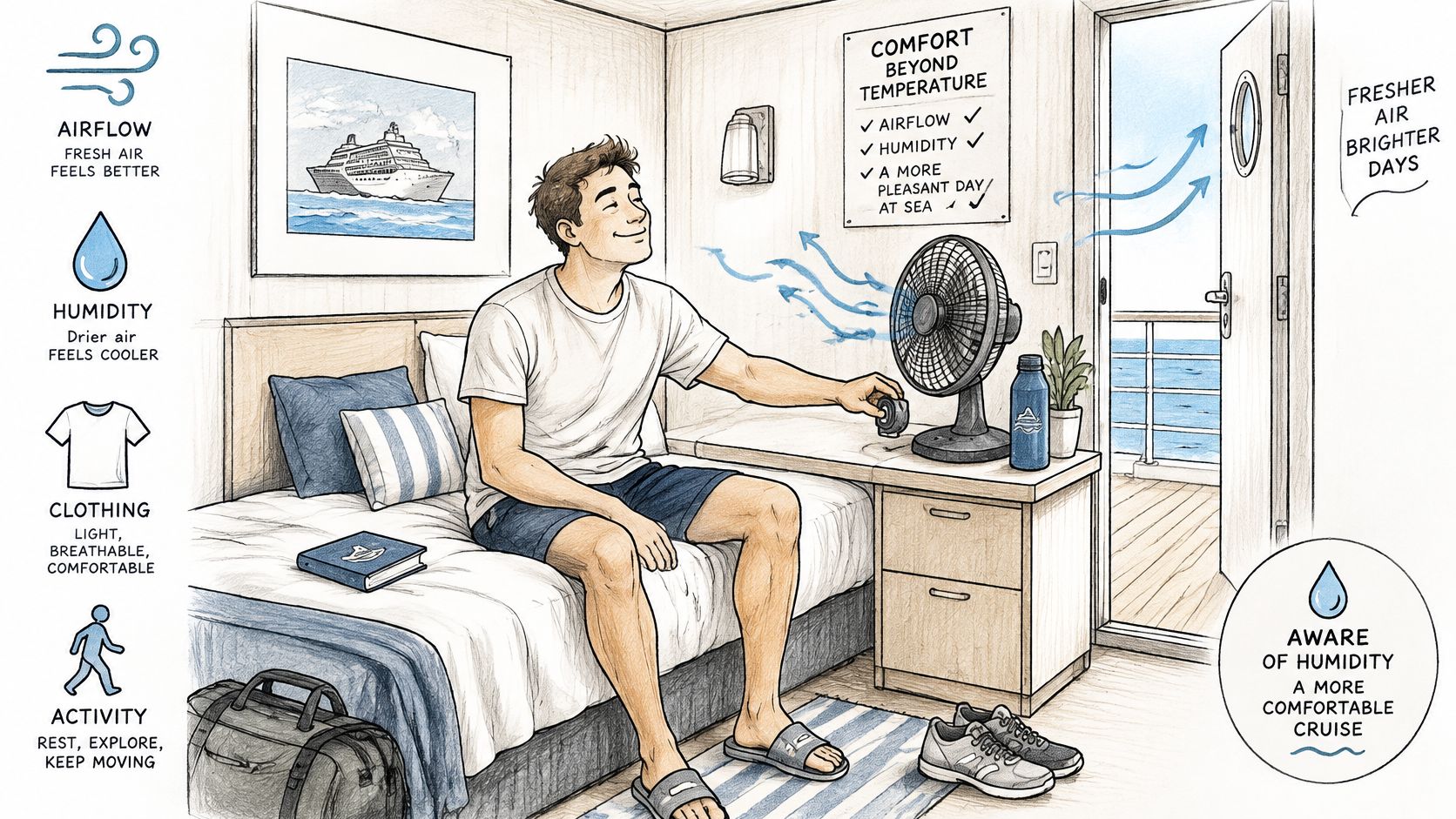
Four fixes, in the order you'll use them
Start with airflow. A Magnetic Fan for Cruise Ship Cabin has multi-speed control and mounts magnetically on metal surfaces, such as a stateroom wall or ceiling, without taking up nightstand space. The fan is approved for use on cruise ships. Set it low and direct the breeze across the sleeper.
Next, clear the counter. A magnetic organizer keeps toiletries, sunglasses, documents, and chargers together on the wall. In a shared cabin, vertical storage frees up surfaces both people need. For more ideas on arranging a compact room, see this stateroom setup guide.
Third, make nighttime trips easier. A rechargeable magnetic night light near the bathroom doorway helps you cross the cabin without switching on the overhead lights. That can be useful after an evening show when someone else is asleep.
Last, give wet swimwear somewhere to hang. A magnetic clothesline keeps swimwear and a light towel off the bed and the chair you use. Place cabin items high enough to keep the floor clear for luggage, while leaving vents unobstructed.
A low fan and a clear path to the bathroom can make the cabin more comfortable later in the day.
After pool time, rinse and hang swimwear, lower the fan, and put the organizer back in order before getting dressed for the evening. The afternoon gap is a practical time for that reset. Leaving wet fabric on the bedding can make the cabin less comfortable when you return.
Motion Comfort and Seasickness Prevention
Motion sickness is a sensory mismatch. Your eyes may see a steady cabin while your inner ear feels pitch and roll.
A clinical review reports that up to 25% of passengers on a large ship may develop motion sickness within the first 2–3 days of an ocean voyage, with higher incidence on smaller vessels and in rough weather, as summarized in this clinical review of motion sickness. Risk sits up front, before you've adapted. Treat the first sea day as the time to act, not the time to wait and see.
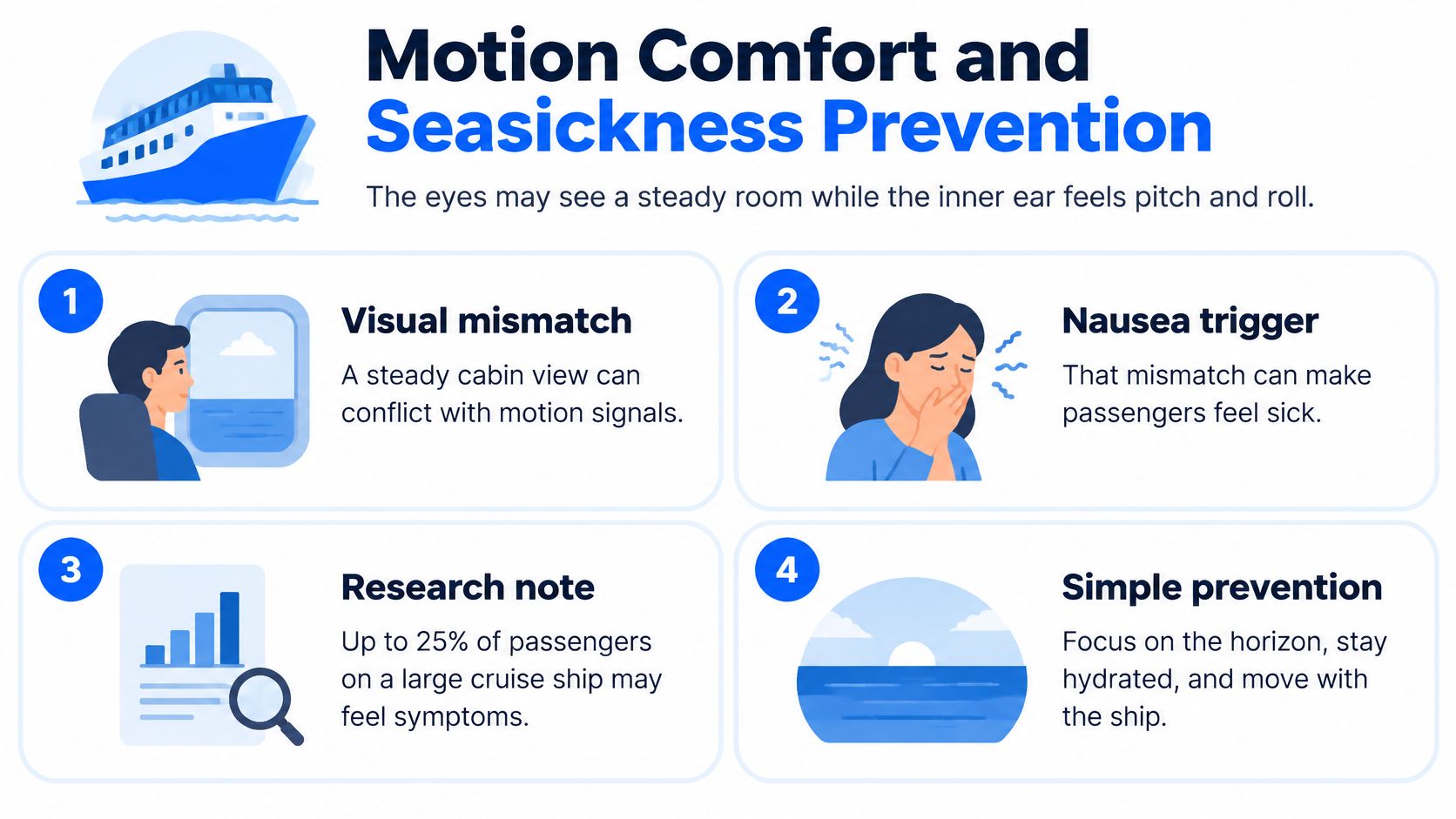
| Timing | Measure | Why it helps |
|---|---|---|
| Before boarding | Choose a lower, central cabin where possible | Less vertical movement than high or forward cabins |
| First 2-3 sea days | Take a preventive remedy before motion is expected | Symptoms are most common while the body adapts |
| Rough-sea day | Keep a fixed horizon in view and avoid reading | Reduces the conflict between eyes and inner ear |
| Symptoms starting | Get fresh air, sip water, rest in a stable spot | Early action may limit severity |
| Severe symptoms or dehydration | Contact ship medical staff promptly | Fluid loss and fainting need professional care |
What to watch, and what no remedy promises
Pale skin, a cold sweat, yawning, and dizziness usually show up before vomiting. Step outside, face the horizon, and skip the book and the phone. Screen use makes the mismatch worse because the page stays still while the ship doesn't.
Get help from the ship's medical staff if vomiting stops you from keeping fluids down, or if you faint, have chest pain, or become confused. Those aren't "wait until dinner" problems.
No measure guarantees you won't feel it. The aim is lower severity so you can still make an excursion, hear a safety drill, and sleep. Sea Sickness Patches for Cruise are a non-drowsy option some travelers use when they want to stay alert. Each box includes 12 patches, they're waterproof, and they're made for cruises as well as cars, flights, trains, and ferries. Apply one before you expect motion. Read the label, and talk with a doctor if you already take other medicines. A fuller timing guide is in how to prevent seasickness on a cruise.
Indoor Health and Hygiene on Sea Days
Rain starts after lunch, the pool deck empties, and the nearest lounge fills. Chairs sit close. Trays pass from hand to hand. That indoor stretch is still a sea day, and it is also the hour when shared surfaces and tight seating pile up.
A 2025 review of cruise health patterns notes that passenger volume reached 37.2 million in 2025, 25% above the 2019 baseline, while CDC Vessel Sanitation Program outbreak counts rose from 10 in 2019 to 23 in 2025, and the reported outbreak rate increased from 0.34 to 0.62 per million passengers, as detailed in this MDPI review of cruise outbreaks and onboard air. The same review describes continuous indoor-air monitoring that found generally acceptable carbon dioxide across most ship areas, with higher levels in heavily used dining rooms. Those figures describe reported outbreaks; they do not estimate your personal risk. They point to close contact and busy dining rooms.
Five habits that lower exposure
Wash before you eat. Use soap and water before a buffet, and again after shared rails, lift buttons, and door handles.
Use the sanitizer at the dining-room door. Hands meet trays, serving spoons, and chair backs in the same minute.
Shift the hour. Use the quieter slots already set out in the hour-by-hour table, and pick a smaller lounge once rain has filled the main room.
Carry your own water bottle. Skip shared cups, and skip trading utensils for a taste.
Call medical early. If vomiting or diarrhea starts, tell the ship's medical staff and follow their instructions instead of sitting it out in a lounge.
An indoor afternoon is a fair trade when the weather is poor. Split a show, a meal, and a crowded demo across separate hours so you are not in three full rooms back to back. Leave a quiet cabin stretch between the lounge and dinner. That keeps the day's energy for the evening instead of spending it all in one crowded room, while you stay on the ship with lower exposure.
Packing and Pre-Sail Checklist
The night before you sail, your cabin gear is either in the carry-on or buried in the big suitcase. Pack for the cabin you booked, based on its size and layout. Check your line's packing note for medication, power strips, and small appliances before boarding, since each line sets its own rules. A good sea-day bag handles airflow, clutter, night walking, wet clothes, and motion, and it fits the space you have.
| Category | Items to pack | Why it matters on sea days |
|---|---|---|
| Cabin comfort | Compact cruise fan and a charger or spare batteries | Stuffy air builds up over long days in the cabin |
| Storage | Magnetic organizer and zip pouches | Counter space is limited in shared cabins |
| Night navigation | Rechargeable night light | Lets you move at night without bright overhead lights |
| Drying | Compact clothesline, clips, and quick-dry swimwear | Wet swimwear otherwise ends up on chairs and beds |
| Motion comfort | Tested seasickness remedy and fresh-air plan | Motion is easier to handle before symptoms build |
| Documents and medication | Passport copies, insurance details, and prescription list in a sealed pouch | Needed for medical or lost-item situations |
| Lazy-day comfort | Light layers, wide-brim hat, and reef-safe sunscreen | Deck temperature and sun change quickly |
| Entertainment | Downloaded books, shows, and playlists | Onboard internet is often slow and paid |
Treat the table as a packing map. Start with the items you will use between your two daily anchors. If you have not tried your motion remedy on a shorter trip, do not make the first sea day the test.
One bag, then six steps before you sail
Do a one-bag test the night you pack. Can the gear for a pool day fit in one tote? Fan or its charger, swimsuit, hat, sunscreen, a zip pouch, and the motion remedy. If it does not fit, the cabin will be a pile by the second afternoon.
- Mark the quiet ship. On the deck plan, circle a covered walk, a forward lounge, and one indoor seat that isn't the buffet.
- Name two anchors for each sea day. Write the time, not just the activity.
- Pack the cabin gear in the carry-on, not the big suitcase. You want it on night one.
- Pack the motion remedy where you can reach it without unpacking.
- Download offline entertainment before you lose home wifi. Paid ship internet is a poor backup for a rest afternoon.
- Save each sea day's program once it's posted, and star only the two anchors.
A fuller room-by-room list sits in this cruise ship packing list. The one decision that matters most is small. Choose the two anchor activities for sea day one before you leave home. Everything else can wait until you are onboard and you know how the ship feels.
Nordmoose sells compact cabin gear for warm rooms, tight counters, night walks, wet swimwear, and motion on sea days, including magnetic fans, organizers, night lights, clotheslines, and non-drowsy patches. If you are packing for a first voyage or a longer sailing, start with the pieces that keep the cabin usable between your two anchors. Visit Nordmoose to see the cruise essentials and choose what fits your stateroom before you sail.