

State Room Cruise Guide: What to Expect and How to Choose
You tap your card key against the reader, hear the lock click, and push open the door to your first cruise stateroom. The hallway hum fades behind you, replaced by the scent of fresh linen, a sealed window or dark wall, a compact closet, and the quiet awareness that the cabin is smaller than a typical hotel room. Excitement arrives first, followed closely by practical questions: Where will the luggage go? Will two people be able to move around? Where will wet swimwear dry, and how will you find the bathroom at night?
A successful state room cruise experience begins before embarkation. The category you choose, the location on the ship, and the way you arrange the cabin all shape daily comfort. This guide walks through the terminology, cabin types, functional layout, air and light conditions, and a practical setup routine. The aim isn't to treat the stateroom as a storage box. It's a small living space that needs to support sleeping, dressing, charging, relaxing, and moving safely while the ship is underway.
Table of Contents
- Stepping Into Your First State Room Cruise
- What a State Room Actually Means on a Cruise Ship
- Cabin Categories Compared Side by Side
- Inside the Cabin Layout and Daily Living Zones
- Climate, Air, and Light How Cabins Actually Feel
- Choosing and Setting Up a Comfortable Cabin Before You Sail
- Quick Packing and Setup Checklist
- Rethinking the State Room as a Feature Not a Footnote
Stepping Into Your First State Room Cruise
Your first few minutes reveal the cabin's basic logic. The entrance usually opens toward the closet and bathroom, while the sleeping and sitting areas occupy the main room. A window, porthole, or balcony door defines one wall, and the remaining surfaces hold the bed, desk, drawers, and fixed furniture.
Cruise cabins are compact by design. An industry overview describes some staterooms as small as 100 square feet, with most under 250 square feet, compared with a U.S. hotel-room average of roughly 350 to 450 square feet. This historical overview of cruise-ship accommodations helps explain why cruise rooms rely so heavily on built-in storage, compact fixtures, and furniture that serves more than one purpose.
Start with a slow inspection rather than unpacking immediately.
- Find the walking route: Identify the clear path from the door to the bed and bathroom.
- Locate every storage area: Open drawers, inspect the closet, and check the space beneath the bed.
- Test the lighting: Notice which switches control the ceiling light, bedside fixtures, and bathroom.
- Check the air controls: Find the thermostat or vent and see how airflow reaches the bed.
- Look at the floor: Decide where luggage can stand temporarily without blocking a doorway or walkway.
That first survey prevents a common mistake. Travelers often leave bags, shoes, chargers, and toiletries wherever they first set them down, then spend the rest of the voyage stepping around those decisions. A stateroom works better when each object has a zone from the beginning.
Practical rule: Keep the floor for walking and luggage staging only. Use drawers, closet shelves, wall space, and the under-bed area for everything else.
Your experience will also depend on what you booked. An inside cabin may feel dark but calm, an ocean-view room may add daylight without outdoor seating, and a balcony can create a private place to sit while leaving the indoor floor plan surprisingly compact. The category is only the starting point. The usable space you create after arrival matters just as much.
What a State Room Actually Means on a Cruise Ship
The term state room, also written stateroom, began as a maritime expression for a designated private chamber used by officers or passengers. Cruise lines kept the language as ships became floating resorts, so today “stateroom” usually means the private accommodation assigned to a guest.
On booking pages, you may also see cabin, inside cabin, ocean-view cabin, verandah, or suite. These labels can vary by cruise line, but the basic idea remains consistent: the stateroom is your private sleeping and living area aboard the ship. The term doesn't tell you the exact size, layout, or quality of the view.
A cruise stateroom differs from a hotel room in several practical ways. Furniture is often fixed in place, with rounded edges and fixtures designed to remain secure as the ship moves. The bed configuration may be narrower, the bathroom commonly uses a compact shower instead of a bathtub, and the window or porthole may be sealed rather than operable.
Why the room feels different from a hotel
A hotel room usually gives you spare floor area for open luggage, a larger bathroom footprint, and furniture that can be shifted slightly to suit your routine. A cruise cabin has to preserve walking clearances, accommodate ship systems, and fit within the vessel's structure. Even the bathroom reflects that constraint, with a small counter, a compact shower, and storage positioned for quick access rather than spacious preparation.
The industry description of cruise cabins as “hotel rooms in miniature” remains useful because it captures both sides of the experience. You receive the familiar functions of a hotel room, but each one is compressed into a carefully planned footprint. The cruise-accommodation guide also describes how balcony-focused design has made the stateroom a more valuable part of the cruise product.
A booking screen tells you what the room is called. The deck plan tells you how you'll live in it.
Use that distinction whenever you compare cabins. Read the listed square footage, check whether the balcony is included in the total, inspect the furniture diagram, and study neighboring public areas. A state room cruise booking becomes much easier once you treat the room name as a category label, not a complete description.
Cabin Categories Compared Side by Side
Most cruise lines organize staterooms into four broad groups: inside, oceanview, balcony, and suite. The names may change slightly, such as Interior, Verandah, or Mini-Suite, but the underlying trade-off stays familiar. You're balancing privacy, natural light, outdoor access, interior room, and price.
The figures below should be treated as orientation rather than a promise for every ship. Verified ship specifications show how much layouts can vary. For example, an MSC Virtuosa technical sheet lists interior rooms at about 182 square feet, standard staterooms around 269 square feet, and balcony layouts at roughly 236 to 301 square feet in total. The MSC Virtuosa technical sheet demonstrates why the deck plan matters more than a category label alone.
Cruise State Room Categories at a Glance
| Category | Typical Size (sq ft) | View | Key Trade-off |
|---|---|---|---|
| Inside | About 158 to 205 | No outside view | Often the most efficient choice, but it can feel dark and offers no natural daylight |
| Oceanview | Varies by ship and class | Porthole or window | Adds daylight and a visual connection to the sea without private outdoor space |
| Balcony | About 236 to 301 total in one modern-ship example | Private veranda or balcony | Outdoor access improves the experience, but the interior room may remain compact |
| Suite | Varies widely, generally larger than standard categories | Expanded view and often outdoor access | More space and separation, with a higher booking commitment |
The inside category can suit travelers who spend most of the day exploring the ship and ports. It may also help people who sleep best in a dark room. The drawback appears during ordinary routines, when you want to know whether it's morning, raining, or approaching land without leaving the cabin.
An oceanview cabin solves the daylight problem, but it doesn't necessarily create more usable floor space. A balcony can change the feel of the voyage because you can step outside for coffee or fresh air, yet a balcony-heavy ship may still place you in a tightly planned interior room. One independent industry guide says balconies account for about 60% to 70% of inventory on modern cruise-ship builds, while Celebrity Reflection is reported to have private verandas on 85% of its 1,523 staterooms. This cruise-industry accommodations guide puts that design shift into context.
Before selecting, compare the room's shape, bed position, closet location, and balcony depth. A larger interior cabin can feel easier to use than a smaller balcony cabin if your priority is dressing, unpacking, or sharing the space with another traveler. For a broader look at how cruise-room measurements vary, review this guide to cruise ship cabin sizes.
Inside the Cabin Layout and Daily Living Zones
A practical stateroom map has four working zones: sleeping, bathroom, storage, and window or balcony. Thinking in zones gives you a better plan than treating every empty surface as available space.
The sleeping zone
Beds commonly sit along the longer wall, often oriented with the ship's structure rather than across the main walking route. Keep the area around the bed clear, especially near the path to the bathroom. If the beds can separate into twins, decide early whether that arrangement helps movement or creates an awkward central gap.
Place phones, reading glasses, and water in the bedside storage. Loose objects on the desk or floor become nighttime obstacles when the cabin is dark or the ship is moving.
The bathroom and storage zones
The bathroom is compact by necessity. Many cabins use a shower-only stall with a curved enclosure or curtain, a toilet connected to the ship's vacuum system, and a counter sized for a small toiletry tray. Hang robes or lightweight items from approved hooks, keep toiletries together, and avoid turning the counter into a permanent pile.
Storage usually begins near the entrance, where the closet and drawers can hold clothing and daily gear. Put suitcases under the bed after unpacking. That single decision protects the walkway, improves dressing space, and keeps the luggage from interfering with the door swing.
Use vertical surfaces for items you reach throughout the day. A Magnetic Cruise Door Organizer uses magnetic attachment on compatible metal cabin walls or doors and provides 15 mesh pockets, each measuring 7.5 by 10 inches, according to the product snapshot. It can hold toiletries, shoes, sunscreen, chargers, or small family items without adding a floor-standing container.
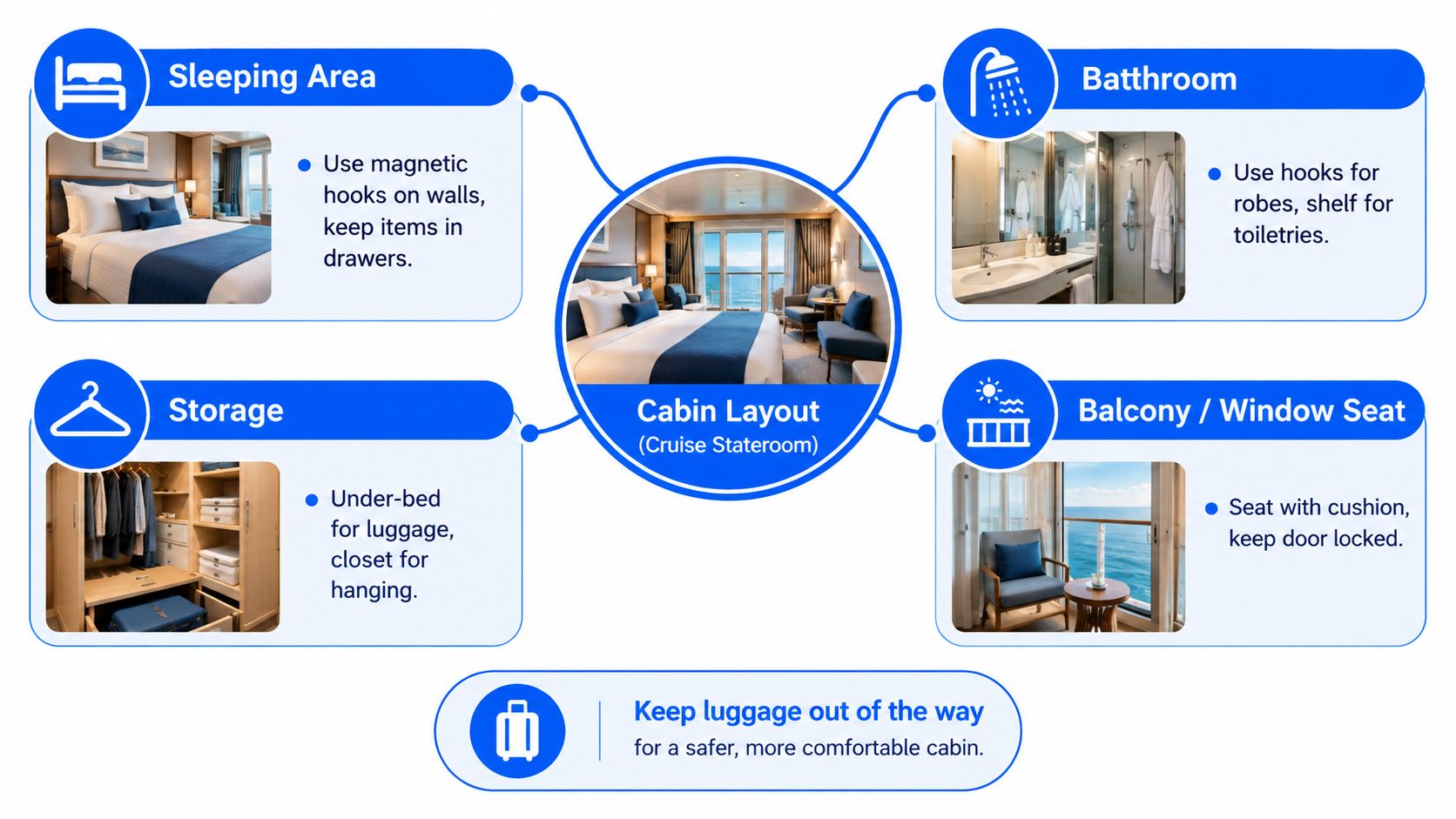
The small-space storage guide offers a useful principle: assign each item to a vertical, drawer, closet, or under-bed location before the cabin becomes cluttered.
The balcony or window zone needs its own habits. Keep the balcony door secured, don't leave loose objects outside, and remember that stepping outdoors on a moving ship is different from stepping onto a hotel patio. A cushion, book, or drink belongs where it can't slide or blow away.
Climate, Air, and Light How Cabins Actually Feel
A cruise stateroom arrives with three comfort systems already installed: air conditioning, lighting, and bedding. They cover the basics, but they don't always match every traveler's preferences.
Research measuring indoor air on a large sailing cruise ship recorded cabin ventilation rates of about 35.5 to 69 liters per second per person and described the measured cabins as over-ventilated. The indoor-air-quality study_2024.pdf) also supports a practical observation: conditioned ship air can feel cool and dry, so comfort may depend on localized airflow rather than the central setting alone.
Cabin Comfort Systems and Their Limits
| System | What the Ship Provides | Common Limitation |
|---|---|---|
| HVAC | Central conditioned air and a cabin control or vent | Airflow may feel uneven, cool, or dry at the bed |
| Lighting | Ceiling fixtures, bedside lights, and bathroom lighting | One bright switch may be too harsh for nighttime movement |
| Bedding | Fixed or convertible beds with standard linens | Partners may prefer different temperatures, light levels, or sleep conditions |
Start with the thermostat and vent direction. If the air hits one side of the bed, rearrange personal items and sleeping positions before adding equipment. A compact rechargeable fan can create more direct airflow without taking up the desk or nightstand.
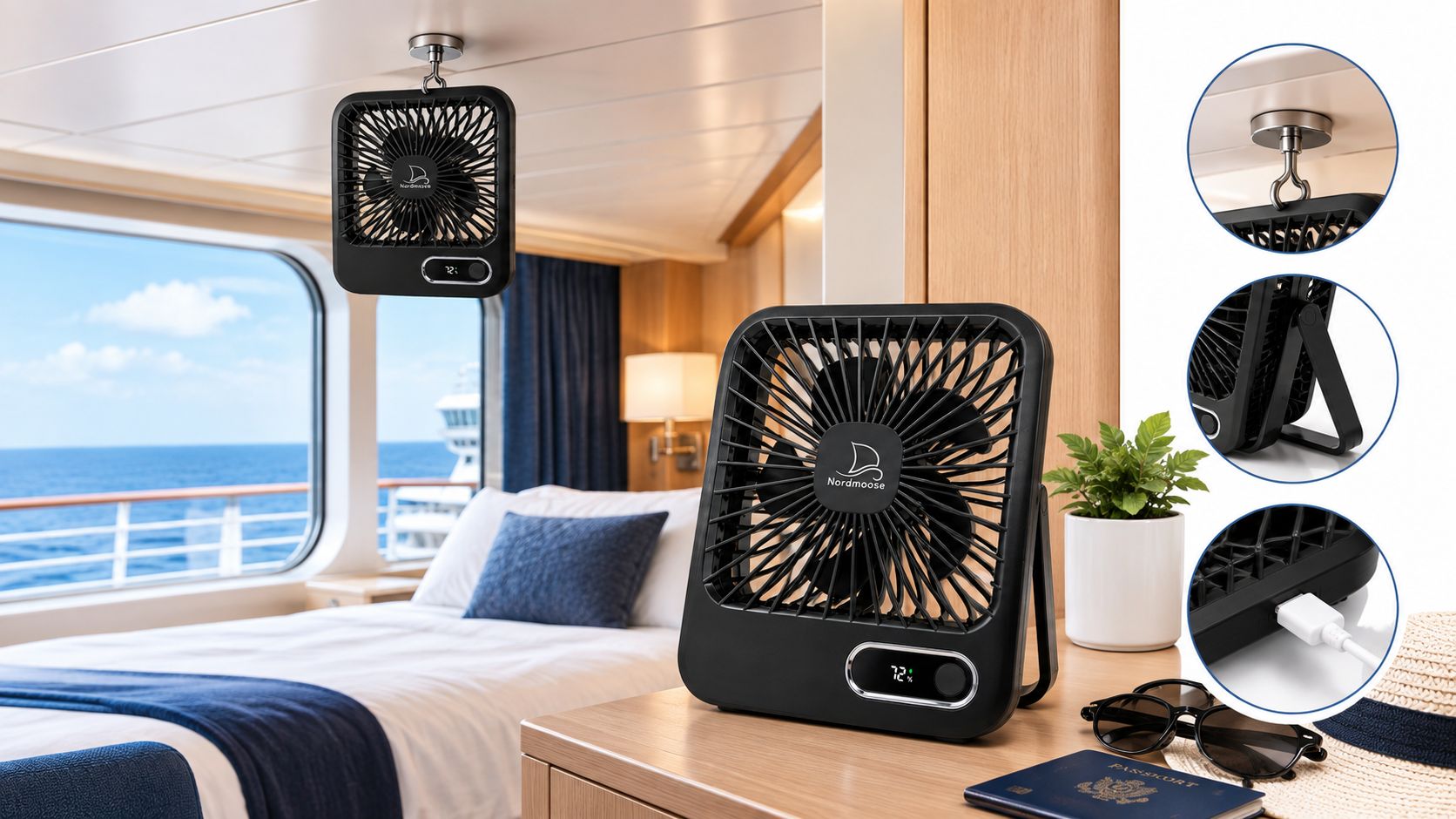
The Rechargeable Cruise Fan with Magnetic Hook to Hang on Cruise Walls & Ceilings is described as a portable, battery-powered cabin fan with a magnetic hook, compact packing format, and selected models offering timers and multiple speeds. Check your cruise line's current safety rules before sailing, then place any approved device where it won't obstruct the walkway or bed.
Night lighting creates a different problem. Interior cabins can be extremely dark, which helps some people sleep but makes a bathroom trip harder. A rechargeable night light can provide a softer route marker than switching on the overhead light, especially when two people share the room.
Blackout curtains, where provided, may not close perfectly at the edges. Test them on the first evening and use the room's existing arrangement before adding anything that could damage surfaces or violate onboard rules. Comfort comes from small adjustments, not from filling the cabin with equipment.
Choosing and Setting Up a Comfortable Cabin Before You Sail
The most effective cabin improvements begin during booking and packing. Once you're onboard, the room's walls, furniture positions, outlets, and storage limits are already fixed. A pre-trip plan lets you match each item to a specific problem instead of buying random accessories that compete for the same small surfaces.
Start with the cabin itself. Check the deck plan for the bed position, bathroom entrance, balcony or window location, and nearby public spaces. If sleep matters most, consider the room's relationship to elevators, entertainment venues, pools, and service areas. If motion concerns you, compare forward, aft, and midship locations with the ship's deck plan rather than choosing by category alone.
Then pack compact solutions for the zones you identified:
- Wall storage: A magnetic hook strip can keep hats, bags, or light clothing off the floor. The supplied example uses a $15 strip to create instant storage on the cabin's metal wall, but verify the product and cruise-line rules before sailing.
- Personal airflow: A rechargeable fan can sit on a nightstand or attach to a compatible metal surface, leaving the desk available for charging and morning coffee.
- Night navigation: A rechargeable motion-friendly light can reduce the need for a bright ceiling fixture when one person gets up.
- Small-item control: A compact organizer can group chargers, toiletries, sunglasses, and documents so they don't spread across the vanity.
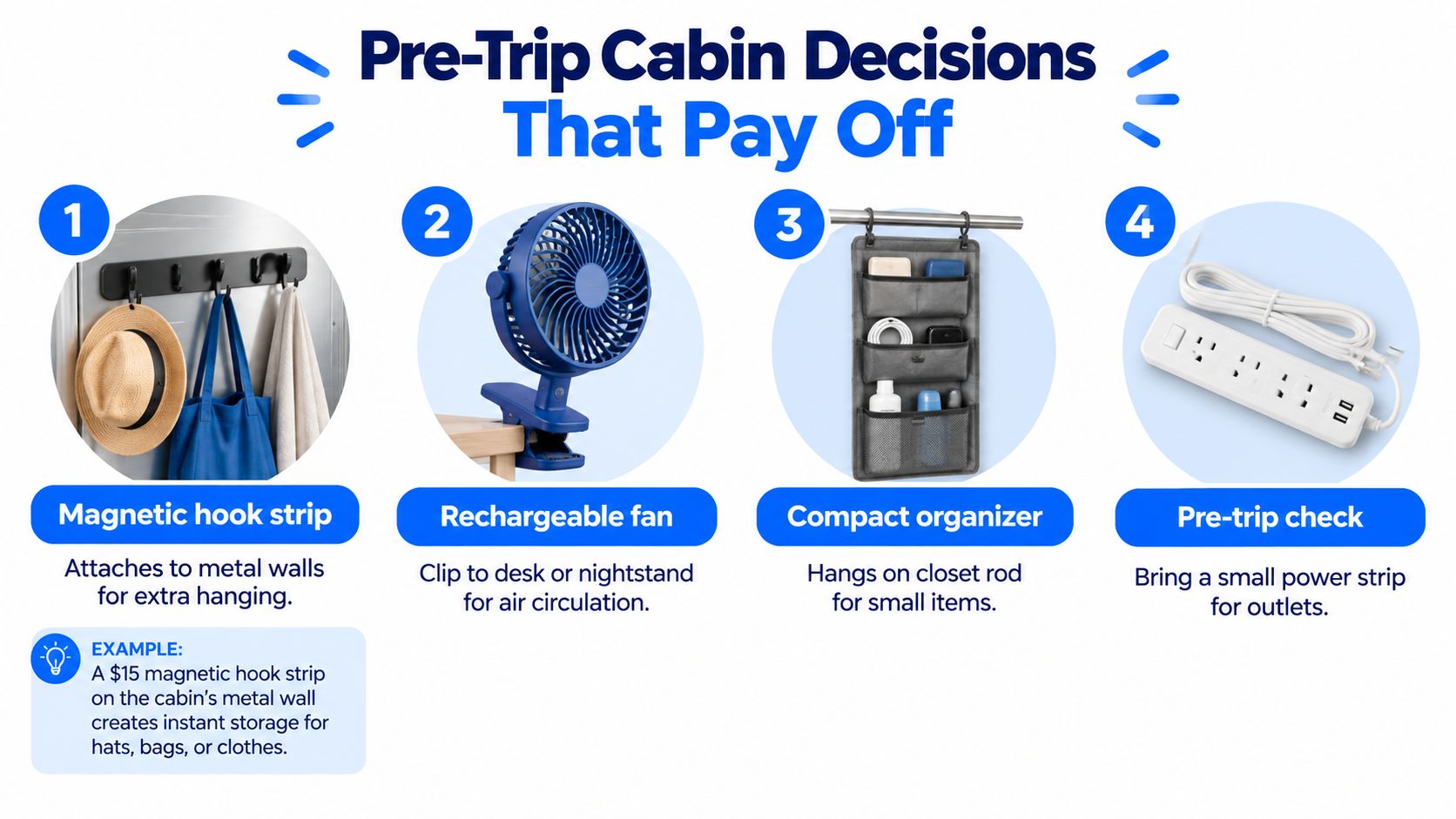
Power deserves special attention. Cruise cabins may have limited outlets, so bring only a compliant, compact power solution and check the line's prohibited-item policy. Don't assume that a household surge protector or extension cord is permitted. A device that solves charging but creates a safety issue isn't a useful cabin upgrade.
Before using magnetic products, test whether the intended surface is metal and keep magnets away from sensitive devices. Before using hooks, organizers, fans, or lights, confirm that they won't block emergency equipment, door operation, vents, or housekeeping access. The goal is a flexible room, not a crowded one.
Quick Packing and Setup Checklist
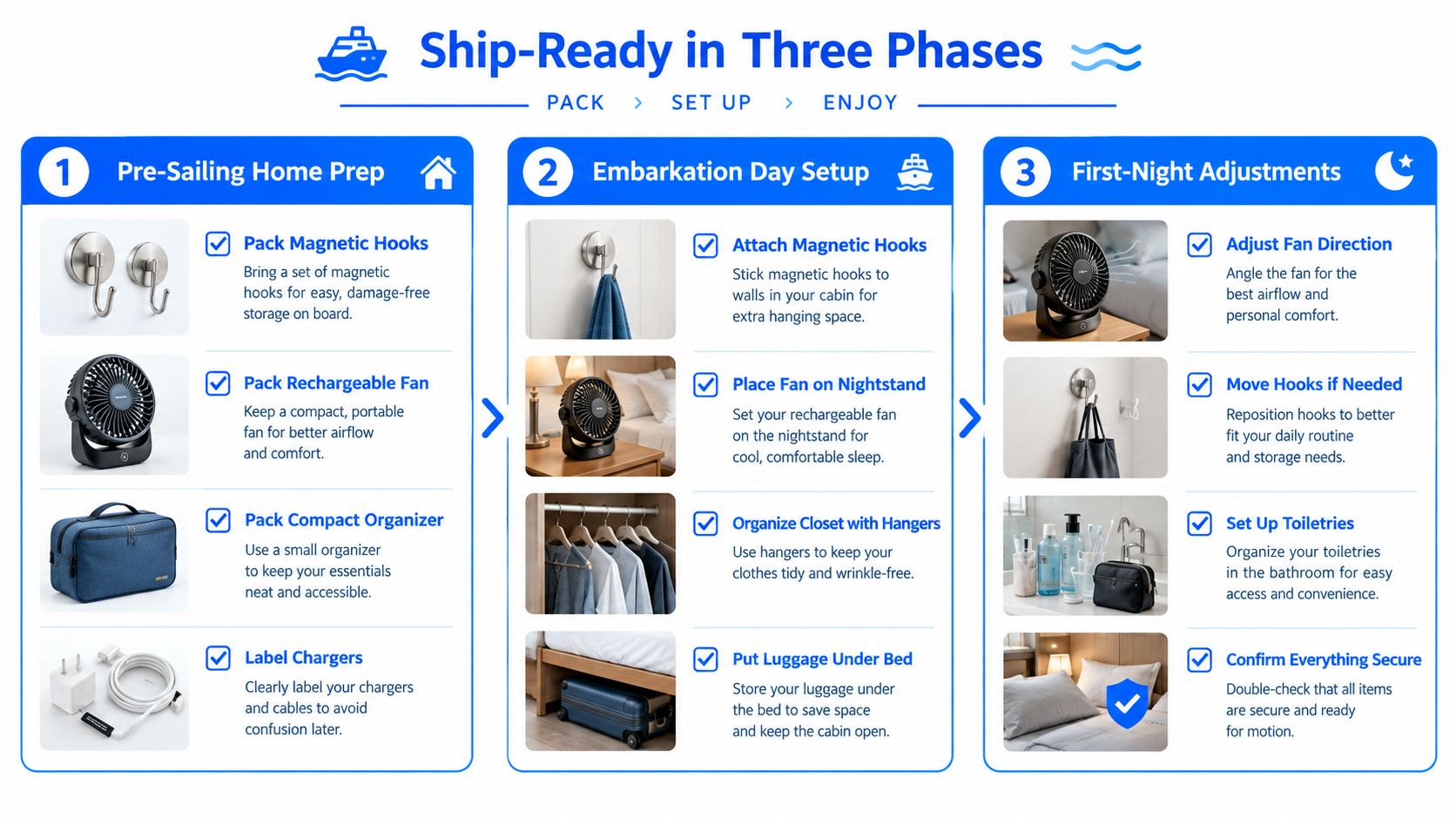
Use three phases so the cabin feels organized before the first full day at sea. Pack for the space you have, not the space you wish you had.
Phase one at home
- Pack magnetic hooks: Choose light items for hanging, such as hats, lanyards, or a small bag.
- Charge rechargeable devices: Fully charge fans and lights, then label the correct cables.
- Bring a compact organizer: Use it for toiletries, shoes, chargers, or children's small items.
- Check power rules: Review your cruise line's prohibited-item list before packing a power strip or charger.
- Pack a small sound solution: A compact white-noise device may help soften hallway sounds, but keep the volume low and follow ship guidance.
Phase two on embarkation day
- Clear the entrance: Leave only the items you'll need before the luggage arrives.
- Inspect the room: Open every drawer, check the closet, and locate the under-bed storage.
- Attach storage carefully: Place magnetic hooks or organizers where they won't interfere with doors, vents, or fixtures.
- Set the airflow device: Put the rechargeable fan on a stable surface or an approved compatible wall location.
- Unpack by zone: Put clothes in the closet or drawers, toiletries in the bathroom, and bags under the bed.
Phase three on the first night
Give yourself a short setup routine before dinner. Walk the floor path, secure loose objects, place nighttime items beside the bed, arrange toiletries, test the bathroom light, and adjust the fan direction or thermostat. If something feels awkward, move it immediately rather than accepting a minor irritation for the whole voyage.
For shared cabins, agree on the sleeping side, charging location, bathroom shelf, and luggage space. That conversation takes little time and prevents one person from claiming every usable surface by accident.
Rethinking the State Room as a Feature Not a Footnote
A well-chosen cabin changes the rhythm of the cruise in quiet ways. You wake without searching through luggage, find your charger where you left it, reach the bathroom without turning on a harsh light, and have somewhere to sit with coffee if you selected a balcony. None of those benefits comes from square footage alone.
The booking decision and the setup decision belong together. An inside cabin may be the right choice if darkness supports sleep and you spend little daytime in the room. An oceanview cabin may solve the need for daylight without requiring balcony furniture. A balcony cabin may give you a private outdoor pause, but it still needs careful storage planning because the indoor footprint can remain limited.
Layout beats the headline number
Two cabins with similar listed dimensions can feel different because of the door position, bed orientation, closet access, furniture shape, and whether the balcony is counted in the published total. Recent cabin-size guidance also points out that interior staterooms on major cruise lines can range from roughly 158 to 205 square feet, while balcony and suite layouts vary much more widely by ship and class. This cabin-size overview is useful when a booking screen makes two rooms appear interchangeable.
The same principle applies to comfort. Airflow, darkness, sound, wet clothing, and charging all become easier when you decide where each item belongs before the room fills up. A compact organizer can preserve the vanity, a fan can direct air toward the bed, and a low-glare light can protect both sleep and safe movement.
Future cruise cabins may continue toward more modular furniture and app-controlled climate, but passengers will still need to understand the physical space. Technology can adjust a setting. It can't decide where your luggage should go or whether a charger is blocking the bathroom path.
Treat the stateroom as part of the itinerary, not a footnote beneath dining and excursions. Choose the layout that fits your habits, then configure the room so every essential action has a clear place.
Nordmoose offers magnetic organizers, rechargeable cabin fans, and other compact cruise accessories designed around limited storage, metal surfaces, airflow, and nighttime navigation. Visit Nordmoose before you sail to match your cabin category and setup plan with practical gear for the space you'll use.