

10 Cruise Packing Ideas for Smarter Cabin Storage
Luggage finally arrives, but the cabin doesn't feel ready for a holiday. The room is warm, the bathroom counter has disappeared beneath toiletries, and your wet swimwear is draped over a chair because there's nowhere else to put it. Once both suitcases are open, moving around the stateroom becomes an exercise in stepping over belongings.
The best cruise packing ideas aren't about adding more products to your luggage. They're compact systems that improve airflow, use vertical space, make dark cabins easier to move around in, keep wet clothing under control, protect medication, and prevent one oversized suitcase from taking over the room. That matters because cruise cabins can be much smaller than many hotel rooms. One widely cited cabin overview places the average inside cabin at 167 square feet, with some standard cabins measuring only 85 to 100 square feet according to this cruise-cabin overview.
The ten ideas below address the cabin problems travelers notice, from heat and motion to luggage delivery and outfit planning. You'll also find a practical way to adapt your packing system for 3-day, 7-day, 10-day, and 14-day cruises. Check your cruise line's current rules before departure, and confirm medication choices and storage requirements with your healthcare professional.
Table of Contents
- 1. Magnetic Cabin Fans for Enhanced Airflow
- 2. Vertical Magnetic Organizers for Cabin Storage
- 3. Non-Drowsy Seasickness Patches for Extended Travel
- 4. Rechargeable Magnetic Night Lights for Safe Cabin Navigation
- 5. Compact Magnetic Clotheslines for Wet Garment Drying
- 6. Pre-Cruise Digital Packing Checklists and Organization Systems
- 7. RFID and GPS-Enabled Smart Luggage Tags for Lost Bag Recovery
- 8. Compression Packing Cubes and Roll-Based Garment Organization
- 9. Versatile Lightweight Clothing Built for Warm Cabin Environments
- 10. Medication and Supplement Organization with Waterproof Accessibility
- Top 10 Cruise Packing Comparison
- Turn the List Into a Trip-Specific Packing Plan
1. Magnetic Cabin Fans for Enhanced Airflow
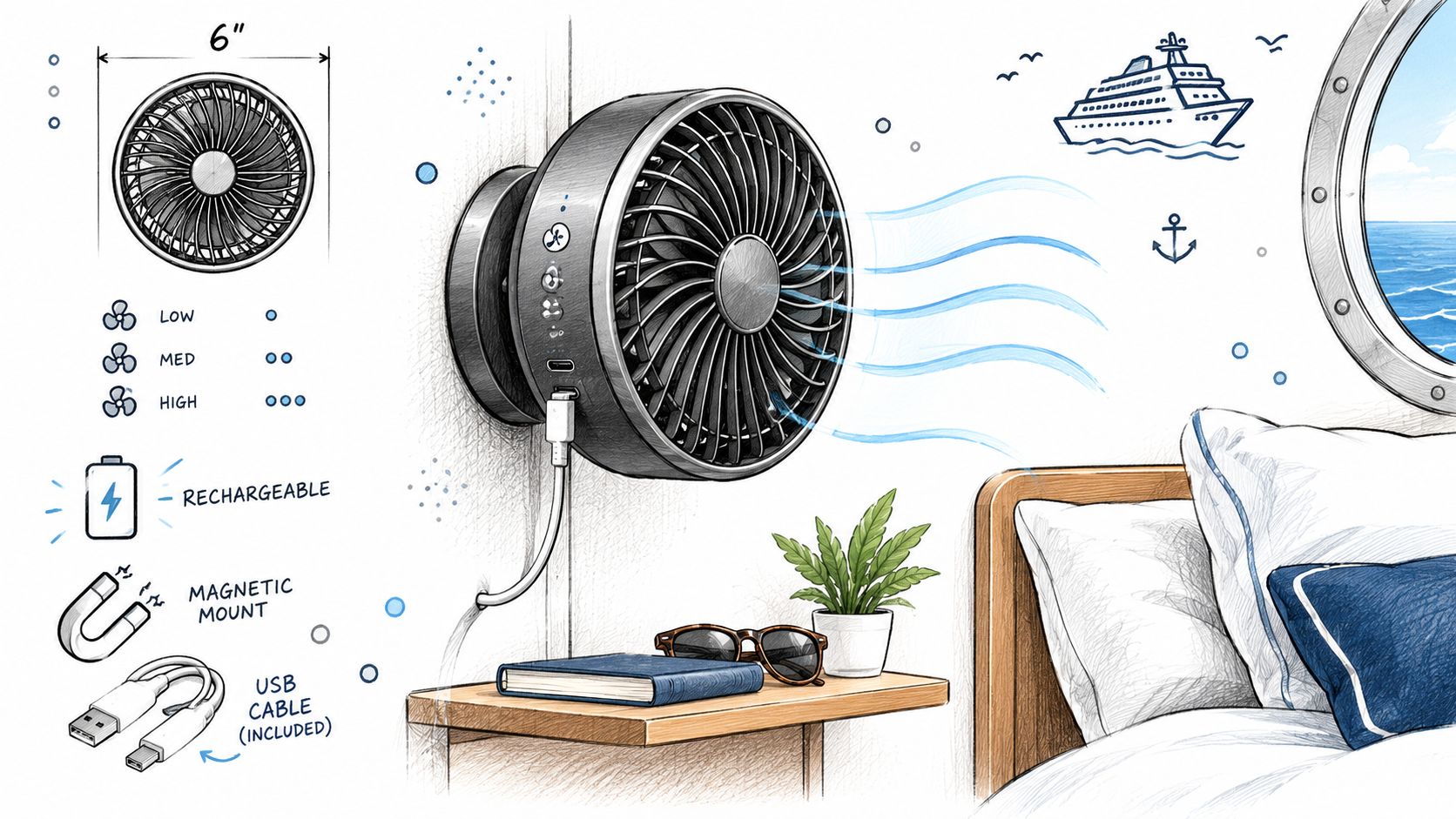
A warm cabin becomes harder to tolerate at night, especially when several travelers share one compact sleeping area. A small rechargeable fan improves air circulation without occupying the bedside table. Its magnetic base can place it on a suitable metal surface, leaving room for glasses, chargers, and toiletries.
Aim airflow across the sleeping area rather than directly at your face. Start with the lowest setting while sleeping. It provides circulation with less noise and preserves battery life. Use a stronger setting during the day after showers or while people are changing clothes, when the cabin can feel stale.
The Magnetic Fan for Cruise Ship Cabin is described as a cordless, USB-C rechargeable fan with a magnetic base, three speed settings, and a stated runtime of 4 to 12 hours per charge, depending on use. It is also described as approved for use on all cruise lines. Check your own operator's current policy before packing any powered accessory, since onboard rules can differ.
Position matters more than maximum power
Mount the fan where air can circulate across the room without blocking a vent or blowing loose papers around. Test the magnetic hold after entering the cabin, then keep the charging cable within reach. A poor mounting position can be more annoying than a lower speed, particularly if the fan vibrates against a surface.
Practical rule: Charge the fan before leaving home, then pack its cable with your embarkation-day electronics instead of burying it in checked luggage.
For finer control, review these variable-speed fan control ideas for cruise cabins. Avoid bringing a large household fan. It consumes luggage space, is harder to position, and offers fewer practical storage options once the cabin is occupied.
2. Vertical Magnetic Organizers for Cabin Storage
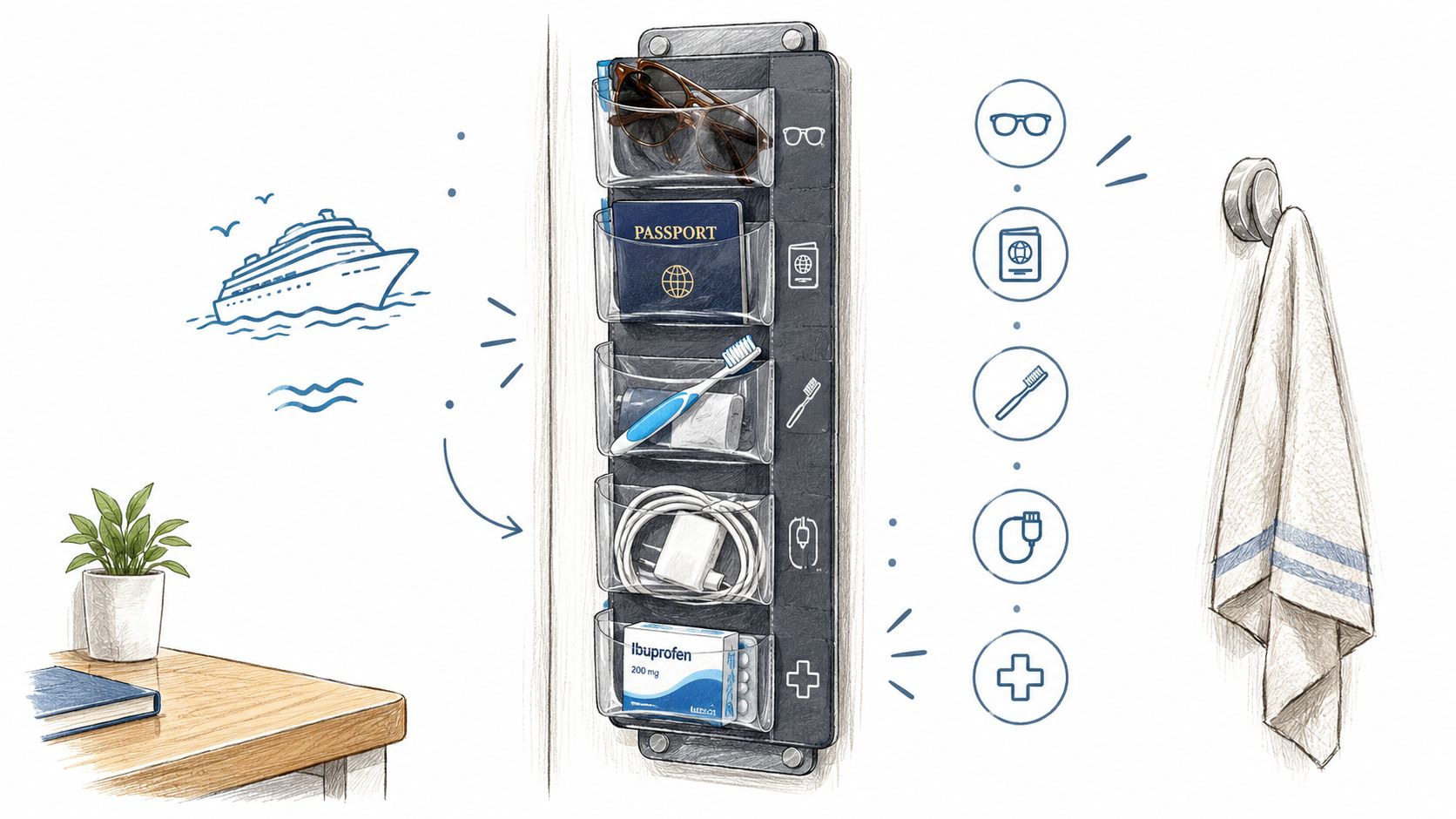
Counters disappear quickly in a shared cabin. Toothbrushes, sunscreen, watches, charging cables, excursion documents, and medication all compete for the same small surfaces. A magnetic organizer changes the arrangement by moving lightweight daily items onto the wall, where they remain visible and easier to reach.
Set it up before unpacking. If you wait until the cabin is already cluttered, you'll likely choose a convenient but impractical location. Keep frequently used items at eye level, place backup supplies higher or deeper in the organizer, and avoid loading heavy objects onto a surface that doesn't feel stable.
A useful arrangement is to give each traveler a defined area. One compartment can hold sunglasses and port documents, another can hold chargers, and a separate section can hold toiletries that would otherwise spread across the bathroom. The approach is particularly helpful in an interior cabin, where limited natural light can make small items harder to find.
Use the organizer as a daily reset point
At the end of each day, return keys, watches, cabin cards, and excursion items to the same compartments. That small habit reduces the chance of leaving essentials behind when you head ashore.
The small-space storage guidance for cruise cabins also supports the broader principle of using vertical surfaces rather than adding more furniture or bags. A poll of more than 9,500 cruise travelers found that 26% said they pack magnetic hooks, while 14% said they pack a fan in this report on cruise-cabin accessories. Those figures suggest that wall-mounted storage and airflow solutions are already familiar choices among many passengers.
3. Non-Drowsy Seasickness Patches for Extended Travel
Motion comfort deserves a place in your packing plan before embarkation day, not after you feel unwell. A passenger who waits until the ship is moving may have a harder time deciding what to take, where to find it, or whether a side effect will interfere with a shore excursion.
Prescription patches and non-prescription motion remedies aren't interchangeable, and “non-drowsy” shouldn't be treated as a guarantee for every traveler. Scopolamine, antihistamines, ginger products, and acupressure bands have different uses, precautions, and possible side effects. Speak with a doctor or pharmacist before choosing a patch, especially if you take other medication or have a condition that affects your response to motion-sickness treatments.
Test the plan before the voyage
Don't make a cruise the first time you try a medication. Follow the package directions or medical advice precisely, and monitor how your body responds before scheduling an active port day around it. Keep a backup option that your healthcare professional has approved, but don't combine remedies casually.
A sensible storage system includes:
- Primary treatment: Keep the product in its original packaging, with instructions available.
- Backup relief: Pack a separately stored option, such as an approved non-prescription remedy or acupressure bands.
- Easy access: Place motion remedies in your carry-on rather than checked luggage.
- Side-effect notes: Keep a short record of what you used and how you felt.
The same approach works for Alaska, Mediterranean, Caribbean, and repositioning itineraries. Rougher water is only one consideration. Some travelers feel motion during embarkation, while others notice it during sea days or while reading indoors. Never assume a patch is suitable because another passenger recommends it.
4. Rechargeable Magnetic Night Lights for Safe Cabin Navigation
A cabin that feels familiar during the day can become disorienting at night. Curtains block outside light, the bathroom switch may be bright, and a sleeping partner may not want the overhead light turned on during a late-night bathroom visit.
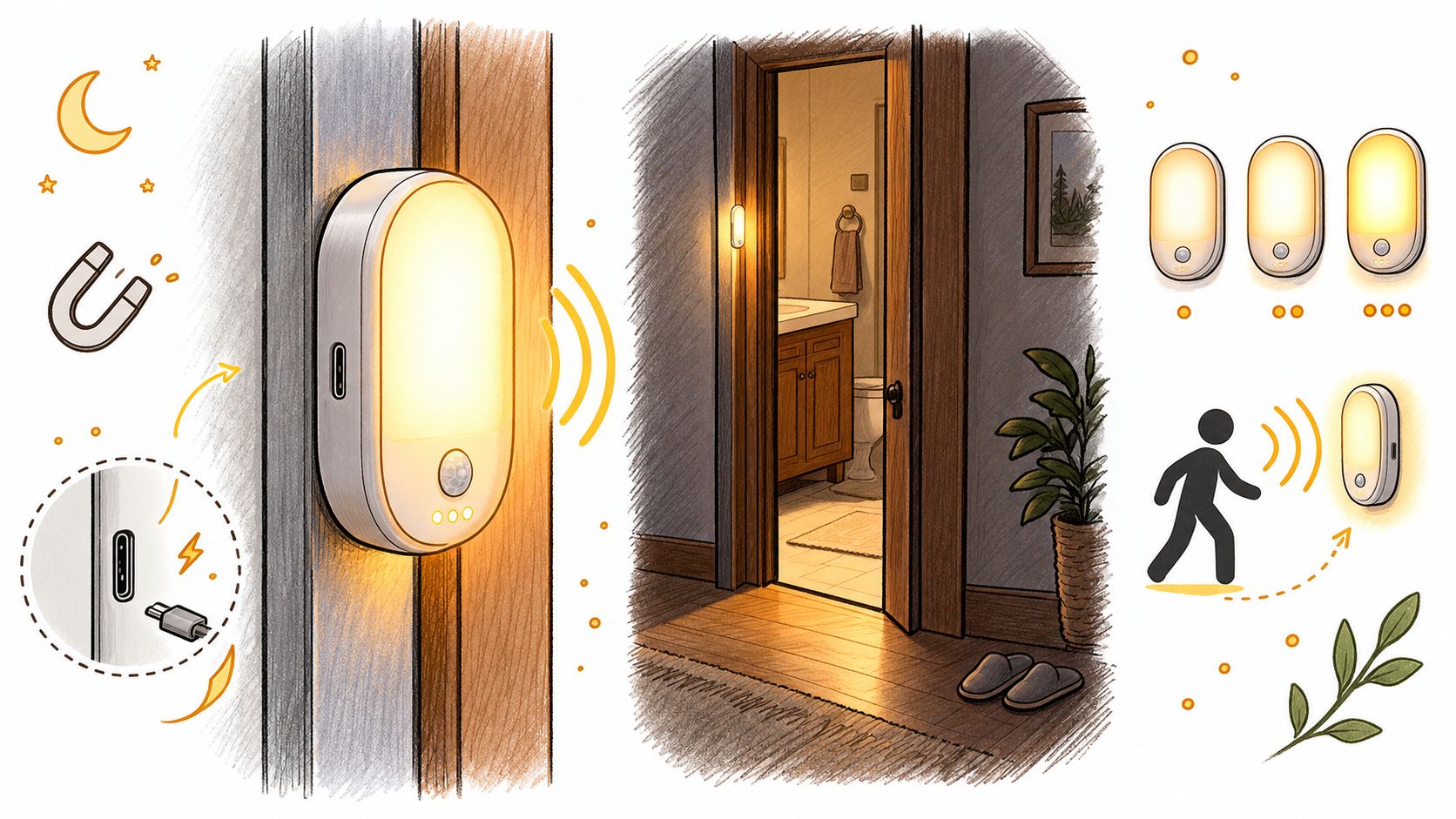
A dim rechargeable night light solves a narrow but real problem. Mount it near the bathroom entrance or along the route between the bed and the door, keeping it low enough to illuminate the floor without shining directly into someone's eyes. A motion sensor can be convenient, but it should be tested in the cabin because sensitivity and placement vary.
Keep the light low and the path clear
The light won't compensate for bags, shoes, or loose charging cables left on the floor. Store those items against a wall or inside an organizer, especially if the ship is moving. A second light may help when two travelers use different sleep schedules, but one well-positioned unit may be enough for a compact room.
Recharge the light before departure and pack its cable with other frequently used electronics. Remove it before checkout, just as you would remove a charger from a hotel room.
A night light should guide your feet, not turn the cabin into a hallway.
For children, older passengers, or anyone who becomes disoriented in darkness, the benefit is less about convenience and more about creating a predictable route. Choose a warm or adjustable light if available, and avoid placing it where a suitcase or curtain can cover it.
5. Compact Magnetic Clotheslines for Wet Garment Drying
Wet swimwear is one of the fastest ways to make a small cabin feel messy. A towel on the back of a chair takes up seating, damp clothes on the bed delay packing, and leaving fabric in a closed bag can create an unpleasant smell.
A compact clothesline gives lightweight garments a dedicated drying location. Install it before the first shower or pool visit, then hang swimwear and cover-ups as soon as you return to the cabin. Use clips if the line allows them, particularly when the ship is moving and air circulation causes clothing to shift.
Drying works best with rotation
Pack swimwear and lightweight layers that can alternate while another set dries. Hang items with space between them rather than folding several wet pieces over one another. Keep the line away from areas where water can drip onto electronics, documents, or bedding.
A useful setup routine is:
- Choose the location early: Avoid blocking the bathroom door, wardrobe, or walkway.
- Separate wet items: Spread fabric out so air can reach both sides.
- Protect the floor: Place a towel below anything that may drip.
- Clean before storage: Wipe and dry the line before putting it back in your luggage.
Air-drying can reduce reliance on ship laundry for small items, but it isn't a replacement for laundering heavily soiled clothing. It also won't solve every humidity problem. If a garment remains damp, move it to a better-ventilated location rather than leaving it compressed in a bag.
The compact design matters more than elaborate features. A bulky rack may work at home but defeats the purpose of cabin-focused packing.
6. Pre-Cruise Digital Packing Checklists and Organization Systems
A digital checklist is most useful when it reflects the actual trip. Start with the itinerary, cabin type, weather, planned excursions, dress expectations, and whether you'll travel to the port by car, air, or train. Then separate essentials from optional comfort items.
Build the list early enough to identify missing documents, replace worn cables, and discuss medication requirements with a professional. A shared list can assign responsibilities to family members, but one person should still review the final version so critical items aren't assumed to be someone else's task.
Use categories that match the trip
A practical checklist can include:
- Pack early: Travel documents, prescriptions, chargers, and items that are difficult to replace.
- Pack by cabin problem: Fan, organizer, night light, drying line, or motion remedy.
- Pack by activity: Port walking, swimming, formal dining, fitness, and rainy weather.
- Pack last: Toiletries, sleepwear, and weather-dependent layers.
- Carry on: Medication, documents, valuables, and the first-day change of clothes.
The travel packing checklist for cruise preparation can provide a starting point, but don't copy a generic list without editing it. A traveler heading to Alaska needs a different clothing strategy from someone taking a warm-weather beach itinerary, and a balcony cabin may offer different practical options from an interior room.
Save the final checklist offline or print it. After returning home, mark what went unused and record what you wished you'd packed. That turns each cruise into useful information for the next one instead of forcing you to start from scratch.
7. RFID and GPS-Enabled Smart Luggage Tags for Lost Bag Recovery
Cruise luggage often moves through several handoffs before it reaches the stateroom. A bag may leave your car, pass through a terminal, wait for delivery, and arrive after you've already gone to lunch or changed plans. A smart tag can add a layer of visibility, but it shouldn't replace the cruise line's required paper tag or your contact details.
Before departure, install the tag's app, pair it with your phone, and confirm that the device works outside your home network. Check battery status and learn what the tag can detect. Bluetooth-based tags generally depend on nearby compatible devices, while GPS-enabled products may require their own connectivity arrangements. Don't assume every feature works at sea or inside a metal luggage compartment.
Build a recovery system, not just a tracking system
Attach a tag to each checked bag if you're traveling with several pieces. Add a durable paper tag with your name and contact information, and follow the cruise line's instructions for cabin or luggage identification. Keep medications, travel documents, valuables, and a basic first-day outfit in your carry-on so a delayed suitcase doesn't disrupt the first hours onboard.
Photograph the outside and inside of each bag before leaving home. The images can help you describe the luggage accurately if it goes missing, while a written contents list is easier to use than memory under pressure.
Privacy-conscious travelers should review the tag's account settings and sharing permissions. Turn off features you don't need, and don't publish location information publicly. A smart tag is useful when it supports a clear recovery process. It's less useful when the battery is flat, the app hasn't been tested, or the traveler assumes the device guarantees recovery.
8. Compression Packing Cubes and Roll-Based Garment Organization
Packing cubes work best when they organize access, not when they encourage overpacking. Assign each cube a purpose, such as swimwear, casual tops, undergarments, or evening clothing. When you arrive, move the cubes into the wardrobe or drawers without unpacking every item onto the bed.
Rolling lightweight garments can reduce creasing and make the contents easier to see. Heavier pieces, including jeans or sweaters, should be placed where they won't crush delicate clothing. Compression zippers can save space, but they also make it tempting to bring more than the cabin or luggage can sensibly hold.
Leave room for the way you'll live
A cube that is packed tightly at home may become frustrating once you need to remove one shirt without disturbing everything else. Don't compress formalwear so aggressively that it emerges wrinkled before dinner. Use a separate garment sleeve or place dressier items at the top of the suitcase.
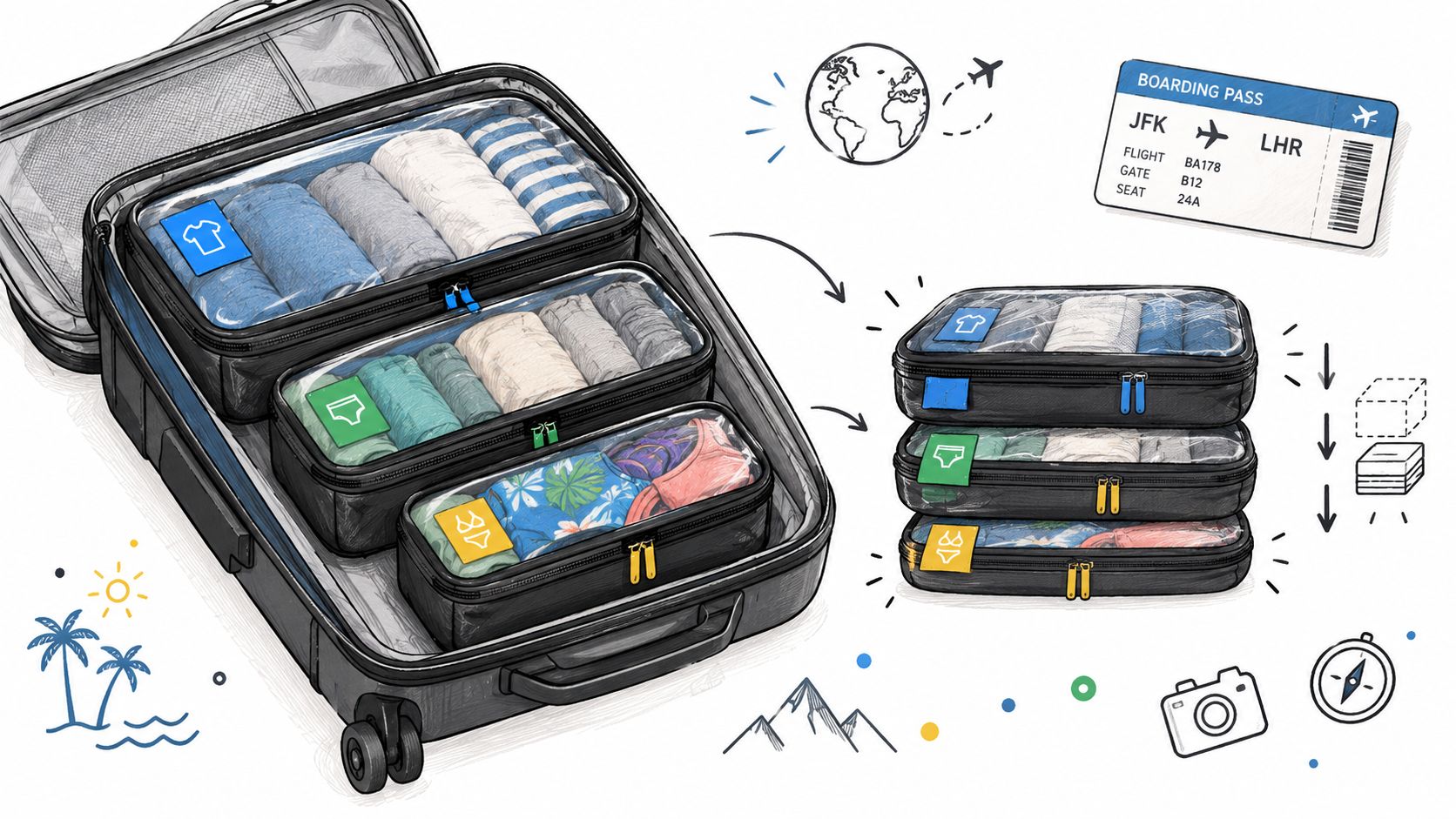
A good test is to pack the cubes at home, remove the clothing you'll need first, and check whether the remaining luggage still closes without force. Wear your bulkiest practical travel shoes and outer layer when appropriate, but don't choose an uncomfortable travel outfit just to save space.
Use cubes with your cabin organizer rather than treating them as competing systems. Cubes manage stored clothing. The organizer handles small daily items. That division keeps the wardrobe orderly while preventing the vanity from becoming a catch-all.
9. Versatile Lightweight Clothing Built for Warm Cabin Environments
A cruise wardrobe needs to handle several settings without requiring a separate outfit for every activity. Ships can feel warm in cabins, cooler in dining rooms, and unpredictable outdoors, while shore excursions may involve walking, rain, swimming, or visits to places with stricter dress expectations.
Build outfits around breathable base pieces and layers. Neutral colors make it easier to combine tops and bottoms, while a wrap, cardigan, or lightweight jacket can change the feel of an outfit without taking much room. Quick-drying clothing is especially practical when the itinerary includes water activities, but it shouldn't replace comfortable walking clothing for long port days.
Cruise packing guidance commonly recommends checking the destination, using layers, mixing and matching, and accounting for dress expectations in this cruise-line packing guide. Those principles are more useful than copying a fixed outfit count because the right wardrobe depends on climate, activities, and personal laundry preferences.
Choose shoes with discipline
Shoes create disproportionate luggage volume. Select pairs that have distinct jobs, such as walking, pool or beach use, exercise, and dressier evenings. If a pair can't handle a specific planned activity and won't be worn otherwise, it probably doesn't belong in the suitcase.
For an Alaska itinerary, prioritize waterproof protection and insulating layers. For a warm beach route, prioritize breathable fabrics, sun protection, and quick-drying pieces. For a city-heavy Mediterranean trip, choose shoes and clothing that can handle extended walking and respectful coverage at religious or cultural sites.
10. Medication and Supplement Organization with Waterproof Accessibility
Medication should stay in your carry-on, remain easy to identify, and be protected from humidity. A daily organizer can simplify routine dosing, but critical medication should also remain in original labeled containers when documentation or identification matters.
Create a medication pouch that separates daily use from backup supplies. Keep prescriptions, medical notes, and emergency contact information in a waterproof envelope, and store a copy separately from the medication itself. If you use temperature-sensitive products, ask your healthcare professional and cruise line about the correct storage process before departure.
Make access the priority
A cabin safe may protect valuables, but it isn't automatically the best place for medication you need during the day or overnight. Choose a dry, consistent location that every traveler who may help you can find. Avoid placing medicines directly beneath a ceiling, beside a shower, or in a damp bathroom area.
Use clear labels for name, dosage, and timing. Don't transfer a critical prescription into an unlabeled container just to save space. Keep motion remedies, allergy treatment, glucose-monitoring supplies, and other urgent items separate from supplements so you can reach them quickly.
Medication rule: Your packing system should help you take the right medicine at the right time. It shouldn't make identification harder.
Individual medical needs override generic cruise packing advice. Confirm what you need with your clinician, check destination and transit requirements, and carry enough planning margin for delays without changing doses independently.
Top 10 Cruise Packing Comparison
| Item | 🔄 Implementation Complexity | ⚡ Resource Requirements | ⭐ Expected Effectiveness | 📊 Ideal Use Cases | 💡 Key Tips |
|---|---|---|---|---|---|
| Magnetic Cabin Fans for Enhanced Airflow | Low, simple magnetic mount and charging | USB-rechargeable battery, compatible metal surface, occasional remote | High for personal cabin cooling; noise varies by speed | Interior or small cabins with poor airflow; bed/reading area | Charge 24h before boarding; use low at night; test mount on arrival |
| Vertical Magnetic Organizers for Cabin Storage | Low, stick-on modular installation | Magnetic panels, segmented pockets; fits narrow wall space | High for small-item organization; limited bulky capacity | Toiletries, documents, chargers in shared or family cabins | Install immediately, heavier items low, pre-organize items at home |
| Non-Drowsy Seasickness Patches for Extended Travel | Medium, medical prep; possible prescription | Patch supply, physician consult (if Rx), skin-sensitivity check | Very high for prevention of motion sickness when used correctly | Passengers with motion sensitivity; rough crossings; day-time excursions | Apply 4–6 hrs before embarkation; consult MD; monitor for skin effects |
| Rechargeable Magnetic Night Lights for Safe Cabin Navigation | Low, magnet mount, optional motion sensor setup | USB-rechargeable LED unit, magnetic mount, occasional charging | High for low-glare navigation and safety; reduces sleep disruption | Nighttime bathroom trips, elderly passengers, families with kids | Charge 12h before boarding; position 18–24" above floor; test sensor |
| Compact Magnetic Clotheslines for Wet Garment Drying | Low, quick tension setup across walls | Magnetic/adhesive mounts, tension cable, clips; needs 4–6 ft span | Medium–High for drying light items; slower in high humidity | Drying swimsuits/towels in cabins without outdoor space | Install on arrival, avoid A/C vents, use clips, allow 8–12 hrs to dry |
| Pre-Cruise Digital Packing Checklists and Organization Systems | Medium, create/customize templates | Smartphone/computer, time (30–60 min) to customize | High for reducing omissions and overpacking | First-time cruisers, families, complex itineraries | Build 3–4 weeks out; customize by climate/cabin; screenshot a copy |
| RFID and GPS-Enabled Smart Luggage Tags for Lost Bag Recovery | Medium–High, device setup and app integration | Tags ($40–80), smartphone app, periodic charging, cellular/Bluetooth | High for port/terminal tracking; limited inside ship hull | Embarkation/disembarkation anxiety, families, multi-bag travel | Attach before leaving home; test app; add paper backup tag; charge fully |
| Compression Packing Cubes and Roll-Based Garment Organization | Low–Medium, packing technique learning curve | Cube set (~$20–40), time to pack/roll, pre-testing in luggage | High for volume reduction (30–50%) and organized access | Limited luggage allowance, multi-week cruises, organized travelers | Assign cubes by type, roll garments, pack formal wear last, pre-pack to test fit |
| Versatile, Lightweight Clothing Built for Warm Cabin Environments | Low, wardrobe planning and selection | Investment in breathable/quick-dry fabrics; fewer garments | High for comfort, layering flexibility, and reduced luggage | Warm-climate cruises, mixed activities, formal nights | Prioritize breathable neutrals, pack 2–3 layers, limit shoes to 3–4 pairs |
| Medication and Supplement Organization with Waterproof Accessibility | Medium, documentation and waterproof packing | Waterproof pill organizers/pouches, desiccants, prescriptions copies | High for adherence and protection against humidity/accidental damage | Seniors, chronic conditions, temperature-sensitive meds | Organize 1–2 weeks prior, keep prescriptions separate, use desiccants and waterproof pouch |
Turn the List Into a Trip-Specific Packing Plan
Start with the itinerary, then work inward toward the cabin. A warm-weather beach route may justify a fan, drying line, breathable clothing, and a low-light navigation solution. A colder itinerary may make airflow less important while increasing the value of waterproof layers, insulated clothing, and a well-organized medication pouch. A port-intensive schedule also requires a realistic walking wardrobe and a carry-on that can handle the first day without access to checked luggage.
Next, confirm the cruise line's current restrictions. Policies can change, and products that appear practical may be restricted because of heating elements, electrical design, adhesives, or other safety concerns. Verify powered accessories, luggage requirements, dress expectations, and any rules related to medication or food before you close the suitcase.
Separate the items that must stay with you. Documents, medication, valuables, chargers, and a basic change of clothes belong in carry-on luggage. Don't put the only copy of a prescription, the only pair of essential glasses, or the only motion remedy in a checked bag.
Then build a climate-appropriate capsule wardrobe. For a 3-day cruise, prioritize pieces that can work across embarkation, sea time, dining, and the main shore activity without relying on a large selection of separate outfits. For a 7-day cruise, use mix-and-match clothing and decide in advance whether you'll use onboard laundry or rotate quick-drying items. For a 10-day cruise, add more deliberate laundry planning, protect space for itinerary-specific layers, and avoid expanding the wardrobe just because the voyage is longer. For a 14-day cruise, think in systems. Plan clothing rotation, drying, medication access, and possible laundry before choosing additional garments.
The cruise retail market was valued at $3.8 billion in 2024 and is projected to reach $7.2 billion by 2033, with a stated 7.4% CAGR in one market report covering the cruise retail market. That growth reflects the availability of trip-specific products, but it doesn't mean every accessory belongs in your bag. Add an item only when it solves a real problem in your cabin, itinerary, or routine.
Before leaving, charge rechargeable fans, lights, trackers, and other accessories. Test magnetic mounting, organizer placement, app pairing, and motion sensors at home. Take screenshots or print your final checklist so it remains useful when your phone is charging or offline.
After the cruise, review what you used, what stayed packed, and what caused frustration. Remove redundant items, improve the carry-on arrangement, and update your itinerary templates. The result should be a faster, more personal packing plan that fits the way you travel, not a generic list that grows after every trip.
Nordmoose offers cruise-focused accessories for airflow, vertical storage, low-light navigation, wet-clothing drying, and motion comfort. Visit Nordmoose to compare compact cabin solutions and choose only the items that match your next itinerary.