

Traveling Packing Checklist: 10 Cruise Essentials
You've packed enough clothes for every dinner, shore excursion, and pool day. Then, at the cruise terminal, you realize the passport is in checked luggage, your medication is buried at the bottom of a suitcase, or the only phone charger is inaccessible until your bags reach the cabin. The trip hasn't started, but the first avoidable problem already has.
A useful traveling packing checklist puts trip continuity before convenience. Documents, medication, payment methods, and essential electronics belong in the personal carry-on. Clothing and toiletries can go into checked luggage, while port-day items should stay easy to reach. Once you board, the list should also help you manage the day-to-day realities of a cruise cabin, including limited storage, metal walls, warm rooms, dim lighting, wet swimwear, and motion discomfort.
A checklist has become a practical travel habit, not just a memory aid. A 2024 survey found that 72.9% of travelers always make a packing list, while 77.1% say a list makes them less likely to forget items (Radical Storage's travel-packing survey). The order below follows the cruise itself, from preparing documents to leaving the ship.
Table of Contents
- 1. Travel Documents and Identification
- 2. Motion Sickness Prevention and Seasickness Remedies
- 3. Clothing, Layers, Swimwear, and Cruise-Appropriate Attire
- 4. Electronics, Chargers, Power Banks, and USB Cables
- 5. Toiletries, Sunscreen, and Medications
- 6. Money, Credit Cards, Currency, and Payment Methods
- 7. Cabin Comfort Essentials, Fans, Night Lights, and Climate Control
- 8. Travel Accessories, Luggage Tags, Packing Cubes, and Organization Tools
- 9. Safety Items, Life Jackets, Identification, and Emergency Documentation
- 10. Cabin Security Measures and Emergency Supplies
- 10-Item Travel Packing Checklist Comparison
- Turn the Checklist Into a Departure-Day System
1. Travel Documents and Identification
Documents can stop embarkation altogether, so pack them before choosing outfits. Keep your passport, cruise ticket or boarding pass, government-issued identification, travel insurance details, visas, and required authorizations together in your personal carry-on. Confirm the cruise line's rules for every traveler, especially children, because acceptable identification formats can vary by itinerary and operator.
International travelers should verify visa or electronic travel authorization requirements well before departure. Don't rely on an email buried in your inbox at the terminal. Download digital copies, save them to your phone, and photograph every original document before leaving home.
Keep originals safe and copies accessible
After boarding, place passports and other originals in the cabin safe unless the cruise line instructs you otherwise. For port days, carry only what the cruise line requires. A laminated document checklist can help you confirm that passports, identification, excursion details, and emergency contacts are back in the safe before leaving the ship.
A practical cabin setup uses vertical space rather than a crowded desk. The Magnetic Cruise Door Organizer uses three anti-scratch magnets to attach to a metal cabin wall or door, and its fifteen mesh pockets can hold copies, insurance information, chargers, or small port-day items. Check your cruise line's rules before using any included over-the-door hooks, since some operators restrict them.
Practical rule: Carry copies or digital images ashore, but keep originals protected unless a port or cruise official specifically requires them.
2. Motion Sickness Prevention and Seasickness Remedies
Motion comfort deserves attention before boarding, not after the first rough stretch of open water. If you're prone to nausea, speak with a doctor or pharmacist about suitable medication, patches, or non-medication options. Follow the product directions carefully, especially because some remedies can cause drowsiness or other side effects.
Pack ginger candies, acupressure bands, and any treatment you already know works for you. Don't test an unfamiliar remedy for the first time during a sea day when you're far from your normal routine. Medication should stay in your carry-on, clearly labeled and easy to reach.
Reduce triggers inside the cabin
Cabin choice can affect comfort. Midship, lower-deck rooms generally expose passengers to less noticeable movement than cabins at the bow or stern, although no location removes motion completely. Once symptoms begin, look toward the horizon, avoid reading and screens, drink water, and choose light meals. Heavy food, alcohol, and strong odors can make nausea worse.
Drowsiness creates a second cabin problem, especially at night. A low-glare light near the bathroom can help you move around without turning on bright overhead fixtures. For more practical preparation, use this guide to what to do for seasickness on a cruise.
After you've settled in, follow the treatment instructions rather than taking extra doses because symptoms feel unpleasant. If you have a medical condition, take regular medication, or aren't sure which option is appropriate, get professional advice before departure.
3. Clothing, Layers, Swimwear, and Cruise-Appropriate Attire
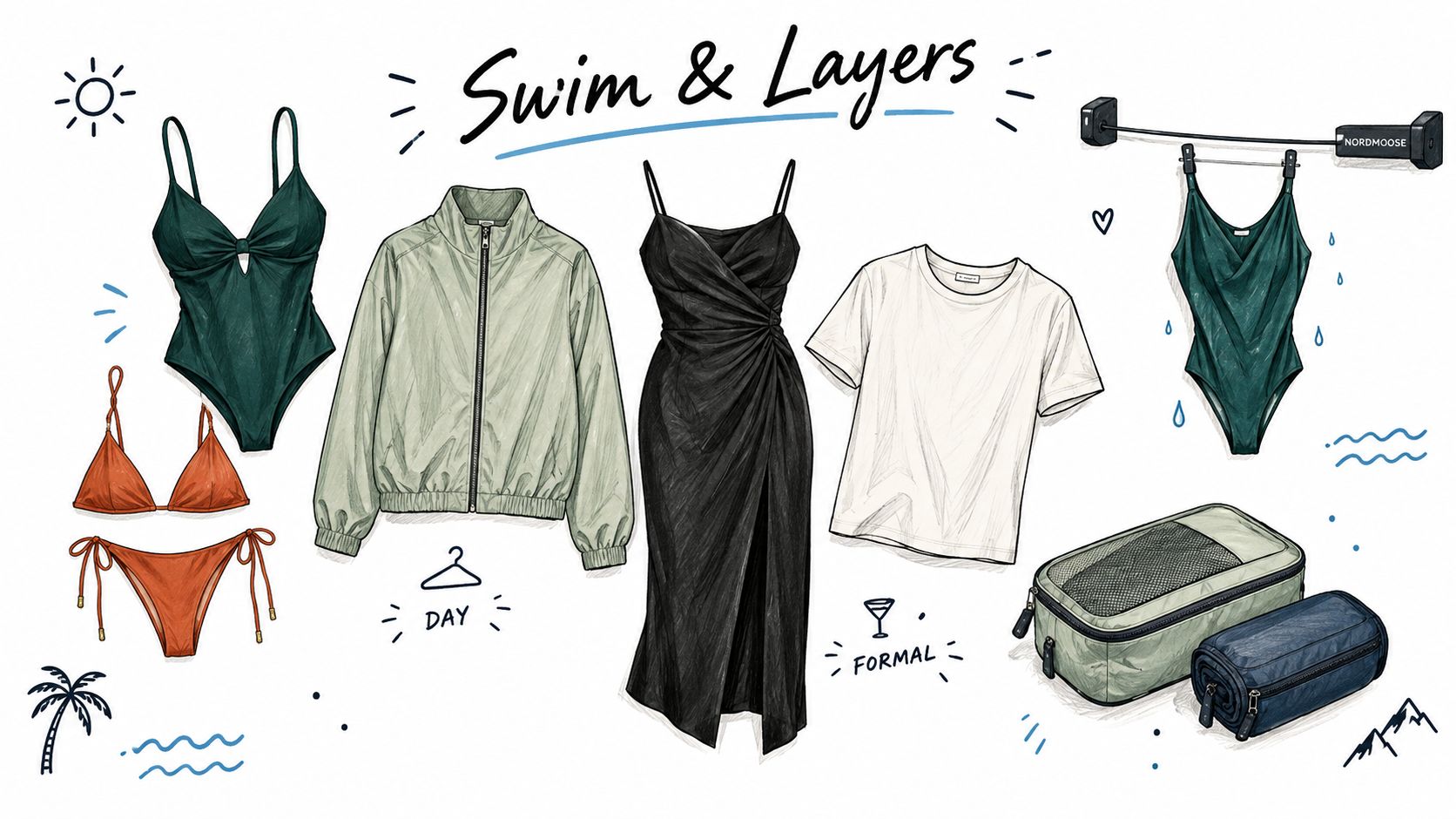
Cruise clothing has to work across several environments in one day. The pool deck may be hot, the dining room can feel heavily air-conditioned, and an evening show may call for something more polished. Pack light layers, comfortable walking clothes, swimwear, sleepwear, underwear, practical shoes, and weather protection for your itinerary.
Avoid building a separate outfit for every possible moment. Neutral colors and mix-and-match pieces give you more combinations without adding another full garment category. Lightweight, wrinkle-resistant fabrics are particularly useful when cabin storage is limited and ironing facilities may be restricted.
Pack for drying, not just changing
Bring enough swimwear to rotate while another suit dries. Wet fabric left on a bed, chair, or closed suitcase can make the cabin feel cluttered and unpleasant. A compact magnetic clothesline, where permitted by the cruise line, gives you a dedicated place for swimsuits, towels, and lightweight hand-washed items.
Weather should decide your outer layer. Caribbean travelers may prefer breathable fabrics, while Alaska itineraries call for waterproof protection, warm layers, and secure footwear. Formal expectations also vary, so check your specific cruise line's dress guidance instead of packing elaborate evening clothing by default.
The efficient wardrobe is not the smallest wardrobe. It's the one that covers your actual itinerary without duplicating outfits.
Wear your bulkiest shoes and coat during travel when practical. Keep one comfortable pair for walking, one activity-appropriate option, and any necessary formal footwear. Pack a small amount of travel detergent if you're willing to wash delicate items in the sink, but don't assume every fabric will dry quickly in a humid cabin.
4. Electronics, Chargers, Power Banks, and USB Cables
Your phone may function as a boarding pass, cruise app, room key, camera, map, and communication tool. Pack the phone, charging cable, wall adapter, power bank, and any required travel adapter in your personal carry-on. A charger buried in checked luggage is useless during the terminal wait, transfer, or first hours onboard.
Before leaving home, download boarding documents, cruise apps, offline maps, entertainment, and reading material. Offline preparation reduces your dependence on ship Wi-Fi and keeps navigation available during port visits. Back up photos regularly if you'll be taking many pictures, especially when device storage is limited.
Build a charging station that stays visible
Cruise cabins often have limited outlets and little counter space. Keep cables separated by function, then assign one place for the charging kit. A magnetic organizer can hold cables, adapters, and backup batteries on a suitable metal wall, but avoid placing heavy items where they could fall onto a bed or walkway.
Charge the phone and power bank before bed so the next morning's shore excursion doesn't begin with a low-battery warning. Put the phone in airplane mode when you don't need cellular service, then enable Wi-Fi selectively according to your cruise plan. Don't assume a port's mobile data will work as expected, and check roaming terms before using cellular service abroad.
One more practical check matters: confirm which electrical devices the cruise line permits. Hair tools, extension cords, power strips, and heating devices may be restricted. A compact cable kit is useful, but a collection of unnecessary gadgets only creates another storage problem.
5. Toiletries, Sunscreen, and Medications
Pack the toiletries you rely on, not every product you might use in an ideal bathroom. Cruise shops may not carry your preferred brands, and replacing a forgotten item onboard can be inconvenient. Prioritize toothbrush and toothpaste, deodorant, skincare, hair products you need, contact-lens supplies, feminine hygiene products, sunscreen, and personal medication.
Prescription medication belongs in your carry-on and should remain in its original labeled container. Bring enough for the itinerary plus a reasonable buffer for travel disruption, and carry prescription information when appropriate. Families should also consider their usual child-safe pain relief, allergy treatment, and basic first-aid supplies.
Protect the small bathroom from becoming a bottleneck
Cruise bathrooms offer limited counter space, so separate daily-use items from backup supplies. A clear, labeled bag makes medication and first-aid items easier to identify, while waterproof pouches reduce the consequences of leaks. Keep products that can spill away from documents and electronics.
Sunscreen deserves a deliberate packing decision. Repeated pool time and shore excursions can use more than expected, while replacing it onboard may be inconvenient. Choose a formula that suits your skin and itinerary, and follow the product's application and reapplication instructions rather than relying on a single morning application.
Vertical storage can help with toiletries, but don't attach anything to a surface unless the product and cruise rules make it appropriate. The right organizer should make items easier to see and reach, not create a falling-object hazard near the sink or shower.
6. Money, Credit Cards, Currency, and Payment Methods
Cruise payments are usually centralized through an onboard account, but that doesn't eliminate the need for financial backup. Pack one primary credit card, a separate backup card, identification, and a modest amount of cash suited to your embarkation and port plans. Keep the backup payment method away from the primary card so one lost wallet doesn't remove every option.
Notify your bank and card issuer about the cruise itinerary if required by their fraud controls. Review how onboard charges will be authorized, and decide whether family members need spending limits or separate access. Specialty dining, drinks, excursions, and shopping can add up when every purchase is charged to the same account.
Separate ship spending from port spending
Use the ship's payment system for onboard purchases, but plan for ports independently. Some destinations accept cards widely, while small vendors, taxis, or beach services may prefer local currency. Withdraw or exchange only what you expect to use, and avoid carrying your entire travel budget ashore.
Keep emergency card-cancellation numbers and account details in a secure offline location. A photo of the cards alone isn't enough if it doesn't show the information needed to contact the issuer, so store the details securely and separately from the physical cards.
At the end of the cruise, request and review the itemized onboard account. Disputing an unfamiliar charge is easier when you identify it before leaving the ship. Cash and cards can be stored in the cabin safe when you're not using them, while daily port money should stay in a small, secure wallet.
7. Cabin Comfort Essentials, Fans, Night Lights, and Climate Control
The cabin can be warm, dim, or short on airflow, particularly when several people share a compact room. Pack comfort tools only after checking the cruise line's prohibited-items policy. Portable fans, rechargeable lights, and compact personal-care accessories can help, but devices that heat, cook, or draw excessive power may not be allowed.
A quiet rechargeable fan is useful when you need airflow without pointing the ship's ventilation directly at your face. Place it on a stable surface or an approved metal area, and avoid positioning it where vibration or movement could send it onto the floor. If you share a cabin, consider whether the fan's sound will disturb your partner.
Use low light for nighttime movement
Interior cabins can be especially disorienting at night because they lack outside light. A rechargeable night light near the bathroom doorway can guide you without waking everyone with the ceiling fixture. That matters even more if motion-sickness medication makes you drowsy or if a roommate has already gone to sleep.
Read the practical guidance on a rechargeable night light before deciding where to place one. Charge comfort devices before bed, keep their controls accessible, and clean fan blades periodically in the salty cabin environment.
A comfort accessory earns its space when it solves a recurring cabin problem without creating a new charging, storage, or safety problem.
Don't pack several versions of the same device. One quiet fan and one low-glare light may be enough for a couple, while a family may need a clearer plan for charging and placement.
8. Travel Accessories, Luggage Tags, Packing Cubes, and Organization Tools
Cruise luggage passes through several hands before it reaches your room, so identification should be simple and visible. Add the cruise line's required luggage tags, your name and contact information, and a clear cabin identifier to every checked bag. Photograph the outside of each suitcase and its contents before departure in case you need to describe a missing bag.
Packing cubes help most when each has a defined job. Assign separate cubes to tops, bottoms, underwear, swimwear, or each family member. This turns unpacking into a controlled transfer from suitcase to drawer instead of a search through every garment.
Keep the first hours covered
Your carry-on should contain the items you'll need before checked luggage arrives, including documents, medication, chargers, basic toiletries, and a change of clothes. Include swimwear if you plan to use the pool before cabin delivery. Keep valuables and electronics with you rather than trusting them to checked bags.
A tracker such as an AirTag or Tile can help you locate luggage where the service and local rules support it. It won't replace a proper luggage tag or prove that a bag is safe, but it can provide useful location information during embarkation and disembarkation.
For more specific guidance, review how to use a cruise luggage tag. When you reach the cabin, unpack only what you'll use soon, then store the rest by category. Visible organization beats a packed drawer when you're dressing quickly for a port call.
9. Safety Items, Life Jackets, Identification, and Emergency Documentation
Safety equipment already provided by the ship doesn't need to be repacked, but you do need to know where it is and how the crew expects you to use it. Locate the life jackets, read the emergency instructions, and attend the mandatory safety briefing. Don't assume familiarity from a previous cruise means the current ship's procedures are identical.
Keep a small emergency information file in your carry-on and a secure digital backup. Include your full name, emergency contacts, allergies, relevant medical conditions, medication details, insurance information, and the contact details of someone at home. Make sure a travel companion knows where to find it.
Make emergency information usable
A document that stays buried in a suitcase won't help during a stressful moment. Use a clear folder or labeled pouch, and store a copy in a secure cloud account that you can access without relying on a paper original. Families should prepare a separate profile for each traveler, including children.
Wear or carry identification according to the cruise line's instructions, particularly when going ashore. Keep your cabin key card and required identification in a consistent place, but don't place every valuable document in the same wallet. Separation reduces the consequences of one lost item.
Before leaving the cabin for a port day, confirm who has the key cards, which documents are required, and where the emergency file remains. The best safety preparation is quiet, visible, and easy for another person to understand.
10. Cabin Security Measures and Emergency Supplies
A compact first-aid kit can handle minor problems without requiring an immediate visit to the ship's medical center. Pack adhesive bandages, antiseptic supplies, blister care, and any personally appropriate over-the-counter treatment. Add a waterproof phone case or pouch if you'll spend time near water, but keep medical items separated from wet gear.
Check the cabin door, safe, and storage areas after boarding. Use the safe for passports, spare payment methods, and valuables, and keep only the day's essentials outside. A supplemental, non-destructive travel security device may be useful for some travelers, but confirm that it won't interfere with the door or violate the cruise line's rules.
Keep the cabin ready for small problems
Store the first-aid kit where every adult in the room can find it. Put emergency contact information in the same general area, while keeping sensitive financial and medical details protected. Photograph important information and store it securely online for access if a paper copy is lost.
Wet clothing needs its own location. Don't leave swimsuits on the bed, over a chair, or inside a closed bag. Hang them where they can dry, then move them once they're no longer damp so the room stays organized and walkways remain clear.
A security item should reduce risk without adding clutter. Skip bulky gadgets that you won't use, and prioritize secure storage, accessible emergency information, a small first-aid supply, and a clear agreement among travel companions about where everything belongs.
10-Item Travel Packing Checklist Comparison
| Item | 🔄 Implementation complexity | ⚡ Resource requirements | 📊 Expected outcomes | 💡 Ideal use cases | ⭐ Key advantages |
|---|---|---|---|---|---|
| Travel Documents & Identification | Moderate, advance planning, renewals, visas | Passport, tickets, insurance, copies; time for applications | Smooth embarkation; fewer delays at ports | International cruises; mixed-port itineraries | Compliance with regulations; quick recovery if lost |
| Motion Sickness Prevention & Seasickness Remedies | Low–Moderate, OTC easy, prescription needs consultation | Patches, meds, ginger remedies, acupressure bands | Reduced nausea; variable effectiveness by person | Sea days, rough-weather passages, motion-sensitive travelers | Enables participation in activities; multiple delivery options |
| Clothing: Layers, Swimwear & Cruise-Appropriate Attire | Moderate, deliberate packing and outfit planning | Multi-season garments, formal wear, packing space | Comfort across venues; dress-code compliance | Variable climates (Caribbean, Alaska), formal-night cruises | Versatility via layering; maximizes outfit options |
| Electronics: Phone, Chargers, Power Banks & USB Cables | Low, pack and pre-configure devices and apps | Phone, chargers, power bank, adapter, SIM/data plan | Onboard app access, navigation, photo backup | App-reliant lines; shore excursions; remote work at sea | Connectivity, convenience, safety (digital backups) |
| Toiletries: Personal Care, Sunscreen & Medications | Low, assemble travel-sized essentials and prescriptions | Travel-size toiletries, SPF, meds, first-aid items | Maintains hygiene and health; prevents sun-related issues | Tropical ports, family travel, long voyages | Comfort, cost savings, immediate symptom care |
| Money, Credit Cards, Currency & Payment Methods | Low–Moderate, notify banks and organize backups | Primary/backup cards, cash, local currency, documentation | Seamless payments; reduced fraud/decline incidents | International ports, high-spend voyages | Payment flexibility; financial security and backup |
| Cabin Comfort Essentials: Fans, Night Lights & Climate Control | Low, simple installation and charging | Magnetic fans, rechargeable night lights, USB chargers | Better sleep, safer nighttime navigation | Interior/warmer cabins; motion-sensitive passengers | Personalized comfort; low-profile, portable solutions |
| Travel Accessories: Luggage Tags, Packing Cubes & Organization Tools | Low–Moderate, tagging and systematic packing | AirTags/trackers, packing cubes, straps, clear bags | Faster bag recovery; efficient luggage use | Embarkation/disembarkation days; family travel | Tracking capability; space and unpacking efficiency |
| Safety Items: Life Jackets, Personal Identification & Emergency Documentation | Low, familiarize and store items accessibly | Emergency cards, insurance, medical ID, document copies | Faster emergency response; accurate medical care | All cruises; passengers with medical conditions | Increased safety and preparedness in crises |
| Safety Items: Cabin Security Measures & Emergency Supplies | Low, deploy lightweight security and first-aid kits | Door alarms/wedges, first-aid kit, waterproof phone case | Reduced petty theft risk; treat minor injuries onboard | Port days, unattended cabins, solo travelers | Immediate deterrence and self-care capability |
Turn the Checklist Into a Departure-Day System
A long list only works when it becomes a packing system. Divide everything into four groups: documents and medication, electronics and valuables, clothing and toiletries, and cabin-comfort items. Documents and medication stay in your personal carry-on. Electronics, payment cards, and valuables remain accessible rather than hidden in checked luggage. Clothing and toiletries go into labeled packing cubes or waterproof bags, while comfort devices should be packed where you can reach them after boarding.
Do a document check before leaving home. Confirm passports, identification, cruise tickets, insurance information, visas or electronic authorizations, and emergency contacts. Photograph the originals and save the copies securely. Then check medication labels and place every essential prescription in the carry-on, not in a suitcase that may be delivered later.
Use a charge-before-leaving routine for your phone, power bank, rechargeable fan, and night light. Download the cruise app, boarding documents, offline maps, and anything you plan to read or watch. Keep charging cables in one small pouch, and make sure the pouch is in the bag that stays with you.
Boarding is easier when the carry-on is arranged for the first few hours, not the whole voyage. Put documents in the quickest-access pocket, medication where you can retrieve it without unpacking, and a change of clothes or swimwear near the top. If checked bags are delayed, you'll still have what you need to begin the day comfortably.
Once inside the cabin, establish zones immediately. Use drawers for clothing, the safe for originals and valuables, the bathroom for daily toiletries, and vertical surfaces for lightweight items that need to stay visible. Keep wet swimwear off beds and chairs, use a dedicated drying area, and place the night light near the bathroom before the cabin becomes dark.
The cabin should be reset every evening: return documents and payment cards to their assigned locations, plug in rechargeable devices, separate damp clothing, and prepare the next day's port items.
Before disembarkation, reverse the system. Check the safe, drawers, bathroom, outlets, under-bed storage, and every organizer pocket. Match each packing cube to your inventory, remove wet clothing from drying areas, and keep documents and medication with you until you're safely off the ship.
The best traveling packing checklist isn't the longest one. It's adapted to your itinerary, dress expectations, weather, health needs, travel companions, and cabin constraints. Cruise packing works when each item has a clear purpose and a clear place before, during, and after the voyage.
Nordmoose offers magnetic organizers, rechargeable cabin lights and fans, clothes-drying solutions, and motion-comfort accessories designed around cruise stateroom constraints. Review the options and choose the tools that solve your specific storage, lighting, airflow, drying, or seasickness needs at Nordmoose.