

Cruise Formal Nights: What to Wear and How They Work
You're standing over an open suitcase, holding a dinner outfit in one hand and wondering whether "formal night" means a tuxedo, a cocktail dress, or something nicer than shorts. Cruise dress codes can sound more demanding than they feel once you're aboard. The useful question isn't just what to wear, but which venue asks for what, and how your cruise line treats the evening.
For most travelers, formal night is a chance to dress up for dinner or photos, not a shipwide order to stay in formalwear all evening. Check your sailing's guidance, choose an outfit you can comfortably wear to dinner, and you'll be prepared without packing a second wardrobe.
Table of Contents
- What Cruise Formal Nights Actually Are
- How Formal Night Became Optional
- Dress Codes Across Major Cruise Lines
- Outfit Ideas for Every Type of Cruiser
- How Many Formal Nights to Expect on Your Cruise
- Etiquette and Graceful Ways to Skip It
- Budget-Friendly Packing and Cabin-Friendly Prep
- Your Pre-Cruise Formal Night Checklist
What Cruise Formal Nights Actually Are
You've unpacked a few things, and the phrase “formal night” is still staring back from your cruise documents. Start with a simple definition: a formal night is a designated evening when a cruise line invites guests to dress more smartly, especially in certain dining venues. On many ships, the main dining room is where that request matters most.
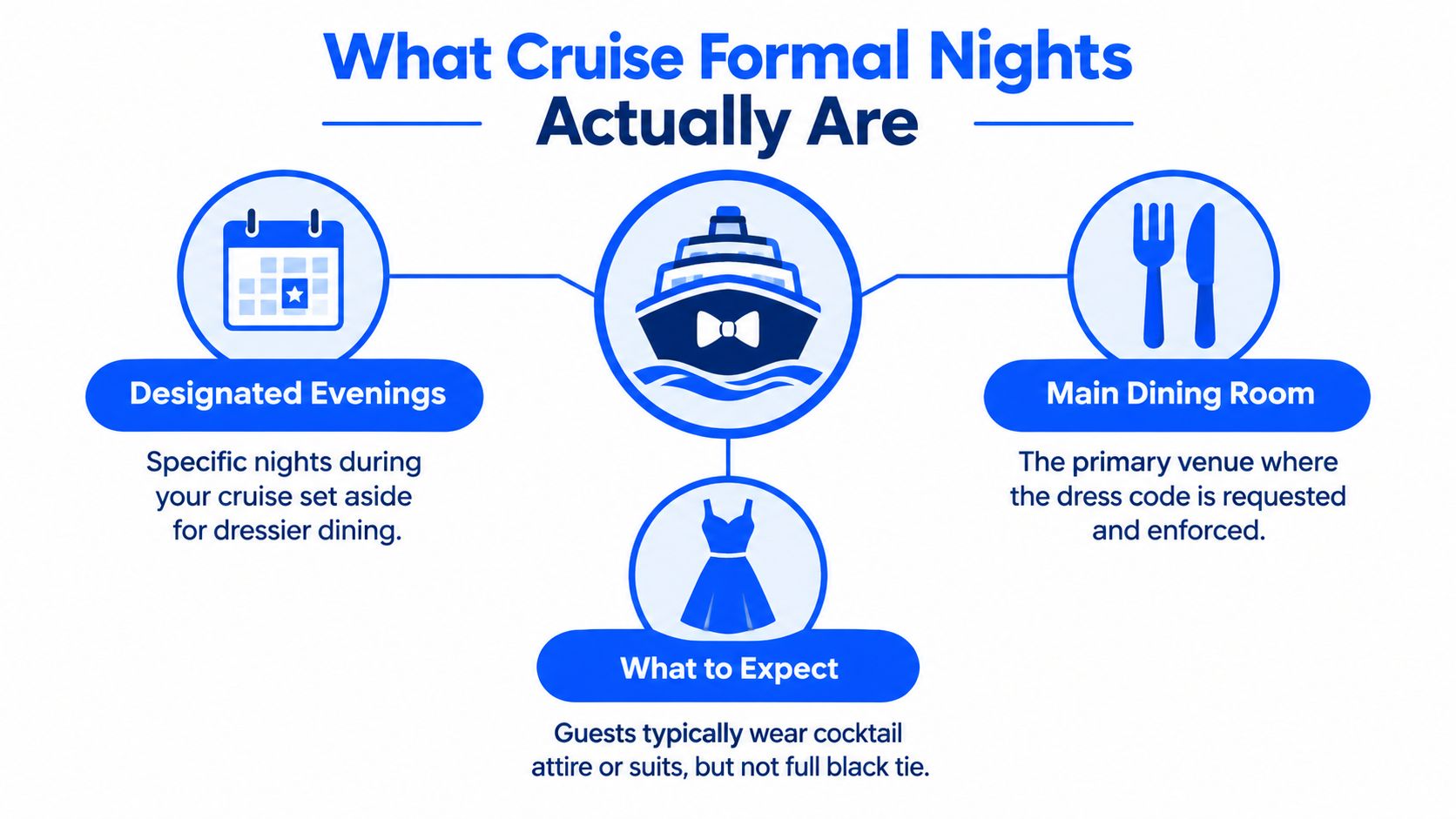
The word formal can mislead first-time cruisers. On many contemporary sailings, it doesn't mean black tie, and it usually doesn't mean you need to dress formally from dinner until bedtime. Think of it as a step up from your everyday vacation clothes. A cocktail dress, dressy separates, dress pants with a collared shirt, or a blazer can suit the occasion, depending on the line and venue.
Think by venue, not by ship
The ship doesn't necessarily have one dress standard for every public space. The main dining room may encourage formal attire, while a buffet or casual restaurant feels less dressy. The theater, lounges, and open decks may also have their own atmosphere. Check the current guidance for your ship rather than assuming that one evening's dress request applies everywhere.
Staff aren't generally standing at every doorway turning away guests who didn't bring formalwear. Still, a particular restaurant may have clearer expectations than the rest of the ship, so it's sensible to follow the venue's posted guidance.
A useful reset: “Formal night” usually means “an evening when dressing up is welcome,” not “a night when you must wear a tuxedo everywhere.”
Once you separate the evening's suggested mood from the rules of a specific restaurant, packing gets easier. Bring something you feel good wearing to dinner, and treat the rest of the ship as its own set of choices.
How Formal Night Became Optional
Cruise dress codes grew out of the conventions of ocean liners, where evening attire applied broadly across public areas, not just to a dining room. Historical accounts describe white tie as the standard for men until the 1920s, followed by the gradual adoption of black tie. After World War II, dinner suits became expected evening dress for many passengers. TravelAge West's account of cruise dress codes traces the shift from those shipwide conventions toward the more flexible expectations travelers meet today.
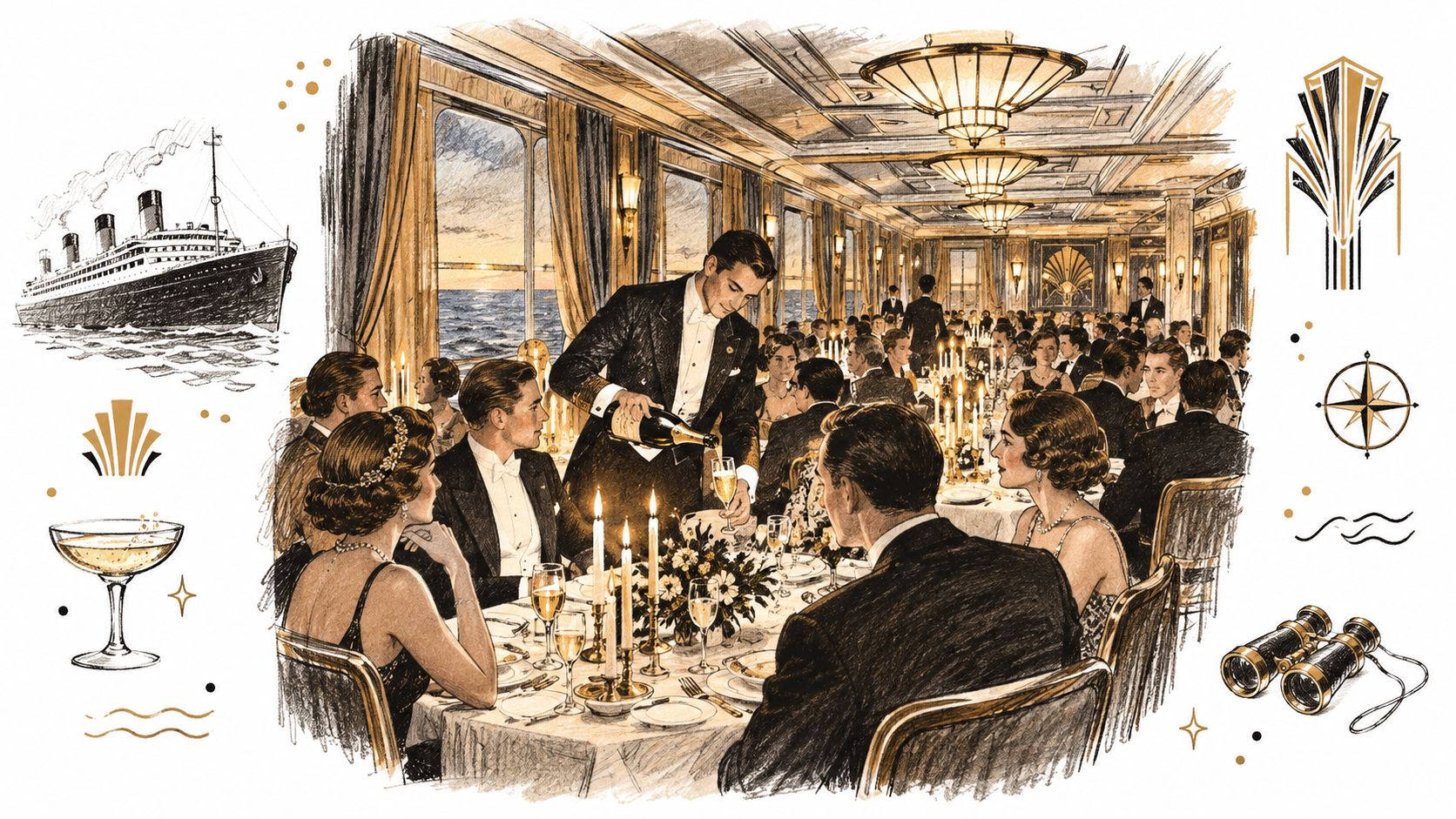
The shift didn't happen because every cruise line decided that dressing up was pointless. As mass-market cruising reached more first-time travelers, and everyday clothing became more casual, lines had reason to make formal participation less demanding. Norwegian Cruise Line's introduction of Freestyle Cruising in 2000 became an important marker in that change, helping normalize relaxed or optional formal evenings.
Tradition didn't vanish, it changed shape
Today, cruise lines may preserve the celebratory feeling while using labels such as “elegant,” “gala,” or “evening chic.” The names signal an occasion without necessarily calling for the same clothing on every ship. A line with a more traditional atmosphere may still make a dressy dinner feel central to the evening. A relaxed line may leave the decision largely to the guest.
That difference helps explain why two cruisers can describe “formal night” very differently and both be right. One may be thinking of a traditional gala dinner, another of a cocktail dress for photos before changing into something comfortable. The cruise line and the venue are the useful clues, not the word alone.
The broader pattern is a move from mandatory shipwide etiquette toward optional participation, restaurant-specific expectations, and a wider range of acceptable dress. Guests can still make an evening of it, then spend the rest of the night in casual clothes if that suits their plans.
Dress Codes Across Major Cruise Lines
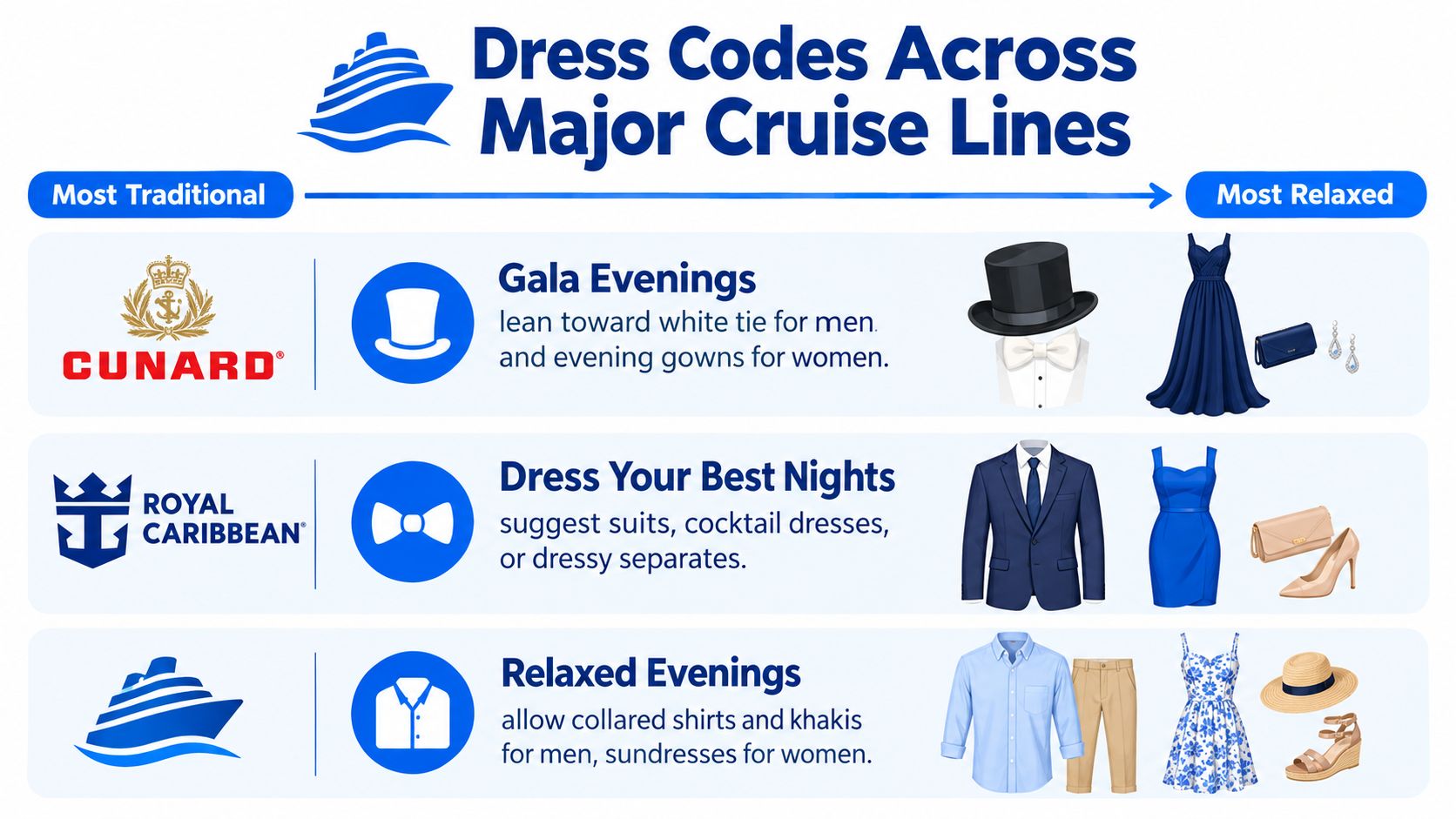
Cruise lines use different language for their dressier evenings, and the language hints at the experience they want to create. Rather than packing for the word “formal” alone, think about where your sailing sits on a spectrum, from tradition-forward to freestyle.
Traditional and celebratory
Cunard sits at the more traditional end of the market. Its Gala Evenings preserve a dressed-up atmosphere, and travelers who enjoy eveningwear may find that expectation part of the appeal. The cruise line's guidance describes approximately two to three formal nights per week, with up to three per week on world cruises, along with themed balls. A cruise dress-code overview from TCAVA offers a useful comparison of that traditional approach with more relaxed policies.
Dressy, but with room to choose
Royal Caribbean calls its designated evenings “Dress Your Best.” That name leaves room for a range of outfits: a suit or blazer, a cocktail dress, or dressy separates can feel at home without requiring a full black-tie look. Celebrity's “Evening Chic” uses a similarly modern label, suggesting a polished evening rather than a single uniform standard. Disney cruises also offer guests the option to dress up, while keeping the choice personal.
Norwegian is the relaxed counterpoint. Under its Freestyle approach, it's widely associated with no formal nights. Guests can choose a more casual routine, though the expectations of a particular dining venue still deserve a quick check.
Use the line's own wording as your cue
If your documents say “Gala,” lean into the occasion if you enjoy dressing up. If they say “Dress Your Best” or “Evening Chic,” a smart outfit that's comfortable enough for dinner and walking around the ship is a sensible choice. If you're sailing Norwegian, don't pack a formal look just because another cruise line's schedule included one.
The practical distinction is not just how dressed up you want to be, but what the chosen restaurant expects that evening. Read the guidance for your specific sailing, then choose an outfit that matches both the venue and your comfort.
Outfit Ideas for Every Type of Cruiser
The easiest formal-night outfit is one that feels celebratory without becoming a packing problem. Choose pieces that resist wrinkles, layer comfortably in a cool dining room, and still let you walk safely across the ship after a long day.
Start with an outfit formula
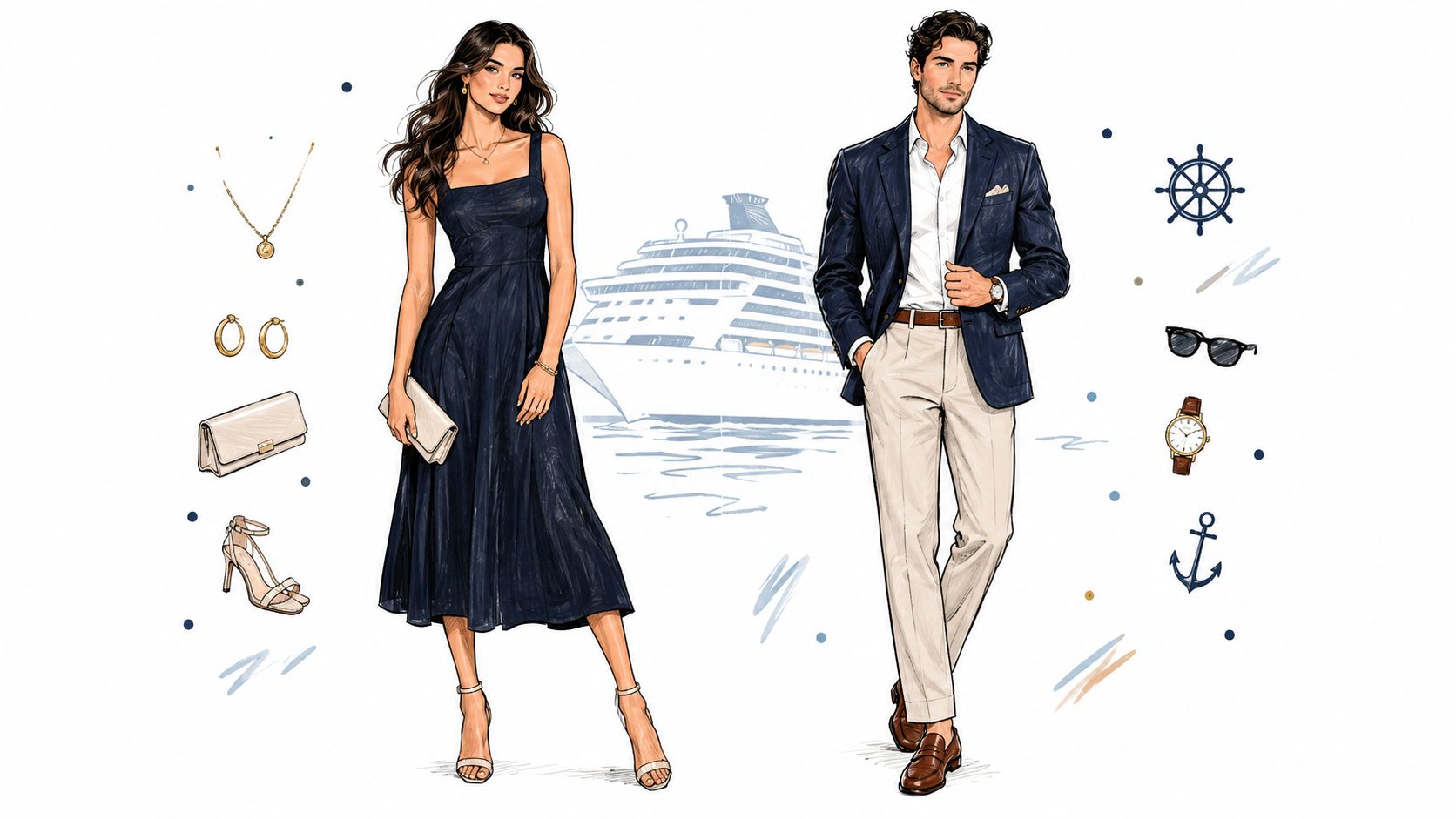
- For women: A dark midi dress with low heels or dressy flats makes a straightforward dinner look. Dressy pants with a polished top work just as well if you'd rather skip a dress. A small clutch and simple jewelry can finish the outfit without adding much luggage.
- For men: Pair dress pants with a collared shirt and a blazer. You can remove the blazer if the room feels warm, and reuse the shirt or jacket for another dinner or a sea-day outing.
- For couples: Coordinate through a shared color or level of dressiness, not matching outfits. One person in a navy dress and the other in a navy blazer looks deliberate without feeling like a costume.
- For families: Let teens choose clothes they'll enjoy wearing in family photos. A dress shirt with dark trousers or a simple dress can make the portrait feel special without turning the evening into a battle over uncomfortable clothes.
- For solo travelers: Pick a dress or a comfortable pair of separates that can be reworn with different accessories. If you're dining alone, comfort and ease matter more than building an elaborate look.
For additional outfit combinations and day-to-evening ideas, see this guide on what to wear on a cruise.
Make comfort part of the look
A ship's dining room may feel cooler than the deck, so a wrap, cardigan, or light jacket can earn its space in your suitcase. Shoes matter too. The evening may involve walking from the cabin to dinner, stopping for photos, and continuing to a show, so choose a pair you can manage comfortably rather than shoes that only look right in a seated portrait.
Wrinkle-resistant fabric helps, especially if your outfit has spent the day in a suitcase or closet. Try everything on before you leave home, including the shoes and layers, so you can check how the complete outfit feels when you move.
How Many Formal Nights to Expect on Your Cruise
There's no universal schedule. Formal-night frequency depends mainly on cruise length and cruise-line policy, and a seven-night sailing may offer one or two dress-up evenings. Use the cruise line's published guidance as an initial estimate, then check your ship's daily program for the actual schedule.
Royal Caribbean's pattern varies by voyage length: its guidance lists one “Dress Your Best” night on a five-night cruise, two on cruises lasting six to ten nights, three on voyages of eleven to fourteen nights, and three to four on voyages of fifteen nights or longer. For a seven-night sailing, Royal Caribbean usually schedules those evenings on Days 2 and 6, though ship and sailing details can affect the plan. Royal Caribbean's onboard dress-code guidance is the place to confirm current details.
Carnival's published guidance uses a different benchmark: one formal night on cruises of two to five days, and two on voyages of six days or longer. A weeklong trip is therefore a reasonable occasion to prepare for two dress-up opportunities, but the final schedule still belongs to your particular sailing.
| Cruise Length | Typical Formal Nights | Example Line Guidance |
|---|---|---|
| 2–5 days | One | Carnival lists one formal night for cruises lasting 2–5 days. |
| 6–10 days | Often two | Carnival lists two on voyages of 6 days or longer; Royal Caribbean schedules two on 6–10-night cruises. |
| 11–14 days | Three on Royal Caribbean | Royal Caribbean's published pattern lists three. |
| 15 nights or longer | Three to four on Royal Caribbean | The exact schedule varies by ship and sailing. |
Don't count sea days and assume that tells you which evening is dressy. Embarkation timing, port calls, and special events can shift the plan, so the daily program is the controlling source. For packing, one versatile, wrinkle-resistant outfit can cover more than one evening; a change of accessories, jacket, or tie can refresh the look without requiring a second full ensemble.
Etiquette and Graceful Ways to Skip It
A little planning takes the awkwardness out of formal night. If you want the main dining room experience, arrive on time for your seating and follow the venue's dress guidance. You can wear your dressier outfit to dinner, then change for a show or a relaxed evening elsewhere on the ship.
Photos are another part of the ritual. A portrait backdrop may draw a queue, and you can stop for a picture if you want one. You don't have to buy a photo or join the line to be a good sport; a friendly “no, thank you” is enough.
Bring kids into the plan
Children don't need to turn dinner into a fashion production. If they're joining the main dining room, neat clothes that suit the venue are a reasonable choice. A child who's happy in a collared shirt, comfortable trousers, or a simple dress is more likely to enjoy the evening than one who's been dressed in something uncomfortable just for a photograph.
If you're unsure whether a venue has stricter rules, check the cruise line's current dress-code guidance. A dress code can depend on the restaurant and sailing, so it's better to confirm than to guess.
Opt out without making it a project
Not feeling dressy? Choose a casual restaurant or buffet, check whether a specialty restaurant has its own dress code, or eat in your cabin if that option is available on your ship. You can also spend the evening elsewhere, such as on an adults-only deck if your ship has one and it suits your plans.
The point is to make a choice, not to feel that you've failed a test. Some guests enjoy dressing up, others would rather relax after a port day, and many mix the two approaches across a cruise. A comfortable alternative is a perfectly good plan.
Budget-Friendly Packing and Cabin-Friendly Prep
The outfit is only part of the evening. A small cabin can turn a damp wrap, a creased shirt, or a dark path to the bathroom into a post-dinner nuisance. Pack with the cabin in mind as well as the restaurant.
Build a small capsule around one versatile dress or a pair of dress pants and a good shirt. Add a jacket, tie, wrap, or accessories to change the mood without taking another complete outfit. A travel steamer may help with wrinkles, but check your cruise line's rules before packing any heat-producing appliance.
Plan for the return to your cabin
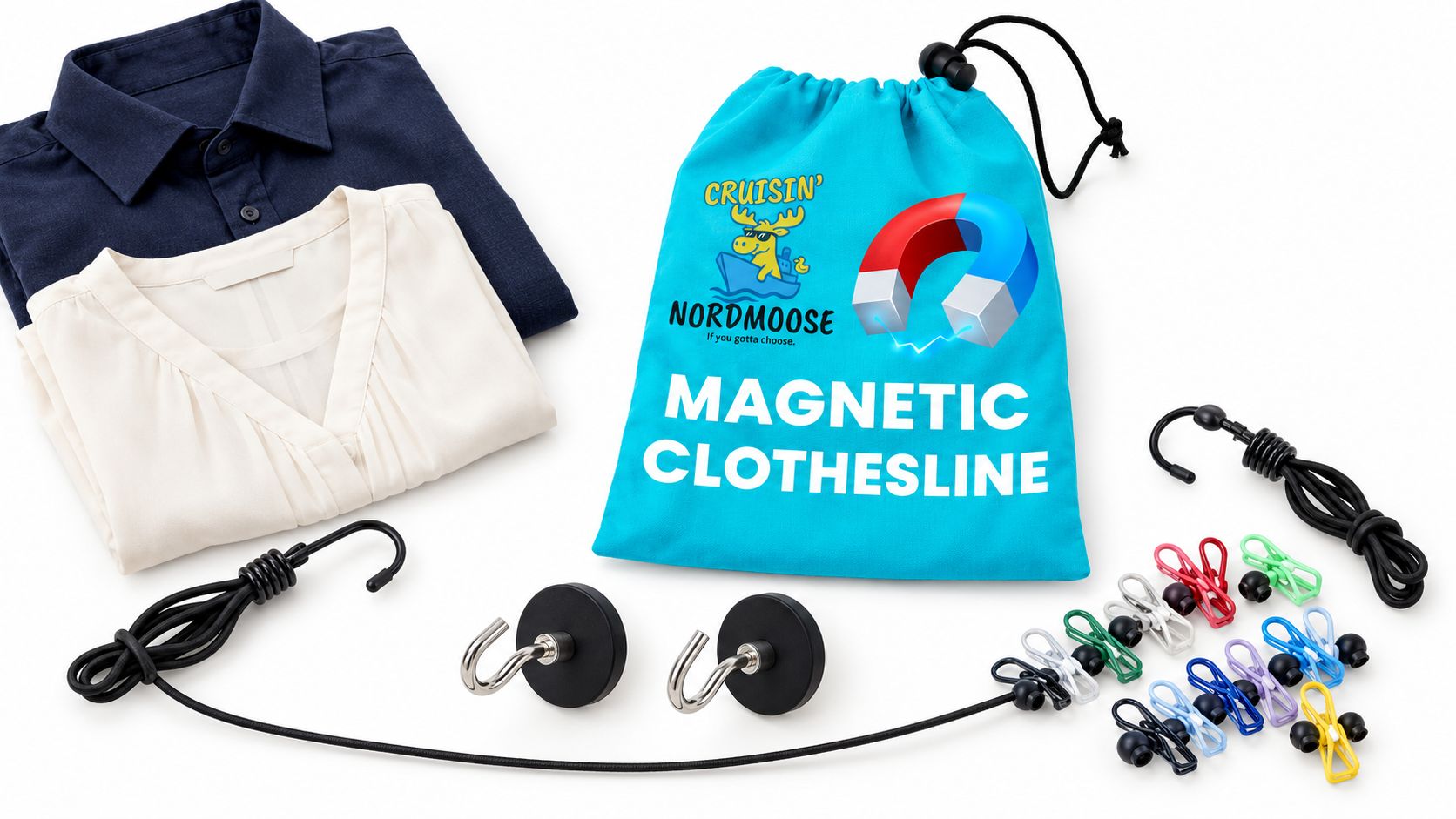
If a light layer gets damp, give it a place to dry rather than leaving it over a chair or bed. A portable option such as the Magnetic Clothesline for Cruise Ship Cabin attaches to metal cabin panels with rubber-coated magnets and retracts when not in use. It can provide a spot for lightweight garments or a wrap, as long as you follow the ship's rules and don't overload it.
After a long dinner, switching on the overhead light can feel harsh if someone's already winding down. A motion-friendly night light near the bathroom or cabin pathway can make nighttime movement easier without flooding the room with bright light. If the cabin feels warm after an evening indoors, a compact fan can help with airflow while keeping counter space free.
Small-stateroom organization matters beyond dressy clothes. These small-space storage solutions for cruise cabins can help you think through where to put accessories, toiletries, and the clothes you'll wear again. The aim isn't to prepare the cabin like a second event, but to make coming back to it comfortable.
Your Pre-Cruise Formal Night Checklist
Before you zip the suitcase, check the details that turn a vague dress-code question into a manageable plan. This cruise packing checklist can also help you keep formalwear in perspective alongside the rest of your trip.
- Confirm the schedule: Look up the dress-up evenings in your ship's daily program or current cruise-line guidance.
- Pack one reusable outfit: Choose a versatile piece that works for dinner and can be restyled with accessories.
- Prepare for wrinkles or spills: Bring a stain pen and a travel steamer if permitted by your cruise line.
- Choose your dining plan: If the main dining room feels intimidating, check the options and dress rules for other restaurants before sailing.
- Plan the cabin reset: Decide where a damp layer can dry and where you'll place a fan, night light, or other cabin essentials.
Formal night is meant to feel like a celebration, not a test of whether you packed the perfect outfit. Most cruisers are focused on enjoying dinner, their travel companions, and the evening, so choose clothes that fit the occasion and let yourself enjoy the ship.
Nordmoose offers compact cruise-cabin accessories for needs such as drying lightweight clothes, improving airflow, and navigating a dim cabin at night. If you're planning your outfit and the space you'll return to afterward, visit Nordmoose to explore options for your trip.