

Cruise Box Navy Explained: Meanings and Packing Tips
You're halfway through packing, you've got a cabin photo open on your phone, and you type cruise box navy hoping for a simple dark blue case that won't swallow the whole wardrobe. Instead you get naval history, military crates, gift sets, and something about missiles. That's not your fault. The same three words point in completely different directions, and picking the wrong one wastes money before you've even boarded.
Table of Contents
- Sorting Out the Three Meanings of Cruise Box Navy
- Navy Cruise Books and Military Sea Boxes
- Packing Boxes, Subscription Kits and Branded Cruise Sets
- Choosing a Cruise Storage Box for Tight Cabins
- Checking Accessibility and Cabin Clearance Before You Buy
- Comparing Packing and Organization Alternatives
- Your Next Step Before You Sail
Sorting Out the Three Meanings of Cruise Box Navy
The word trunk shows how this works. To one person it's luggage, to another it's a car part, and to a third it's a tree. Cruise Box Navy works the same way, and context decides which meaning matters for you.
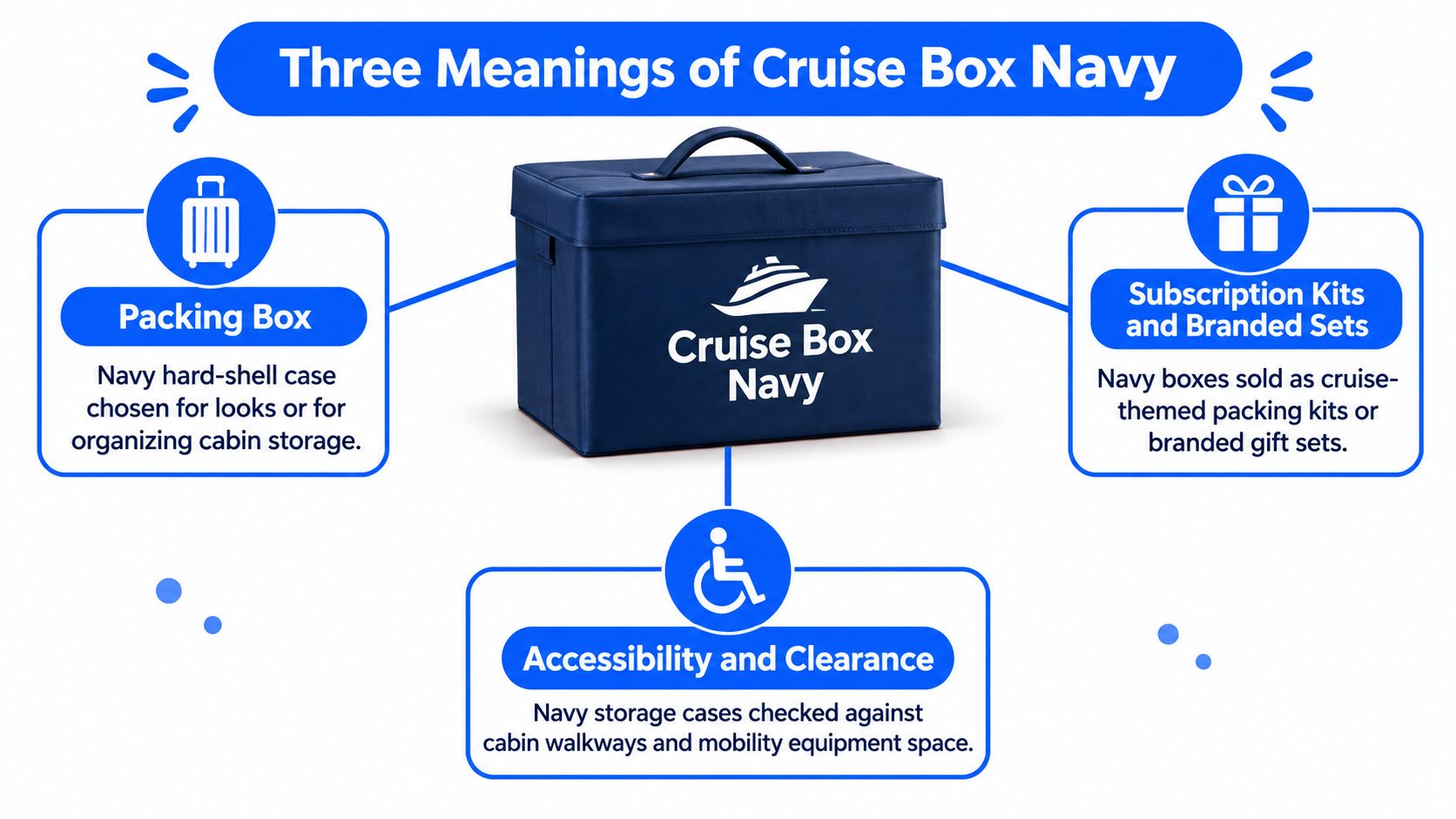
A quick way to sort your search
- A navy colored packing box: You're shopping for travel. Navy describes the color, not the military. This is what most cruisers actually want.
- A naval or military container: You're looking at service equipment or history. These boxes were built for crews and cargo, not for passenger cabins.
- A missile launcher enclosure: You're in naval history territory. It has nothing to do with packing.
That third meaning sounds odd, but it's real. The phrase can refer to a cruise missile launcher enclosure, and on USS Long Beach, box launchers for Tomahawk missiles each held four missiles. In that context, box describes a launcher, not a storage case.
Practical rule: If the listing talks about ships, deployments, or weapons, it isn't a cabin accessory, no matter how the title is worded.
Most readers land here for the first meaning. The rest of this guide focuses on that consumer choice, while clearing the naval terms out of your way so they don't keep cluttering your results.
Navy Cruise Books and Military Sea Boxes
A search for a navy cruise box can lead to records of ship deployments or heavy-duty military equipment. The shared words can obscure their different purposes, so start with what each item is used for.
The Navy cruise book is a record, not luggage
A Navy cruise book is a commemorative record of a ship's deployment, made mainly for its officers and crew. It brings together photographs, port visits, rosters, and accounts of daily life at sea, much like a yearbook documenting a crew's time aboard.
The Navy Department Library collection page lists 3,390,504 records in its Navy cruise book collection and also notes an estimate of roughly 8,000 to 10,000 cruise books published from the late nineteenth century to the present. That estimate helps explain why these records appear so often in search results. They form a substantial historical collection.
Crews generally produced the books privately and in limited quantities. Surviving copies can therefore help families and researchers trace a relative's service or learn about life during a deployment. For a traveler choosing something to pack, though, a cruise book is a historical record, not a cabin organizer.
The military sea box is logistics equipment
A military sea box is a rugged container for transporting and storing equipment through rough handling, stacking, and exposure to water during moves and deployments. Its design serves the demands of shipping and military storage, rather than the limited space beneath a passenger ship's cabin bed.
Check the intended use and seller. Military sea box listings focus on impact resistance, load strength, and military storage needs, and are commonly found through surplus or logistics suppliers. A consumer cabin box should instead make its weight, dimensions, stowability, and ease of access clear. Those details matter in a tight cabin: even a sturdy box may be unsuitable if it cannot fit under the bed or be reached comfortably.
Packing Boxes, Subscription Kits and Branded Cruise Sets
Once you set the naval meanings aside, three consumer products remain. They look similar in photos, but they solve different problems.
The image below shows the kind of coordinated set gift shoppers often see first.
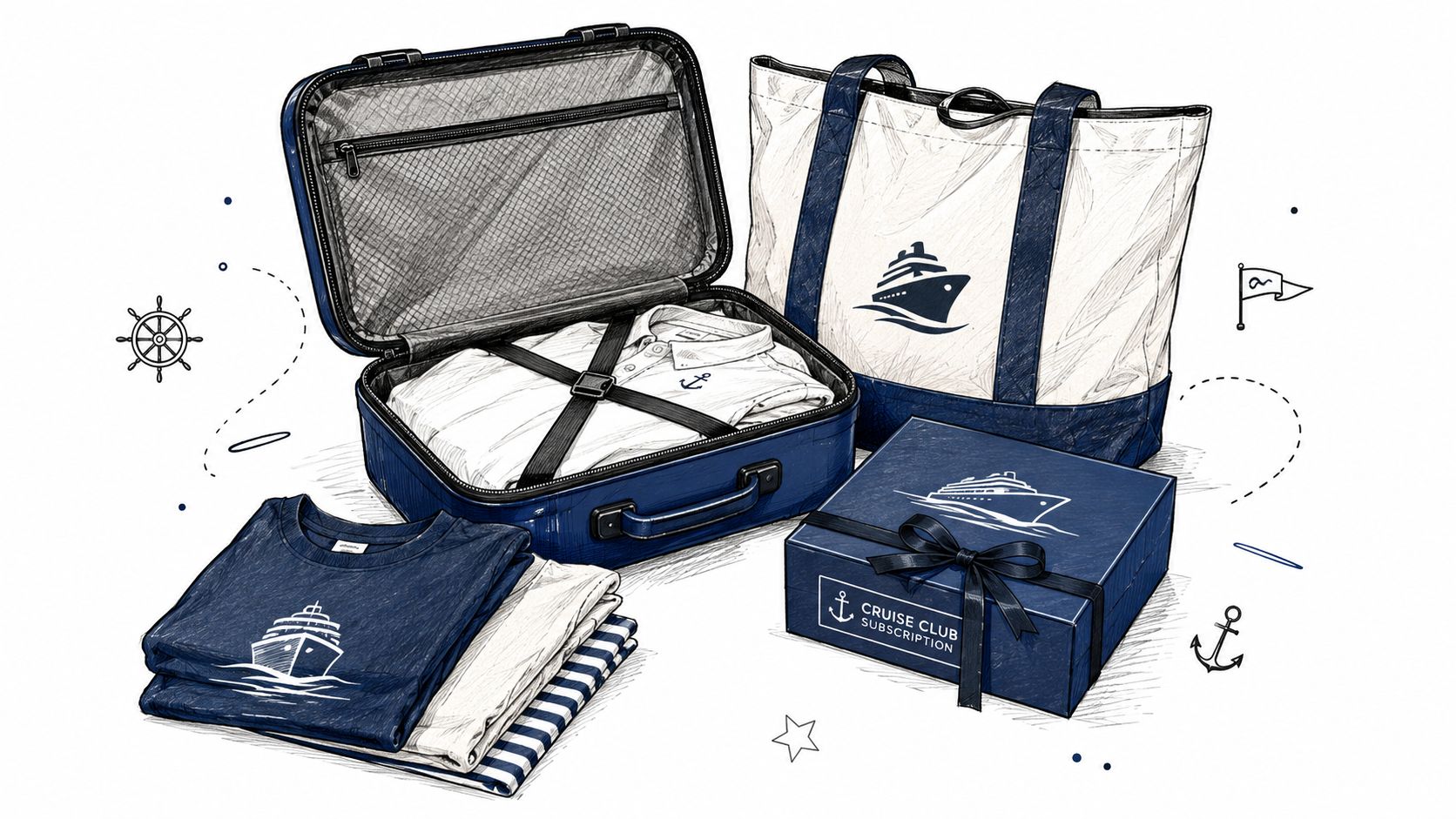
Three shoppers, three different boxes
A couple sharing a stateroom might want matching navy packing boxes because dark blue hides scuffs and is easy to spot among black luggage. For them, the box itself is the product. They should check outside dimensions, empty weight, and whether it nests inside their main suitcase on the way home.
A gift shopper faces a different choice. A subscription kit sends themed travel items over time, while a branded cruise set bundles coordinated accessories in one purchase. Both can delight a first time cruiser, but only if the contents match real cabin needs. Ask what's included, whether individual items can be replaced, and whether the recipient's ship allows every item in the bundle.
A pretty navy lid tells you nothing about fit. The contents list and the measurements tell you almost everything.
A third shopper, an experienced cruiser restocking basics, often does better buying single items. Bundles can duplicate things already owned, like luggage tags or tote bags, and leave out the one item that cabin actually needs.
This short video walkthrough helps you see how small accessories look once they're spread across a real counter.
Before you pay, list the problems you're solving. Drying swimwear, charging phones, and finding sunscreen in the dark are different jobs, and no single box does all three well.
Choosing a Cruise Storage Box for Tight Cabins
Color is the least important part of this purchase. In a tight cabin, you're buying usable volume, empty weight, and stowability. A box that's brilliant in a garage can be useless if it won't fit under the bed once it's empty.
Use the military sea box as a worked example of reading specifications critically. One documented model is built from high density polyethylene and measures 16 by 16.5 by 31 inches, about 4.74 cubic feet externally, weighs 23 pounds empty, and can support a 250 pound person, with recessed wheels, retractable handles, and Velcro straps. That strength is impressive, but ask the cabin questions. Will 16 inches of height clear your under bed space? Do you want to lift 23 pounds before you've packed anything? For most cruisers, that example shows what to check, not what to bring.
Cruise Storage Box Selection Criteria
| Criterion | What to Check | Why It Matters in a Cabin |
|---|---|---|
| Outside dimensions | Height, width, and length with wheels and handles included | Determines under bed and wardrobe fit |
| Empty weight | Weight before packing | Affects lifting, carrying, and airline limits |
| Usable volume | Interior space after walls and hardware | Thick shells can waste packing room |
| Water and impact resistance | Material, lid seal, corner design | Protects contents in terminals and damp bathrooms |
| Hardware profile | Recessed wheels, retractable handles, straps | Reduces snag points in narrow corridors |
| Empty stowage | Whether it nests, folds, or slides away | An empty box still occupies cabin space |
Measure before you order, then compare your numbers against practical small space storage solutions for compact cabins. Rounded corners and recessed hardware matter more than they sound. They protect adjacent bags and keep handles from catching on bed frames and door thresholds.
Your short checklist is simple. Confirm height first, weigh it second, and decide where the empty box lives for the whole sailing before it earns a place in your luggage.
Checking Accessibility and Cabin Clearance Before You Buy
More organization isn't automatically better. That's the assumption worth challenging, especially if anyone in your cabin uses mobility equipment, has low vision, lives with balance limits, or is traveling with a temporary injury.
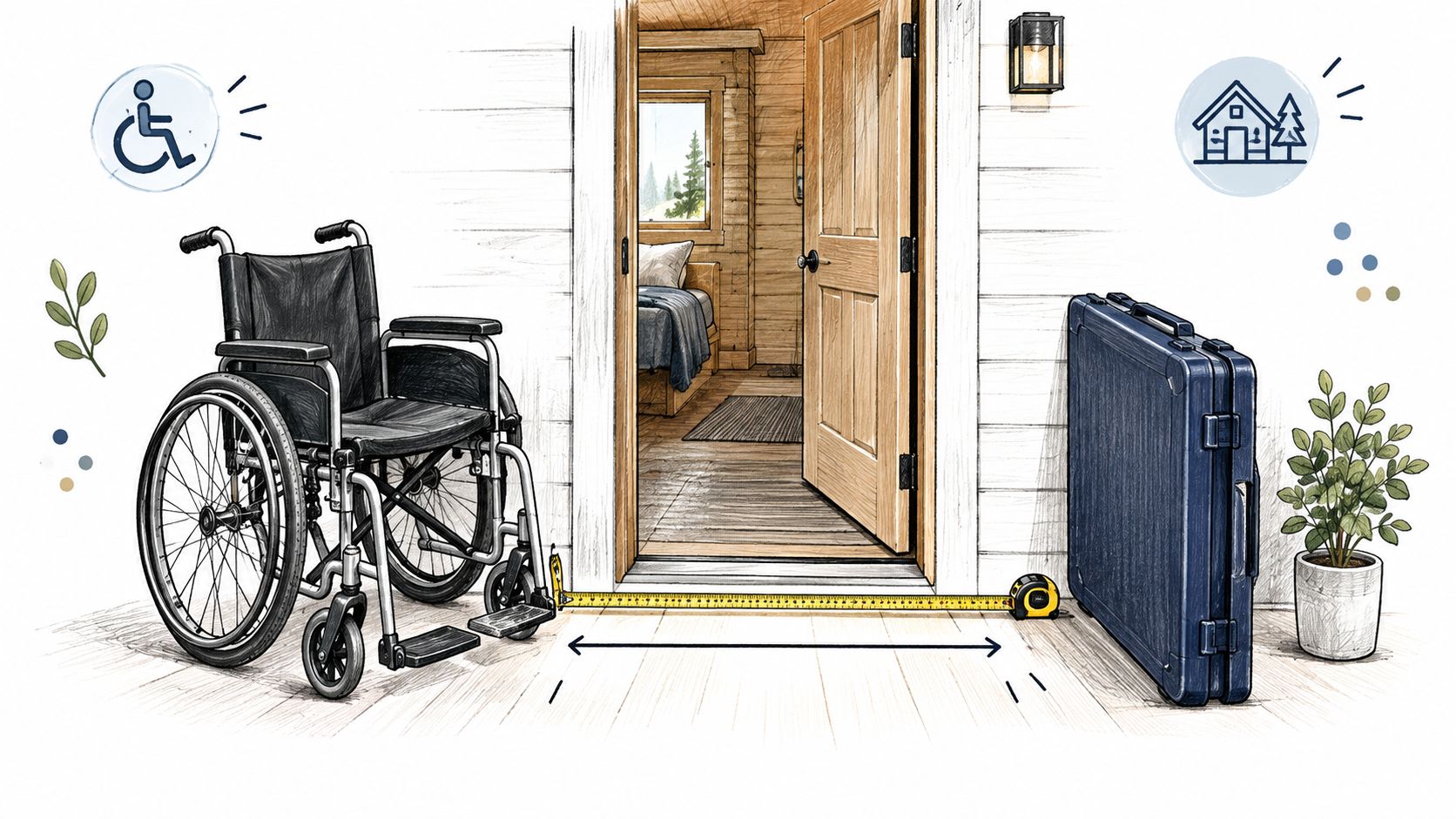
Cruise lines state that wheelchairs and mobility scooters must be stored inside the cabin rather than in corridors, and accessible cabins may include wider doors, lower shelving, handrails, ramps, and wet room bathrooms. That same guidance notes that accessibility needs generally require advance notice before sailing, so don't leave disclosure until embarkation day.
Where a helpful box becomes a hazard
- In the turning area: A box on the floor can remove the space a seated user needs to turn or transfer safely.
- Across a pathway: Night lights, clotheslines, and organizers help only if they don't create trip hazards or block emergency access.
- Mounted too high or too low: Vertical storage can force overreaching or repeated bending, which defeats the purpose.
- Protruding from a wall: Items sticking into a walkway are harder to detect for travelers with visual impairments.
Standard cabins and accessible cabins aren't interchangeable, even when photos look similar. Compare layouts using a guide to cruise ship cabin sizes and layouts, then place accessories within comfortable seated reach and keep door swings completely clear.
If an accessory changes how the room functions, ask the cruise line for written approval before you sail.
That one email protects you from buying gear you'll be asked to remove, and it gives the line a chance to suggest a cabin that genuinely fits your equipment.
Comparing Packing and Organization Alternatives
A packing box can contain loose items, but it also takes up a fixed amount of room. In a cabin with limited storage, compare each option by what it holds, where it fits, and whether it stays out of the way.
Packing cubes group clothing and slide into drawers, though they do not provide visible, grab-and-go storage. Soft duffels fit odd corners and fold flat, but protect belongings less than hard cases. Hard-shell cases offer more protection and need a place to stay. Over-door organizers use vertical space, but hooks may not suit every door, which still needs to close fully.
Magnetic organizers can make use of metal surfaces when a cabin has little drawer space. Nordmoose offers a Magnetic Cruise Door Organizer; check that the surface is suitable and that the organizer will not interfere with a doorway. A wall-mounted option can free a counter, but it is only useful if its contents remain easy to reach.
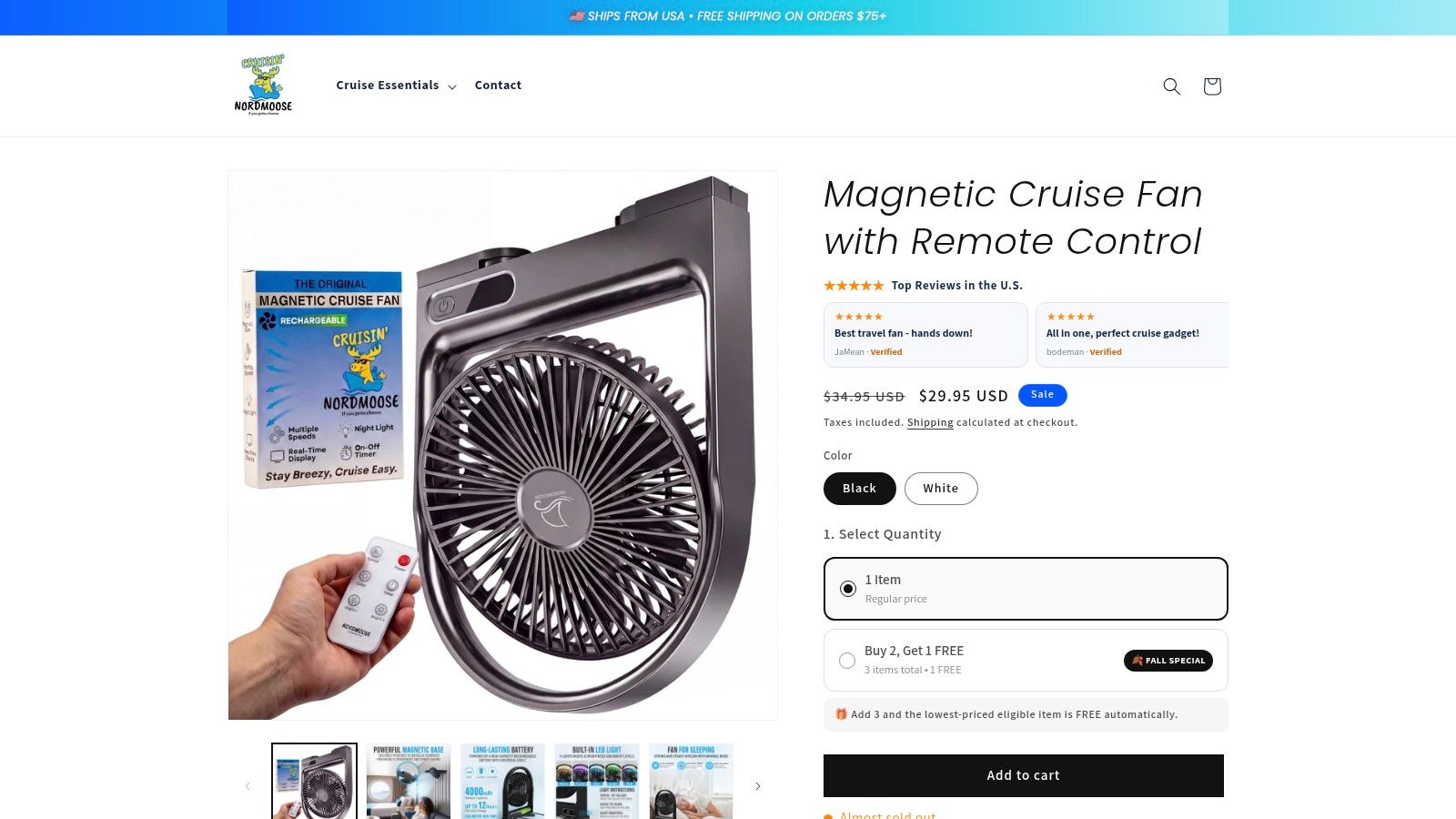
A fan illustrates a different trade-off: it addresses airflow rather than storage, and its placement matters if counter space is scarce. Compare possible solutions with cruise packing ideas matched to common cabin problems, then choose based on the problem you actually need to solve.
Organization also includes keeping luggage identifiable. Cruise bags may pass through port terminals, ship side loading, onboard sorting, and cabin delivery before passengers see it. Use limited contact details on an exterior tag, keep fuller information inside, and carry medication and embarkation essentials with you. A clear tag helps identify a bag without displaying your full home address.
Your Next Step Before You Sail
Search results can make “cruise box navy” sound like one product. Before you choose, match the name to your trip: it may refer to naval records, a military sea box, a themed gift set, or storage for a cabin. The right choice depends on what you need to bring aboard.
Use the cabin notes you already gathered to compare options by function. A fan addresses airflow, a night light helps with low-light movement, and organizers or a clothesline can handle smaller storage and drying needs. Like choosing a tool for a specific job, compare each item with the problem it is meant to solve, rather than judging by color or bundle photos.
Nordmoose lists a documented 30 day refund policy and customer support before and after trips. That may offer reassurance if an item does not suit your cabin once you see it in person.
The right choice fits your routine and leaves the cabin comfortable for everyone sharing it.
If your plans point toward wall mounted storage, better airflow, or gentler night lighting instead of another bulky box, compare the magnetic organizers, cruise fan, night lights, and clothesline at Nordmoose against your cabin checklist. Bring your under bed height and wall space notes with you, pick only what solves a problem on your list, and leave the rest ashore.