

8 Cabin Storage Ideas for Cruise Staterooms in 2026
You've just opened your cabin, dragged two suitcases past the bed, and realized there's nowhere obvious to put what's inside them. Swimsuits need a place to dry, toiletries crowd the vanity, chargers slide off the desk, and the closet looks full before you've hung half your clothes. That's not poor packing. It's the math of the room.
Many standard interior staterooms provide about 160 to 180 square feet, and the Travel Statistics Bureau summary of stateroom sizes puts the estimated average at 167 square feet. That footprint has to hold beds, seating, a bathroom, wardrobes, drawers, luggage, and personal belongings for the entire itinerary. Good cabin storage ideas don't copy home organization. They work around metal walls, shallow closets, rolling motion, and almost no spare counter space.
The eight ideas below focus on that reality. Each one includes a setup check to do before you buy or board, plus how it holds up on a sea day when the ship is moving, the bathroom is steamy, and two people need the same small sink. I prioritize compact, removable tools that keep daily items visible without adding furniture or blocking the narrow paths you'll use all week.
Table of Contents
- 1. Magnetic Wall and Ceiling Organizers
- 2. Over-the-Door Hanging Organizers
- 3. Under-Bed and Under-Sofa Storage Bins
- 4. Vacuum and Compression Storage Bags
- 5. Packing Cubes and Drawer Dividers
- 6. Collapsible Magnetic or Suction Clothesline
- 7. Trackable Luggage Tags
- 8. Bedside Caddy and Nightstand Organizer
- Cabin Storage Options Compared
- Build a Storage Plan Before You Sail
1. Magnetic Wall and Ceiling Organizers
Most cabin walls and doors are steel under the paint, and that's your largest unused surface. A magnetic organizer turns that vertical plane into storage for toiletries, sunglasses, chargers, cruise cards, and documents that would otherwise cover the vanity. Nothing sits on the counter, nothing slides into the sink, and you can move the whole thing in seconds.
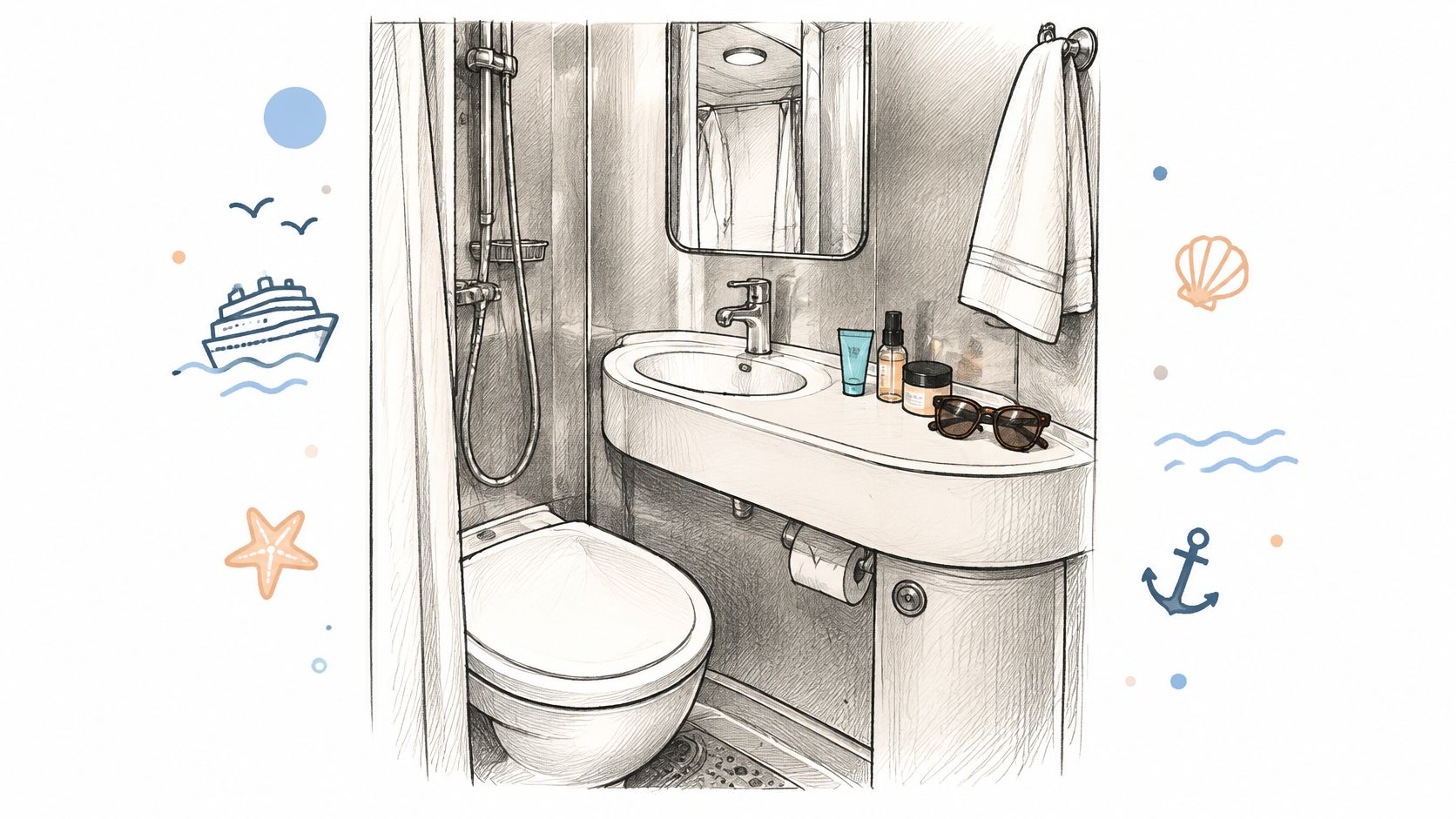
A sketched bathroom layout shows why counter space disappears so fast in these rooms.
Check the Surface Before You Trust It
Pack a cheap fridge magnet and test the wall, door, and ceiling area on embarkation day. Some newer panels, bathroom modules, and balcony dividers aren't magnetic, and a weak hold gets worse when pockets fill up. Put frequently used items at eye level and heavier bottles low, close to the magnets, so a full pocket doesn't peel away in rough seas.
- Test first: Confirm the surface holds a magnet firmly before loading pockets.
- Respect the rating: Don't overload compartments, especially with glass bottles.
- Keep clear: Never mount over vents, sprinklers, alarms, or door hardware.
As one concrete example, the Magnetic Cruise Door Organizer uses 3 anti-scratch magnets, has 15 mesh pockets measuring 7.5 inches by 10 inches, and is built to hold up to 25 lbs. It also includes over-the-door hooks for home or hotel use, though some cruise lines don't allow those hooks onboard because of door damage risk. If you're comparing formats, the guide to using a magnetic organizer board in a cabin walks through placement choices in more detail.
Practical rule: If an organizer slides when you tug it lightly at the dock, it won't survive a choppy night at sea.
On sea days, load it like a grab station by the door, with sunscreen, sunglasses, and cruise cards in the top row. You'll stop dumping those items on the bed.
2. Over-the-Door Hanging Organizers
A fabric pocket organizer can turn a cabin door into storage for toiletries and small travel gear, without taking up a drawer or the shallow bathroom counter. Clear or mesh pockets make it easy to spot a hair brush, sunscreen, or charging cable. They're less suited to shoes once the pockets are filled with everyday items.
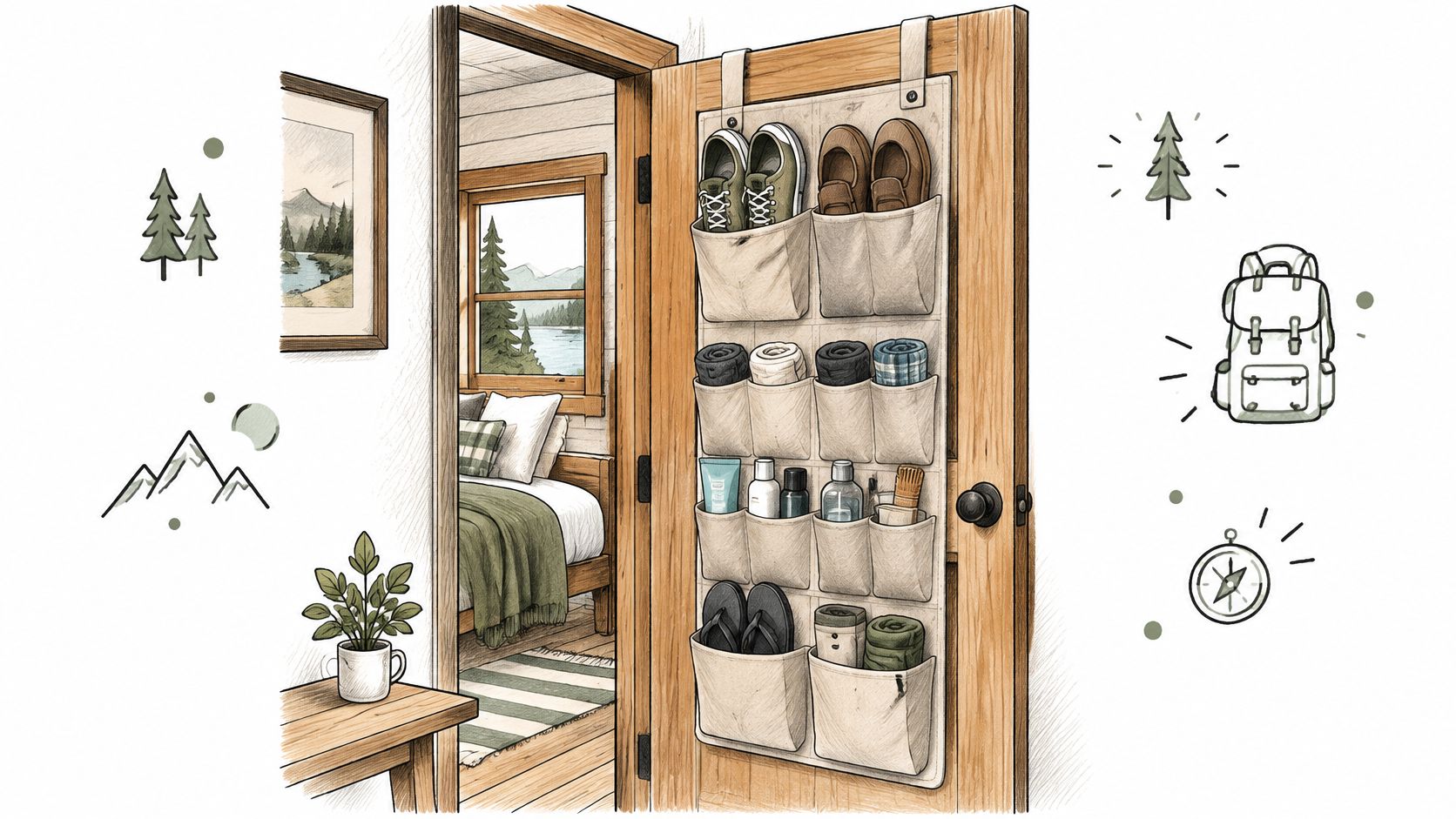
The fit matters more than the pocket count. A loaded organizer can swing and knock against the door as the ship moves, while hooks can stop a bathroom door from latching or scratch its frame. Before packing one, check your cruise line's rules: the Direct Line Cruises guide to what you can and can't bring onboard explains why household items should be checked against onboard policies.
Check the Door Before Filling the Pockets
Try the closet door first. Hang the empty organizer, then open and close the door and check the latch, clearance, and hooks. If it binds or lifts when the door moves, use another storage spot rather than loading it and discovering the problem at sea.
Set it up for quick access, not maximum capacity. Heavier toiletries belong in lower pockets, where they're less likely to swing and make noise. Keep valuables such as passports and cash in the safe or a secure bag, rather than exposed in open pockets.
For two people sharing a bathroom, assign each person a row or section. Put daily toiletries within reach and shared sunscreen where either person can grab it before heading ashore. This keeps small items together and leaves the shallow vanity available for washing and getting ready. On a sea day, return items to their assigned pockets after use so they don't end up loose on the counter or floor.
3. Under-Bed and Under-Sofa Storage Bins
Measure the bed clearance before choosing a bin. A container that fits at home can catch on a center support or fail to slide under a cruise bed, where frame styles vary by ship and cabin category. Check cabin photos or the deck plan, then confirm the gap in the room before loading your things.
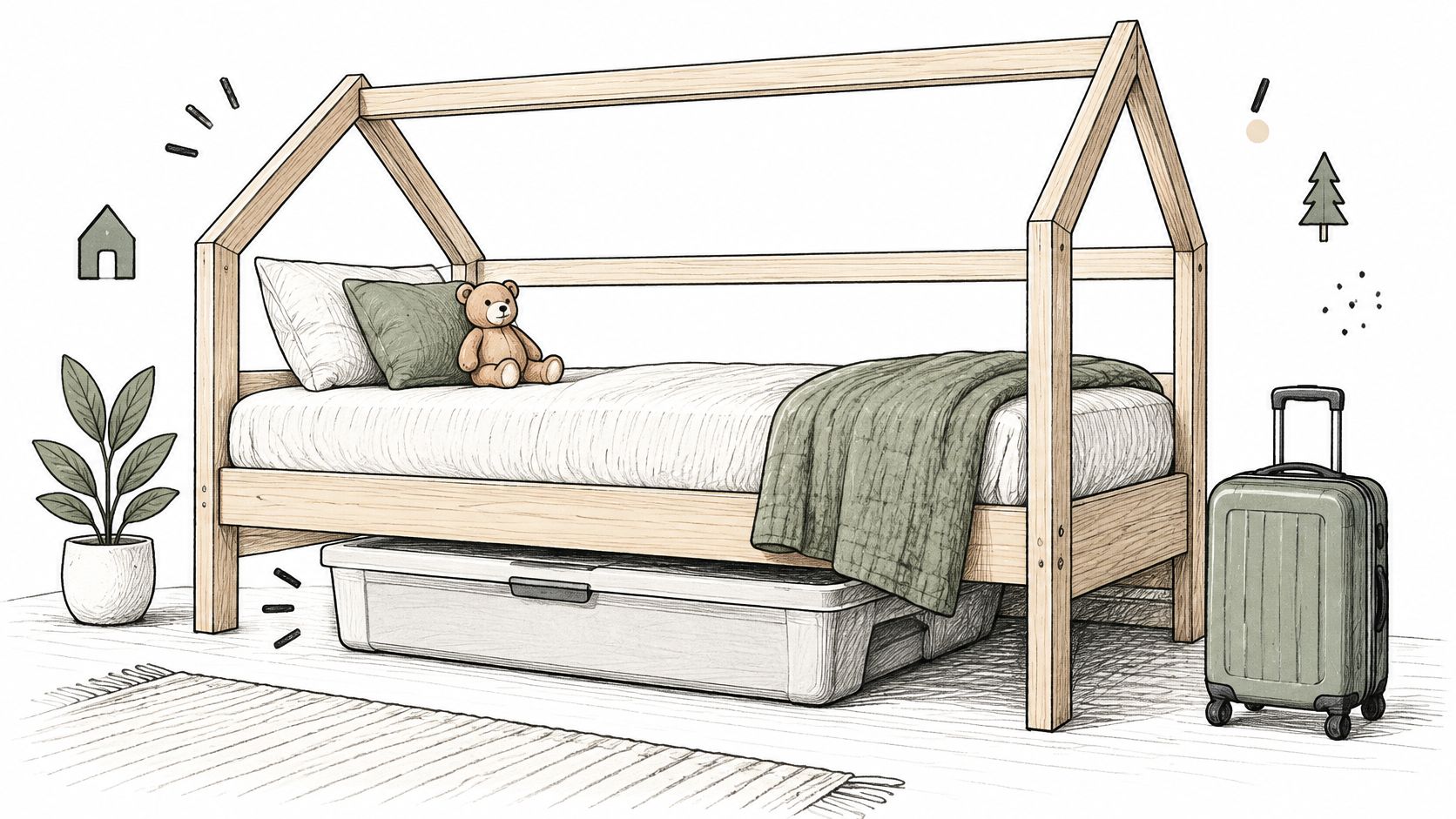
Low fabric bins flex around obstacles better than rigid containers and can pack flat in your luggage for the trip home. A suitcase that opens flat can also serve as a drawer. Choose storage for items you do not need several times a day, since retrieving it means bending down and moving anything in front of it.
Before buying a bin, check the dimensions and whether its handles or lid add height. If clearance is limited, measure your open suitcase instead. Avoid filling the entire gap: you need to pull the container out without scraping a support leg or blocking access to the bed.
Reserve under-bed space for extra clothing, shoes, beach gear, and bulky items. Put formal-night shoes, spare layers, or dirty laundry sealed in a bag there. Keep daily clothes in drawers or the closet, where they are easier to reach without kneeling. Label each bin at the end with painter's tape so you can identify its contents while it is still under the bed.
On a sea day, stow the beach bag and extra shoes underneath when they are not in use. Keep the walking lane clear, but place frequently used gear near the front so you can retrieve it without pulling out every container. This is especially useful at night, when clutter on the cabin floor can obstruct the route to the bathroom.
4. Vacuum and Compression Storage Bags
A roll-valve compression bag can reclaim drawer space when bulky clothes are crowding a shallow cruise-cabin closet. It removes air by hand, so there's no need for a vacuum in the cabin. Use it for sweaters, jackets, and spare outfits, not as a way to make every packed item smaller.
Fabric sets the limit. Fleece and soft knits compress well, but structured blazers and lined dresses can come out creased or misshapen. Shoes and hard objects do not compress, and their edges can puncture the bag. For dinner clothes, leave enough room to hang them instead.
Roll, Seal, and Stow
Smooth each garment before folding it. Wrinkles trapped in a compressed bag can become stubborn creases. Roll slowly from the valve end, press out the air evenly, and check the seal before stowing the bag. If it leaks, it can expand and crowd the drawer again.
The video demonstrates the hand-rolling technique, which needs no equipment.
Before buying, check the bag's dimensions against the space beneath your cabin bed or in the wardrobe. Bed frames and closet shelves vary, and a full-size bag may not lie flat where you intend to put it. Choose roll-valve travel bags that fit your planned storage spot.
Use this simple test: pack soft layers, seal one bag, and place it flat beneath the bed. Keep the stack low and stable for rolling seas, rather than piling bags where they could slide or block access. A spare bag can hold dirty laundry and compress it for the trip home.
For a cooler itinerary, two bulky sweaters each can take up valuable drawer room. Compressing them flat under the bed keeps that space available for clothes you reach for every day. On a sea day, leave the bag stowed and retrieve only what you need, rather than reopening the stack.
5. Packing Cubes and Drawer Dividers
Packing cubes earn their place in a cabin because the unpacking takes two minutes. You lift zippered cubes from your suitcase straight into a drawer or onto a closet shelf, and your categories stay separated all week. Drawer dividers do the same job inside built-in dressers, which are usually wide, shallow, and prone to turning small items into one sliding pile when seas pick up.
Three cubes in a single drawer show how categories stay separated.
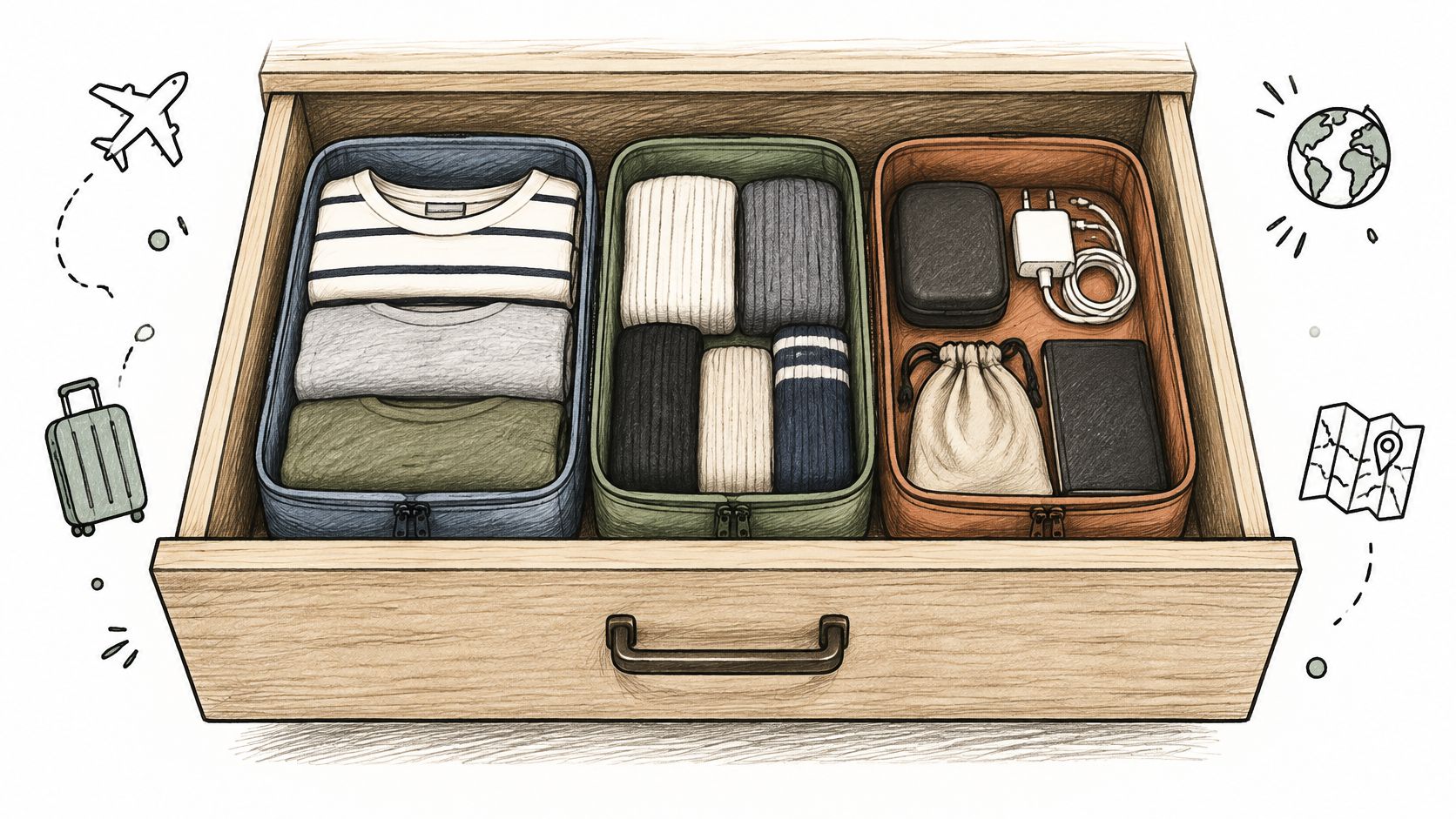
Sharing is where cubes really pay off. A cross-market survey cited in CLIA's 2026 State of the Cruise Industry presentation covered 2,459 recent passengers and found couples were the most common travel party, with average party size approximately 2.5 people. Two adults splitting three drawers need visible boundaries, and color-coded cubes provide them without an argument on day one. Eagle Creek and IKEA SKUBB cubes are both widely used, and the cheaper ones work fine if the zippers are sturdy.
Build a Cube System by Category
Pack one cube per category, such as tops, bottoms, and undergarments, and keep the cube you open most on top of the stack. Measure drawer depth before buying rigid dividers, since cabin drawers are often shallower than home dressers. Flexible fabric dividers forgive a sizing mistake.
Two travelers, two colors. When every cube is the same gray, you'll open the wrong one every single morning.
On sea days, pull the swim cube out whole, carry it to the pool deck bag, and drop it back when you return. Nothing migrates into bedding or under the sofa.
6. Collapsible Magnetic or Suction Clothesline
Wet swimwear is a daily storage problem nobody pictures before sailing. Suits draped over chairs, balcony rails, and bed corners stay damp, smell musty, and eat the seating you need. A compact clothesline gives swimwear, towels, and lightweight gym clothes a dedicated drying spot, then folds flat into a toiletry bag when you pack.
Magnetic versions anchor to metal walls or the ceiling, and suction versions grip smooth bathroom surfaces and shower walls. Many cabins have a retractable line in the shower already, so check before you buy. If yours does, a packable line still helps when two or three people rotate suits after every port day and the shower line fills up.
Position It for Airflow, Not Convenience
Drying speed depends on moving air, not length. Hang the line where cabin ventilation or a small fan passes over it, space items so they don't touch, and wring everything well first so you aren't dripping onto the floor. The bathroom works if you leave the door cracked, but a line near the cabin's air vent dries a suit noticeably faster overnight.
- Check attachments: Confirm magnets or suction cups grip firmly and won't mark the surface.
- Spread items out: Bunched fabric stays wet in the folds and starts to smell.
- Keep paths clear: String it high and out of the walkway so nobody catches it half-asleep.
For anchor spacing and knot basics, the step-by-step guide to hanging clothes on a clothesline covers the setup in plain steps. Say you return from a beach excursion at four. Suits go on the line by the vent, and by dinner they're dry enough to pack into the swim cube for tomorrow.
7. Trackable Luggage Tags
Storage planning starts before your bags reach the cabin. During embarkation, thousands of suitcases move through shared terminals and corridors, and cabin delivery can take hours. A trackable tag using Bluetooth or similar technology lets you check a companion app and confirm your bag is on the ship, instead of wondering whether it's still on the pier. Apple AirTag and Tile trackers are the widely used options.
This isn't theft prevention, and it won't speed up delivery. It's information. Knowing your suitcase is two decks below changes how you unpack, because you can set up organizers and hang what's in your carry-on instead of keeping the whole cabin in limbo.
Set Up Tracking Before You Leave Home
Test the tag with your phone at home, confirm the battery is fresh, and make sure the app alerts reach you. Put one tracker inside the bag in a zippered pocket where it can't be knocked off, and register your contact information in the app so a finder can reach you. Keep the matching printed cruise line tag on the handle as well, since crew sort by that, not by your tracker.
- Pair and test early: Don't troubleshoot a new tag in the terminal.
- Charge or replace: Swap the battery before a long itinerary rather than guessing.
- Screenshot your cabin number: If a bag lands at the wrong door, you can describe exactly where it should go.
The trackable cruise luggage tag setup guide covers pairing and placement in order. On disembarkation morning, the same tracker confirms your bag reached the terminal claim area, so you walk straight to it instead of scanning rows of near-identical black suitcases.
8. Bedside Caddy and Nightstand Organizer
The nightstand in a compact cabin is often a small shelf barely wider than a phone, and sometimes there isn't one on both sides of the bed. Glasses, medication, a water bottle, and a charging cable compete for that surface, and whatever loses ends up knocked into bedding or onto the floor during the night. A bedside caddy that tucks under the mattress or stands on the nightstand keeps essentials corralled and within reach.
This is a safety item as much as a storage one. Consumer Reports' cruise booking guide notes that only about 3% of cabins are ADA-compliant, so most travelers with limited reach or mobility are adapting standard layouts themselves. Keeping nightly medication and glasses in the same reachable pocket every night beats searching a dark cabin at 3 a.m.
Choose Stability Over Pocket Count
Look for a non-slip base or a flat tuck-in flap that the mattress holds firmly, because a lightweight caddy walks across a shelf when the ship rolls. Put medications and glasses in the caddy pockets rather than loose on the nightstand top, and route the charging cable so it doesn't cross the path to the bathroom.
- One-handed access: You should reach your phone and glasses without sitting up fully.
- Low profile: Tall organizers tip, so pick wide and flat over narrow and tall.
- Pair with soft light: A small motion-friendly night light near the caddy makes late-night trips safer without blasting the whole cabin awake.
Say you read in bed each night. Book, glasses, lip balm, and phone each get a pocket, and the nightstand holds only your water. On a rolling sea night, nothing slides, and you're not sweeping a hand across the floor looking for your glasses.
Cabin Storage Options Compared
| Item | Best For | Where It Mounts or Sits | Main Limitation |
|---|---|---|---|
| Magnetic Wall and Ceiling Organizers | Keeping toiletries and small essentials accessible while freeing counter space | Metal walls or panels | Works only on magnetic surfaces and has modest weight capacity |
| Over-the-Door Hanging Organizers | Storing shoes, accessories, toiletries, and small clothing | Cabin or closet doors | May obstruct doors and can sag when overloaded |
| Under-Bed and Under-Sofa Storage Bins | Stowing extra clothing, shoes, and bulky items | Under beds or sofas | Limited clearance and harder access |
| Vacuum and Compression Storage Bags | Reducing the bulk of soft clothing and linens | Suitcases, drawers, or wardrobes | Can wrinkle clothing and may leak or tear |
| Packing Cubes and Drawer Dividers | Sorting clothing and small items | Suitcases or cabin drawers | Can add bulk or fit drawers poorly |
| Collapsible Magnetic or Suction Clothesline | Drying swimwear, towels, and lightweight garments | Metal or smooth surfaces | Limited capacity; suction may lose grip |
| Trackable Luggage Tags | Locating misplaced luggage | Attached to luggage | Requires a phone and app; tracking depends on nearby devices |
| Bedside Caddy and Nightstand Organizer | Keeping nighttime essentials within reach | Nightstand or bed edge | Limited capacity and may be unstable on uneven surfaces |
Build a Storage Plan Before You Sail
Start with your actual room, not a generic packing list. Pull up the deck plan and cabin photos for your ship and category, then note the surfaces you can really use, including metal walls and doors, door backs, drawer depth, closet shelves, and clearance under the bed. Interior, oceanview, and balcony cabins differ enough that a bin or organizer that fits one layout can fail in another.
That planning matters because ships keep getting bigger while standard staterooms stay tight. A U.S. homeware market summary cited in the Elara closet organization guide references YouGov research finding that 46% of Americans identify insufficient storage as a challenge to maintaining an organized home. A cruise cabin compresses that same frustration into a fraction of the space, with more gear per person and no spare room to overflow into.
Pick one or two tools from each category that fits your trip, rather than buying all eight ideas at once. A couple on a warm itinerary needs the clothesline and magnetic organizer most, while a family of four needs cubes, under-bed bins, and a hard rule about shoe storage. Test magnets against your fridge, measure bags and bins against your suitcase, and pair every tracker at home where troubleshooting is easy.
Judge each item by whether it survives real cabin conditions. Deloitte's U.S. cruise customer-experience study, cited in CLIA's 2025 State of the Cruise Industry report, surveyed 994 passengers and found roughly 75% were satisfied with cruise basics. Storage friction is one of those basics you control. If you can find your cruise card, charger, and medication in under ten seconds without moving three other things, the system works, whatever it cost.
Keep compliance in the plan from the start. Favor removable, non-damaging setups, keep vents, sprinklers, doors, and pathways clear, and verify hook and power accessory rules with your specific line before boarding. The best setup is the one that adds capacity without creating a trip hazard or an inspection problem, and that preserves turning space and clear routes for every traveler in the room.
Do a five-minute reset each evening. Wet items go on the line, tomorrow's port gear goes by the door, dirty laundry goes into one sealed bag under the bed, and daily essentials return to their assigned pockets. That small habit keeps a compact stateroom working on day seven the same way it did on day one, and packing up on the last morning becomes a matter of zipping cubes and bins instead of excavating the cabin. If it fits your plan, Nordmoose is one relevant option for magnetic cabin organizers and clotheslines sized for these constraints, but the system matters more than any single product.
Before your next sailing, build your cabin setup around the surfaces you have, with magnetic organizers, a compact clothesline, and night lighting designed for small metal-walled staterooms. Visit Nordmoose to see the cruise-specific storage and comfort accessories, compare pocket sizes and mounting options, and pick the pieces that match your cabin category and itinerary.