

Tips for First Time Cruisers: A Practical 2026 Guide
You arrive at the port with a suitcase that barely closes, a carry-on full of items you may not need, and no clear plan for what happens before your cabin is ready. Your checked luggage disappears into the terminal, the ship feels larger than expected, and you're left wondering where to keep your passport, charger, medication, swimwear, and room key. Then someone mentions seasickness, the safety briefing begins, and the first day starts feeling like a series of small problems to solve.
The best tips for first time cruisers prevent that friction before it starts. Your cabin choice affects comfort, your carry-on protects the first hours onboard, and a deliberate stateroom setup keeps a compact room usable throughout the voyage. You'll also need a sensible plan for motion, safety, shared space, and the final morning. Follow the journey in order, from booking to disembarkation, and your first cruise will feel far more manageable.
Table of Contents
- 1. Choose the Right Cabin Type Based on Personal Priorities
- 2. Establish a Pre-Cruise Packing Strategy for Compact Cabins
- 3. Plan Efficient Luggage Management Before Embarkation
- 4. Prepare for Motion Sensitivity Before Embarkation
- 5. Address Warm and Stuffy Cabin Conditions Early
- 6. Pack a Cabin Setup for Safety and Comfort
- 7. Follow Ship Safety and Shared-Cabin Etiquette
- 8. Disembark Without Last-Day Chaos
- First-Time Cruiser: 8-Tip Comparison
- Turn These Tips Into a Cruise-Day Checklist
1. Choose the Right Cabin Type Based on Personal Priorities
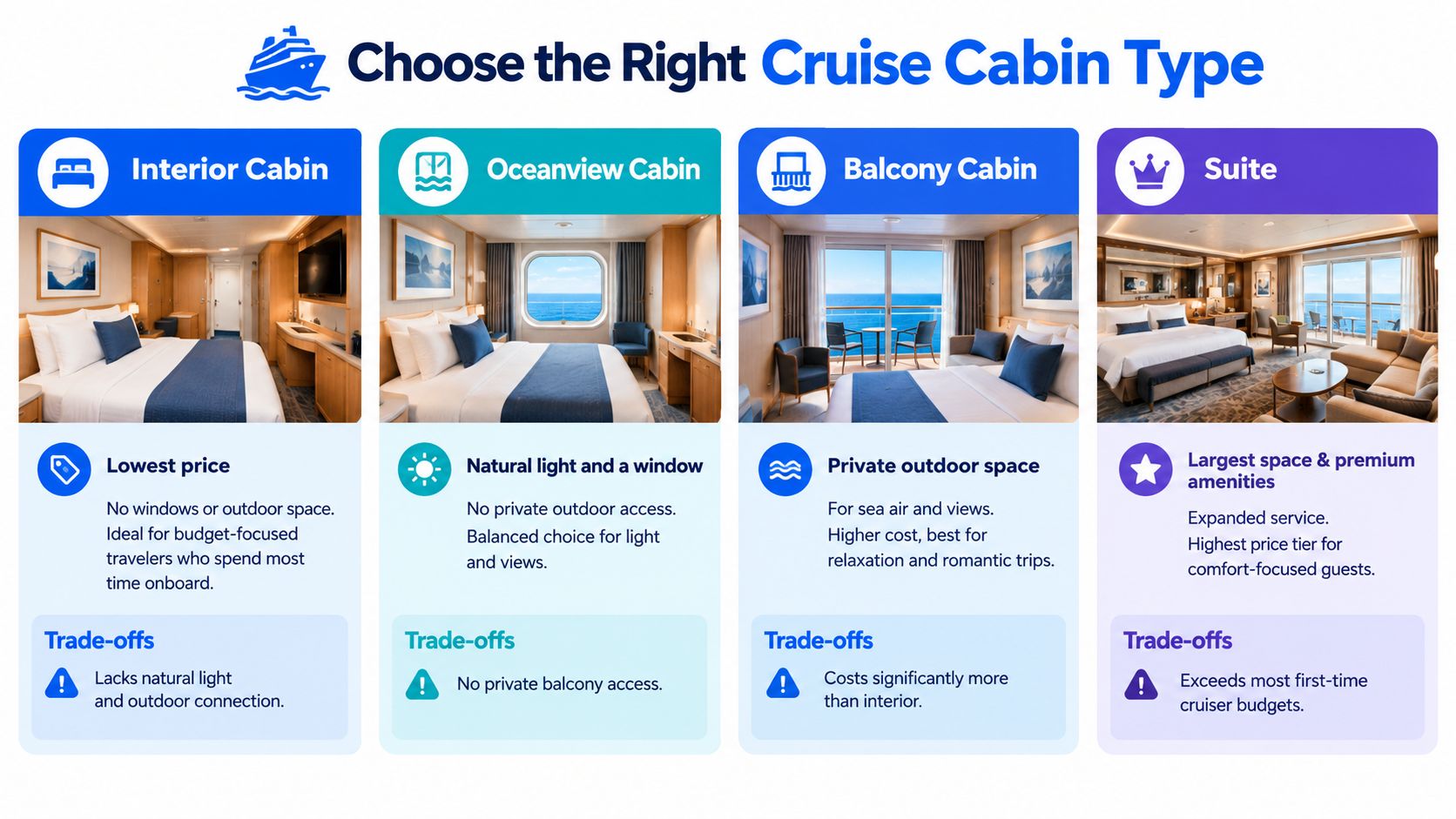
Price is only one part of a cabin decision. An interior stateroom can be a sensible choice if you expect to spend most of the day at activities, on excursions, or around the ship. An oceanview cabin adds natural light without the outdoor space of a balcony, while a balcony gives couples a private place to sit outside without leaving the room. Suites provide more space and separation, but a first voyage may not be the best time to pay for features you haven't yet learned to value.
Start by deciding what matters most to you. Budget, daylight, outdoor access, privacy, and motion sensitivity should guide the search before you compare specific prices. A traveler who feels uneasy at sea may prefer a cabin nearer the middle of the ship, where motion is generally less noticeable than at the bow or stern. A light sleeper should study the deck plan carefully and avoid locations beneath busy entertainment areas, near elevators, or close to service spaces.
CLIA's 2025 State of the Cruise Industry report says 31% of cruisers in the prior two years were new to cruise, compared with 27% in 2023 and 24% in 2019. The same report says 68% of international travelers are considering taking their first cruise, so cabin planning increasingly needs to serve people who haven't yet learned their own cruise preferences.
Before selecting a room, review the line's cruise ship cabin sizes and then inspect the exact cabin number on the deck plan. Don't assume that two cabins in the same category will feel identical. If the line allows specific cabin requests, choose the location rather than accepting an unknown assignment.
Practical rule: Save money on the cabin only when the trade-off matches how you'll actually use the ship.
2. Establish a Pre-Cruise Packing Strategy for Compact Cabins
A cruise cabin rewards a smaller, more deliberate wardrobe. You'll unpack once, live in a confined space, and repeatedly reach for the same essentials. Packing every possible outfit creates more decisions and makes it harder to find the items you need.
Build your list well before departure and plan outfits around the itinerary rather than packing by category alone. Lay out walking clothes, swimwear, evening clothing, sleepwear, and shore-day layers. A compact color palette helps tops and bottoms work together, while quick-drying fabrics can be more practical than bulky cotton when you need to reuse an item. Convertible clothing can also earn its space, but only if you'll genuinely wear it. A complicated garment that stays in the suitcase isn't efficient packing.
Leave some room in the luggage instead of filling every pocket. That empty space makes it easier to organize the cabin and accommodate anything you bring back. Compression bags can reduce volume, but they don't reduce weight, and they may make it harder to separate clean and worn clothing. Use them selectively, not as a reason to pack more.
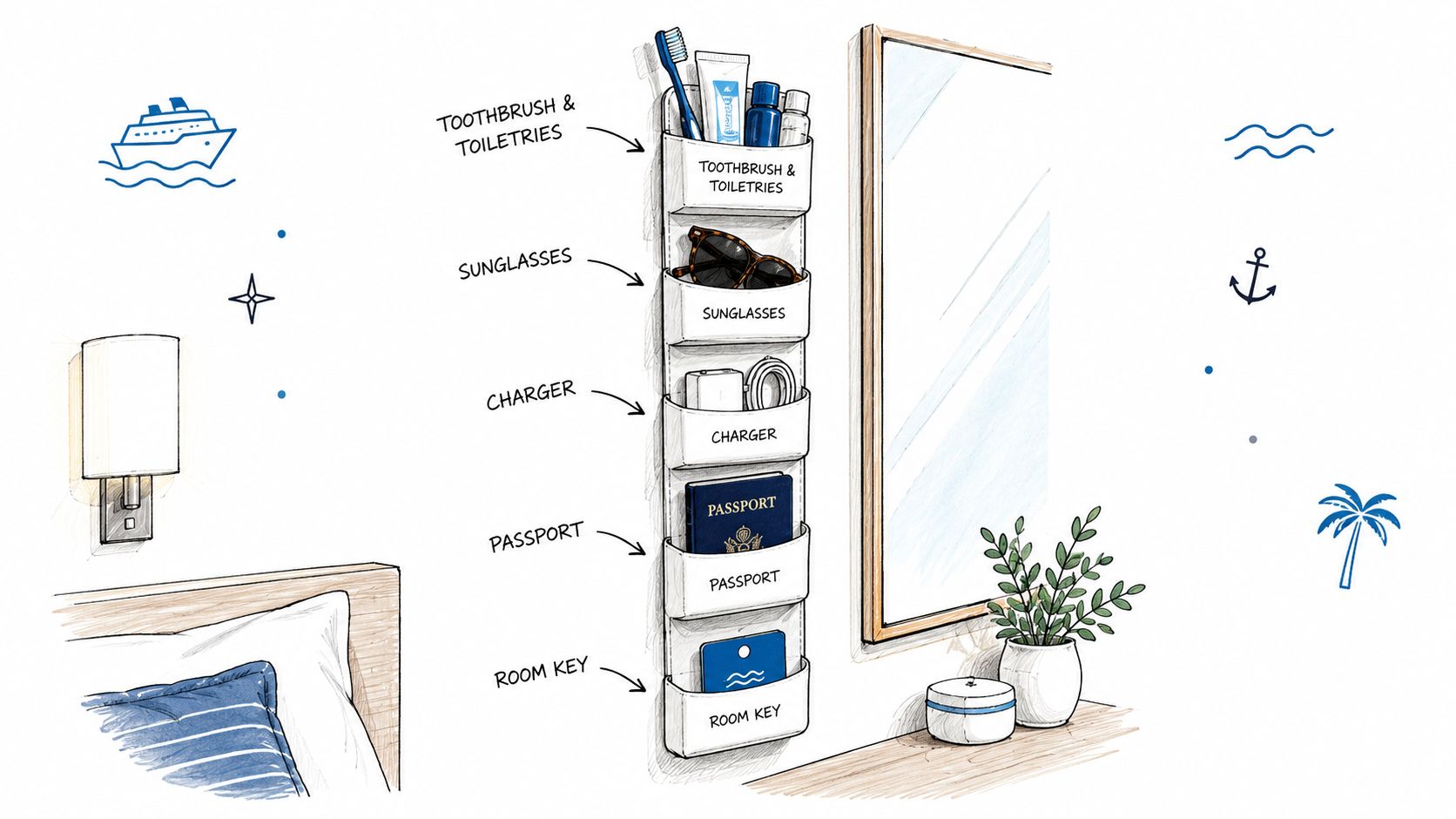
For toiletries, chargers, sunglasses, documents, and small daily items, a hanging system can turn unused vertical space into storage. The Magnetic Cruise Door Organizer has three anti-scratch magnets, 15 mesh pockets, and a stated capacity of up to 25 pounds. Its magnetic and hook options aren't interchangeable with every ship's rules, so check the cruise line's policy before using hooks on a cabin door.
See the cruise ship essentials guidance while building your list, and keep all medication, identification, valuables, and travel documents in your personal carry-on.
3. Plan Efficient Luggage Management Before Embarkation
Your luggage may leave your hands before you reach the ship, and your stateroom may not be ready when you board. Treat those as normal parts of embarkation, not as signs that something has gone wrong. The practical solution is to separate what you need immediately from what can wait until the bags reach the room.
Your carry-on should contain the items that protect your independence during the first part of the day:
- Medication and health items: Keep prescriptions and anything you may need on a schedule with you, not in checked luggage.
- Documents and valuables: Carry identification, confirmation details, payment cards, and other irreplaceable items personally.
- First-day clothing: Pack swimwear, a cover-up, comfortable shoes, and a change of clothes if you plan to use the pool or explore the ship.
- Basic comfort items: Include sunscreen, toiletries, a charger, water, and anything needed after a long journey.
- Cabin setup essentials: Keep small organizers, a night light, or other compact accessories accessible if you want to arrange the room before unpacking.
A generic “keep essentials in your carry-on” instruction is easy to overlook. A better system is to pack for the first four to eight hours, when you may be waiting for cabin delivery, eating, attending the safety process, and moving around the ship. Families should also distribute essential items so one delayed bag doesn't leave everyone without a change of clothes.
For checked luggage, use clear identifiers and photograph the tags before handing the bags over. If your cruise line offers digital luggage tracking, register every bag and keep the cruise luggage tag information accessible. Verify that each bag appears in the system before leaving the terminal, and report a missing or incorrect item promptly rather than waiting until evening.
4. Prepare for Motion Sensitivity Before Embarkation
You don't need to assume that seasickness will ruin your cruise, but you shouldn't wait for nausea to become severe before making a plan. Motion can feel different during departure, open-water sailing, sea days, and rougher weather. First-time travelers may also be unsure which parts of the ship feel steadier, so preparation gives you more options.
The available figures vary by method and voyage. One cruise-health guide reports that 21% of passengers felt slightly unwell and 7% vomited in a large at-sea sample, while another source places any seasickness symptoms at about 10% to 15% of passengers. A medical-literature summary also reports that motion sickness can affect up to 25% of passengers within two to three days of an ocean voyage, with higher incidence on smaller vessels and in adverse weather, as described by cruise motion-sickness guidance.
Those figures aren't a prediction of what will happen to you. They do show why a small, practical plan is worthwhile, particularly if you already know that boats, cars, or amusement rides affect you.
Make prevention part of your departure plan
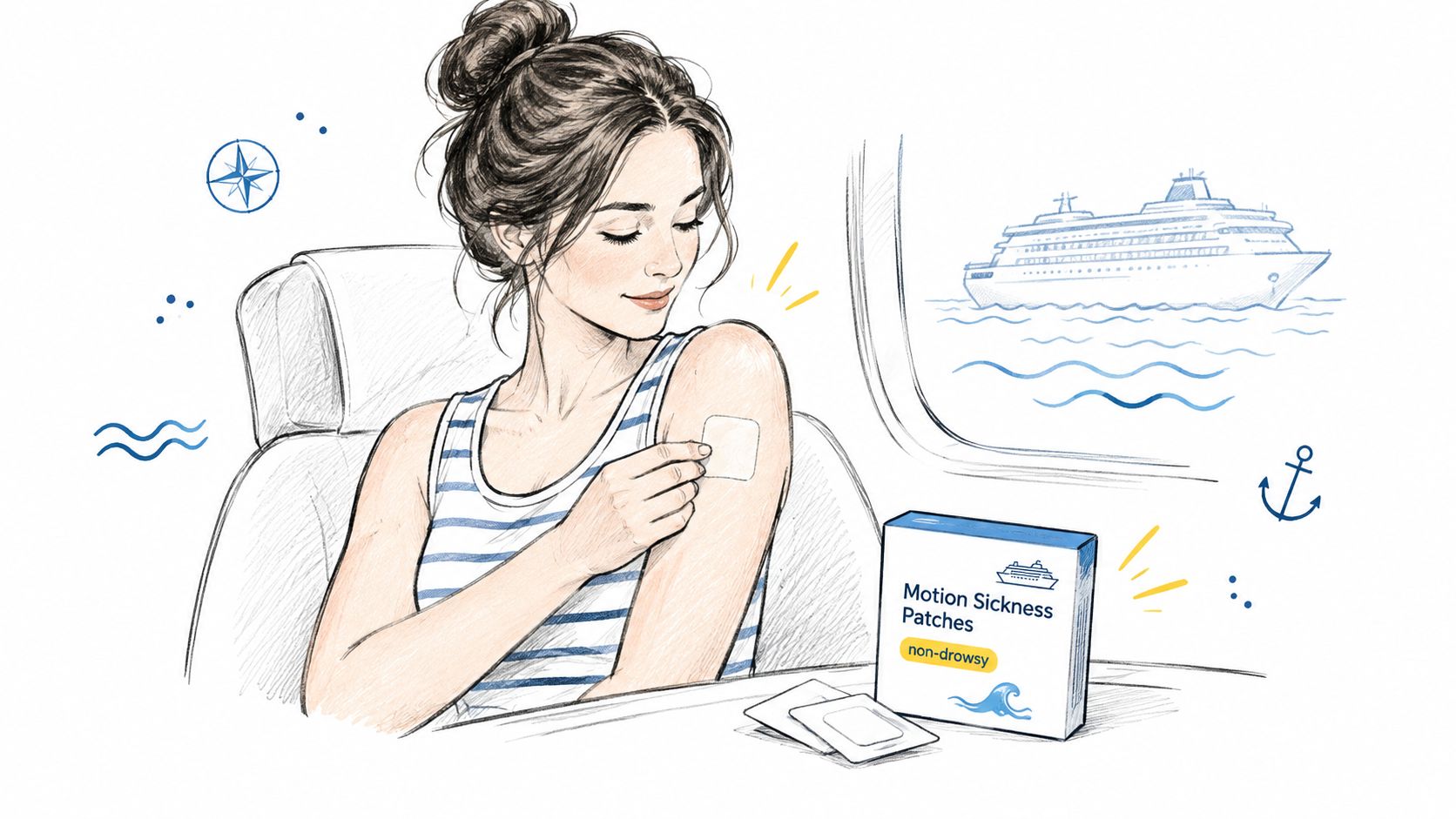
If you use a motion-sickness patch or medication, discuss it with a qualified healthcare professional before travel and follow the product instructions. Apply preventative products before symptoms escalate, rather than treating them as an emergency fix. Pack spares in your carry-on in case checked luggage is delayed, and keep them accessible during embarkation and sea days.
When the ship is moving, try the areas that usually feel more stable, such as a central, lower part of the vessel, and step outside for fresh air if that helps. Focus on the horizon, eat lightly if your stomach feels unsettled, and tell the crew if symptoms become difficult to manage. A solution that makes you drowsy may not suit a shore excursion or an active day, so consider alertness as part of the trade-off.
5. Address Warm and Stuffy Cabin Conditions Early
A cabin that feels comfortable when you first walk in can feel different after the door stays closed, wet swimwear enters the room, and several people prepare for bed. Interior rooms may feel especially enclosed because they lack a window, but any compact stateroom can benefit from better air movement.
Don't wait until bedtime to discover that the room feels warm. Walk in, identify the air-conditioning outlet, and test the airflow before you unpack. A small rechargeable fan can circulate air without taking up the counter space needed for toiletries and electronics. Place it where it moves air across the room rather than directly at one person, and adjust the speed so it supports sleep instead of becoming a new source of noise.
Test the cabin layout before committing to a setup
Start with a temporary position. Run the fan while you inspect the room, open luggage, and use the bathroom. You may find that airflow from the entrance toward the bathroom works better than aiming across the beds. If the device mounts magnetically, verify that the surface is suitable and that the attachment is secure before placing it near a sleeping area.
Rechargeable equipment also needs a routine. Charge the fan when the cabin is empty or when you're settled for the night, and don't place it where a cable crosses a walkway. Keep wet clothing away from the fan, outlets, and bedding. Air circulation can improve comfort, but it won't replace the ship's ventilation system or solve a maintenance problem. If the cabin remains unusually hot, report it to guest services promptly.
The most useful cabin accessory is the one you can set up without sacrificing the little free surface you have.
Families should agree on the fan position and speed before bedtime. One person may want active airflow, while another may prefer quiet. Solving that disagreement early is easier than negotiating in the dark after a long day ashore.
6. Pack a Cabin Setup for Safety and Comfort
A compact room works best when you assign locations before clutter spreads. The first hour onboard is the right time to decide where the room cards, daily schedule, chargers, toiletries, wet items, and shoes will live. If you postpone that decision, beds and counters become temporary storage, and temporary storage tends to remain there.
Begin with a quick survey. Look for metal surfaces, available outlets, the bathroom entrance, ventilation paths, wardrobe space, and any area that could become a trip hazard. Install the organizer first, then place the fan and night light. This order keeps the most frequently used zones clear while you still have energy to make small adjustments.
Use a simple division of responsibility:
- Daily documents: Choose one visible location for schedules, excursion details, and notices.
- Room cards: Keep every traveler's card or wearable in the same easy-to-reach area.
- Chargers: Group cables near an outlet, but keep them away from wet surfaces and walkways.
- Wet items: Hang swimwear and towels where they can dry without touching beds or electrical equipment.
- Night navigation: Place a low light near the bathroom route so nobody needs the overhead light for a nighttime trip.
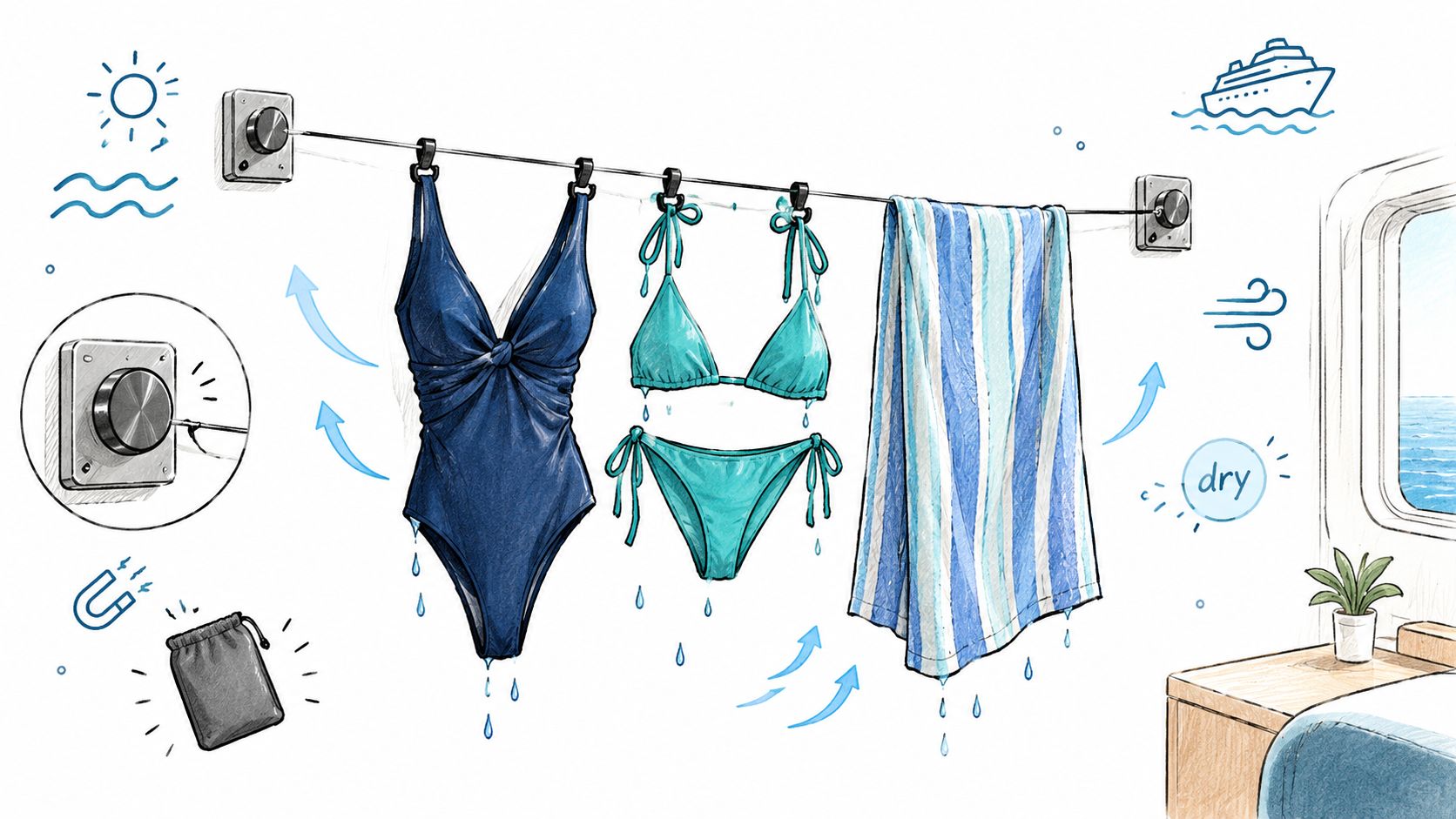
Don't mount anything until you've checked the ship's current rules and the product instructions. A surface that appears suitable may be close to an emergency fixture, a door, or a sprinkler. Keep the floor clear, and recharge battery-powered accessories when the cabin is unoccupied or when they can be monitored.
For shared rooms, give each person a defined storage area. That small decision prevents the common evening search for a missing room key, shore pass, or charger.
7. Follow Ship Safety and Shared-Cabin Etiquette
The safety process is part of your first day, not an interruption to it. Complete the required muster process as soon as the cruise line instructs you to do so, and learn the route from your cabin to the muster station. Don't rely only on elevators. Knowing the stairs and the ship's layout is useful if elevators are unavailable or crowded.
After the muster process, look at the cabin with safety in mind. Suitcases shouldn't block the entrance, emergency equipment, or the path between the beds and bathroom. Secure loose objects before rough-water periods, and follow crew announcements even when advice from a product label or online forum says something different. Ship policies take priority over general cruise tips.
Make the room work for everyone
A shared cabin needs agreements, not assumptions. Decide when lights go off, where chargers can remain plugged in, how the fan will be used, and where room cards will be kept. Families may also want a fixed meeting point in case someone becomes separated in a busy public area. Keep wet towels and beach items contained rather than leaving them on chairs or across the floor.
The same principle applies to accessories. Magnetic products, hooks, electrical items, and battery-powered devices may be subject to line-specific restrictions. Check current rules before boarding, and do not use a hook just because it worked on a previous ship. Some lines may prohibit over-the-door hooks because of potential door damage.
Safety habit: Know where you are, keep escape routes open, and treat crew instructions as the final authority.
Good etiquette also protects your relationship with cabin mates. Quiet hours, bathroom timing, overhead lighting, and storage can become sources of tension in a small room. A short conversation on the first evening prevents repeated frustration later.
8. Disembark Without Last-Day Chaos
Disembarkation begins before the final morning. By the last evening, you should know which belongings will be packed into checked luggage, which items must remain with you, and what instructions the ship has provided. The process may differ from embarkation, so don't assume you can just reverse the steps from the first day.
Prepare a dedicated final-night carry-on. It should hold the clothes you'll wear after leaving the ship, medication, identification, travel documents, chargers, valuables, and anything needed during the journey home. Keep those items out of checked luggage even if it means carrying a slightly fuller bag through the terminal.
Pack in stages instead of emptying every drawer at once. Start with formalwear, spare accessories, and items you won't need overnight. Leave morning toiletries, sleepwear, medication, and travel clothes in one clearly defined area. If you place luggage outside the cabin according to the ship's instructions, photograph the identifiers and keep the matching information accessible.
Do one slow cabin sweep
The final search should be methodical rather than rushed. Check the following locations:
- Bathroom: Look behind toiletries, on shelves, under the sink, and near outlets.
- Wardrobe: Inspect hangers, upper shelves, pockets, and the back of the closet.
- Drawers: Open every drawer fully, including the small bedside compartments.
- Bed area: Check under the bed, beside the mattress, and behind bedside furniture.
- Technology: Look at every outlet for chargers, adapters, and cables.
- Documents: Confirm that passports, identification, room cards, and transportation details are together.
Allow buffer time for luggage collection, terminal procedures, customs, and onward transportation. Keep the cabin orderly while packing so small items remain visible. The last morning is not the time to discover that a charger is still plugged in behind the bed or that a passport was placed inside a checked suitcase.
First-Time Cruiser: 8-Tip Comparison
| Item | Implementation Complexity 🔄 | Resource Requirements ⚡ | Expected Outcomes 📊 | Ideal Use Cases 💡 | Key Advantages ⭐ |
|---|---|---|---|---|---|
| Choose the Right Cabin Type Based on Personal Priorities | Medium 🔄🔄, research cabin types & deck plans | Medium ⚡⚡, time, budget flexibility | Higher comfort alignment; fewer surprises 📊📊📊 | First-time cruisers weighing budget vs comfort; couples/families | Tailored experience; reduces regret ⭐⭐⭐ |
| Establish a Pre-Cruise Packing Strategy for Compact Cabins | Medium 🔄🔄, planning and outfit testing | Medium ⚡⚡, capsule wardrobe, compression gear | Less clutter; simpler daily routines 📊📊 | Families/couples and first-timers managing limited storage | Maximizes space and outfit flexibility ⭐⭐ |
| Plan Efficient Luggage Management Before Embarkation | Medium 🔄🔄, tag setup and app registration | High ⚡⚡⚡, tracking tags, app, battery upkeep | Faster bag recovery; reduced anxiety 📊📊📊 | Passengers concerned about lost/delayed luggage; families | Real-time tracking; cross-trip usefulness ⭐⭐⭐ |
| Prepare for Motion Sensitivity Before Embarkation | Low 🔄, apply patches / consult physician | Low ⚡, OTC patches, minimal supplies | Reduced nausea; sustained participation in activities 📊📊📊 | Motion-sensitive passengers and families with prone members | Non-drowsy, preventative relief; reliable delivery ⭐⭐⭐ |
| Address Warm and Stuffy Cabin Conditions Early | Low 🔄, install portable fan and test placement | Low ⚡⚡, magnetic fan, rechargeable battery | Immediate improved airflow; better sleep 📊📊 | Interior or obstructed cabins; hot-cabin locations | Portable, immediate temperature relief ⭐⭐ |
| Pack a Cabin Setup for Safety and Comfort | Low 🔄🔄, arrange organizers and night lights | Low ⚡⚡, magnetic organizers, lights, clothesline | Organized space; safer night navigation 📊📊 | Shared cabins, small staterooms, families | Preserves surfaces; repeatable cabin routine ⭐⭐ |
| Follow Ship Safety and Shared-Cabin Etiquette | Low 🔄, learn muster and coordinate with mates | Very low ⚡, attention, brief communication | Fewer hazards; smoother coexistence 📊📊 | All passengers, especially shared-cabin occupants | Aligns comfort with ship rules; reduces conflict ⭐⭐ |
| Disembark Without Last-Day Chaos | Medium 🔄🔄, final-night packing routine | Low ⚡⚡, overnight bag, time for pre-packing | Calmer departure; fewer forgotten items 📊📊 | Travelers with tight connections; families | Prevents rushed packing and misplaced essentials ⭐⭐ |
Turn These Tips Into a Cruise-Day Checklist
A smooth first cruise doesn't come from carrying every accessory or planning every minute. It comes from making a few decisions early, then giving each item a sensible place in the cabin. Choose the right room, protect your first hours onboard, manage motion before it becomes a problem, and keep essential belongings with you through the final morning.
Before booking
Start with your priorities. Decide whether you care most about price, daylight, a balcony, privacy, or reduced motion. Compare cabin categories and study the deck plan rather than choosing by category alone. Look for potential noise sources, consider the room's position, and request a specific cabin when the cruise line permits it.
Review the itinerary and the ship's policies before you buy accessories or pack equipment. Check what the line permits in cabins, what it restricts at the door, and how it handles luggage delivery and tracking. If you're traveling with someone who has mobility or health requirements, resolve those details during booking rather than hoping a standard cabin will be suitable.
Before boarding
Build an embarkation kit that covers the first part of the day without checked luggage. Keep medication, documents, valuables, chargers, toiletries, swimwear, and a change of clothes in your carry-on. Label and photograph checked bags, register available tracking information, and confirm that every bag is accounted for before leaving the terminal.
When you reach the cabin, complete the safety process first. Then survey the space and set up the organizer, fan, night light, and wet-item area before unpacking clothing. Put room cards and daily documents in one visible place. If you're prone to motion sensitivity, follow the plan you discussed with a healthcare professional, carry any preventative products with you, and use fresh air or a more stable area of the ship when needed.
Before disembarkation
Read the ship's final instructions and work backward from the required departure process. Pack the items you won't need overnight, but keep medication, travel clothes, documents, chargers, valuables, and essential toiletries in a personal carry-on. Keep luggage identifiers and transportation details accessible until you leave the terminal.
Finish with a slow room sweep. Check every drawer, shelf, outlet, closet, bathroom surface, and the space under the bed. A successful first cruise depends less on packing everything than on keeping the right things accessible, using the room deliberately, and following the ship's systems from arrival to departure.
Nordmoose offers cruise-focused accessories including magnetic cabin organizers, rechargeable fans, night lights, clotheslines, and non-drowsy motion-sickness patches. If you're preparing for your first voyage, review the available options and choose only the items that address a real problem in your cabin or travel routine.
Nordmoose offers compact cruise accessories designed for limited storage, warm cabins, nighttime navigation, wet swimwear, and motion comfort. Visit Nordmoose to review practical options before you pack for your first cruise.