

Cruise Ship Decoration: 6 Cabin Upgrades for 2026
You board for an anniversary cruise, open the stateroom door, and find a beige bedspread, bare walls, and a narrow desk already occupied by the ship's information folder. You've packed a favorite photo and a few celebratory touches, but there's nowhere obvious to put them without reaching for tape.
That's where cruise ship decoration needs a different approach from decorating at home. Steel behind a cabin's finished walls can make magnetic accessories useful, but not every surface will hold a magnet. Storage, door clearance, housekeeping access, and cruise-line rules matter more than how a display looks in a photograph.
The smartest upgrades use magnets instead of adhesives, vertical space instead of countertops, and restrained lighting instead of illuminated displays. Even then, magnetic attachment isn't automatic permission to install something.
- Personalize lightly. Choose removable artwork, coordinated accents, and a modest door marker where permitted.
- Make space work harder. Use wall storage and approved nighttime lighting to support daily routines.
- Test before committing. Check the policy before sailing, test the packed item at home, then check its attachment discreetly onboard.
The six indoor approaches below keep the cabin usable. The balcony and window option needs an even more cautious approach.
Table of Contents
- 1. Magnetic Wall Art and Removable Decor Panels
- 2. Magnetic Cabin Organizers and Vertical Storage Decor
- 3. Themed Cabin Decor Packages
- 4. Rechargeable Magnetic Night Lights and Ambient Lighting
- 5. Compact Cabin Textile and Bedding Accents
- 6. Stateroom Door Decorations
- 7. Balcony and Window Privacy Decor
- How the Seven Cruise Ship Decoration Approaches Compare
- Pick Two Upgrades and Test Them Before You Sail
1. Magnetic Wall Art and Removable Decor Panels
A small anniversary photo can make a cabin feel personal without turning the wall into a display board. Choose a lightweight, flat piece that you can remove immediately if the attachment slips or the crew asks you to take it down.
This illustration shows the restrained effect to aim for, rather than a surface-by-surface decorating plan.
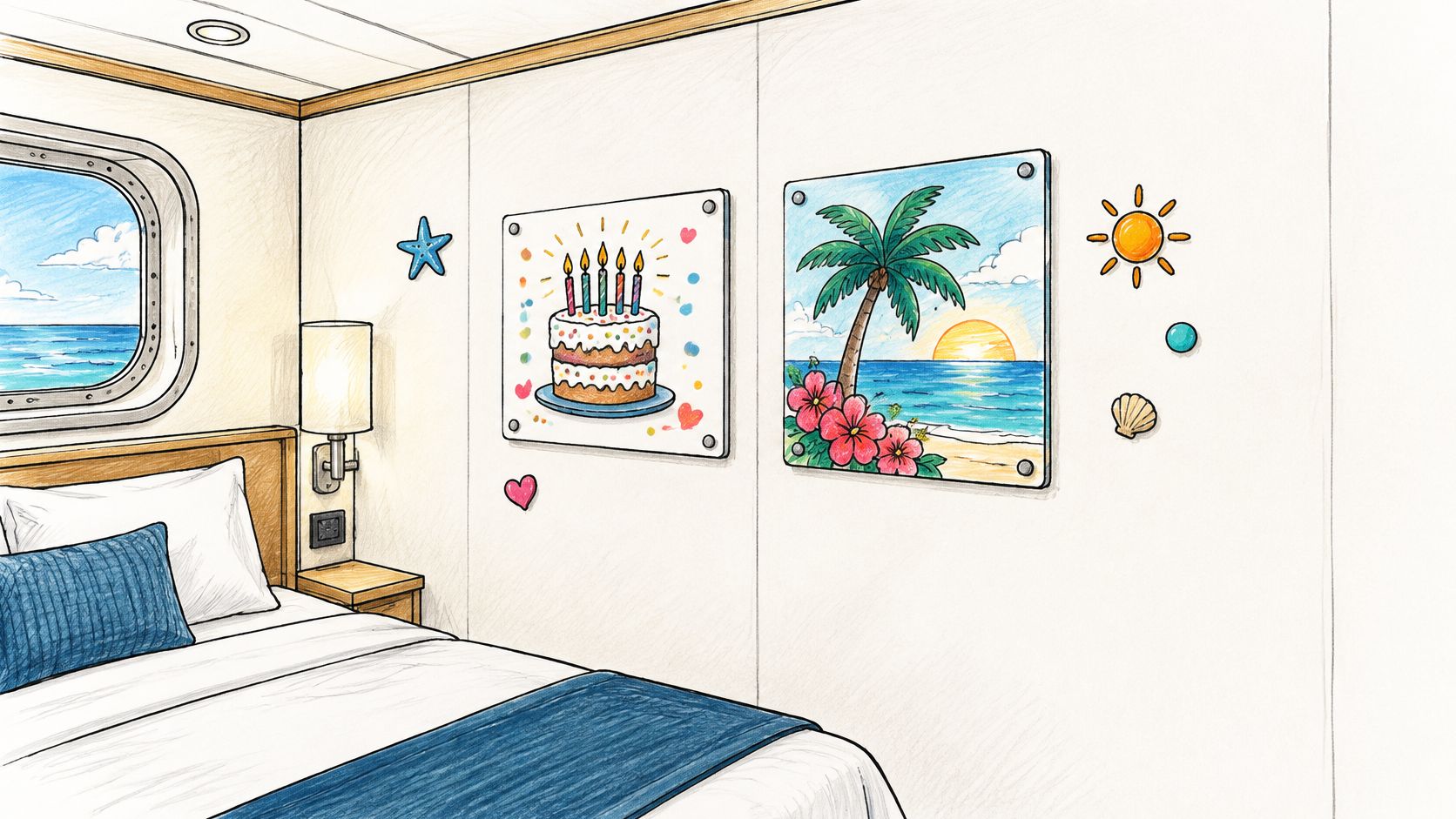
Check whether interior decorations are permitted before packing wall art. A cruise line may distinguish between door decorations, cabin accessories, and decorative materials attached to interior surfaces. Don't assume permission for a door magnet extends to a fabric wall panel.
Marine interiors also have material constraints that household rooms don't. The Cruise & Ferry guide to marine-interior regulations explains that exposed finishes are subject to flame-spread, smoke, and toxicity requirements, which is why improvised fabrics and consumer adhesive decorations aren't sensible substitutes for approved materials.
Test the attachment, not just the magnet
At home, assemble the complete decoration and check whether it slides on a vertical steel surface. A magnet that holds bare may perform differently with a protective backing or decorative layer between it and the wall.
Onboard, inspect an inconspicuous permitted spot, wipe away grit, and place the magnet gently. Lift it to reposition it rather than dragging it, then check for marks before adding the decoration.
Practical rule: If a decoration needs tape to stop it slipping, remove it rather than improvising a second attachment.
For an anniversary cabin, a compact photo and a matching removable accent are easier to manage than a broad panel. Keep both away from switches, vents, safety information, and the steward's working area.
2. Magnetic Cabin Organizers and Vertical Storage Decor
The most useful decorative upgrade may be the one that gets sunglasses, charging cables, and sunscreen off the desk. A coordinated wall organizer adds color while giving everyday items a predictable home.
A clear desk is the useful part of this cabin arrangement.
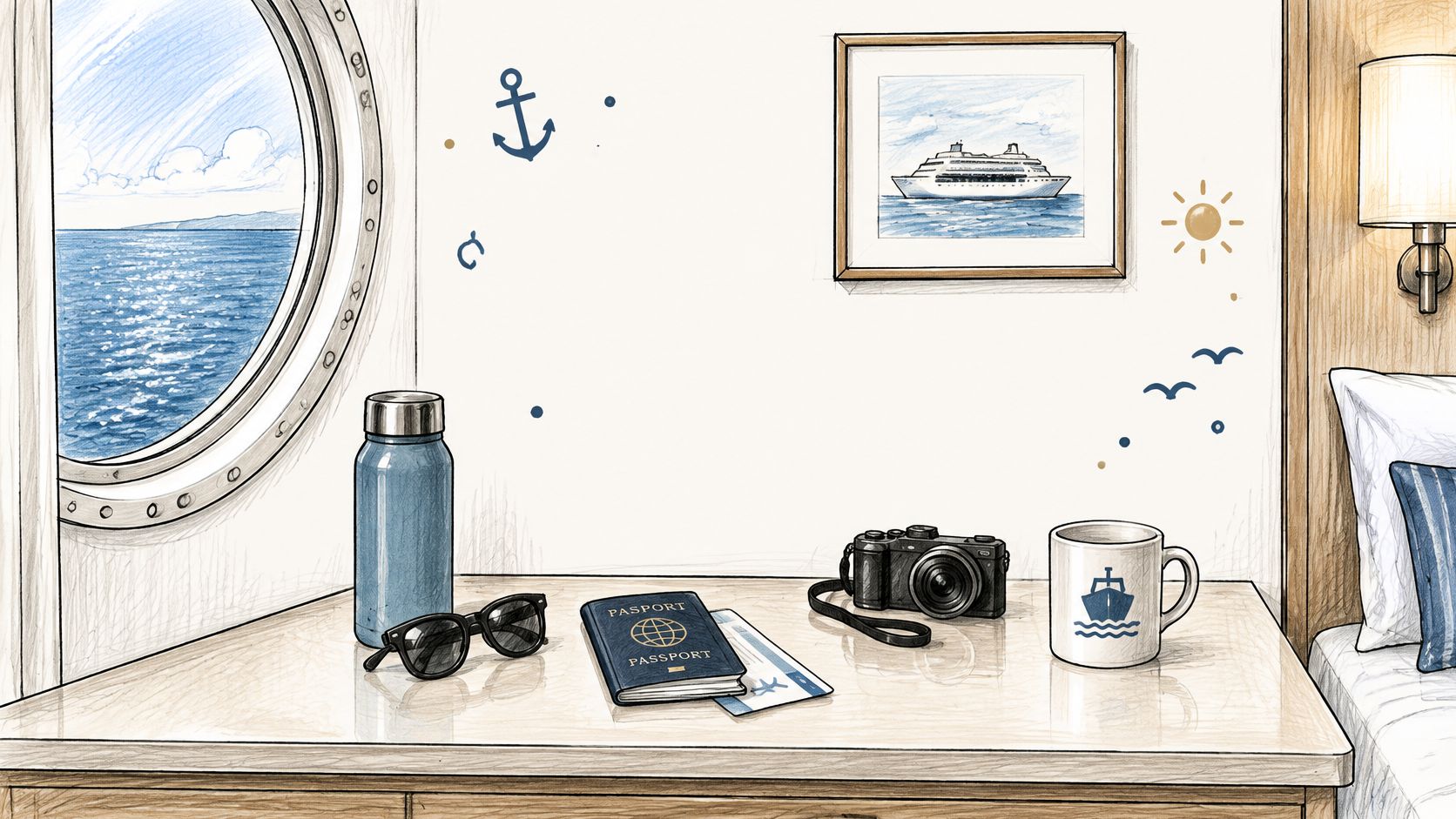
For a shared cabin, assign pockets by person or activity. Keep shore-excursion essentials together, separate sunglasses from scratchy objects, and avoid putting valuable documents in an exposed hallway organizer.
The magnetic organizer board guide is a useful starting point for planning vertical storage. Choose the location before choosing the size, because a large empty wall isn't useful if hanging pockets interfere with a doorway or seating.
- Load gradually. Start with light items and watch for sliding before adding anything heavier.
- Store weight lower. Keep heavier contents low and avoid top-heavy arrangements that pull the organizer away from the wall.
- Protect access. Leave switches, ventilation openings, door hardware, and emergency information visible.
- Separate wet items. Don't put damp swimwear against papers, electronics, or fabric pockets that can't dry.
Try the morning routine before unpacking everything
Say you're sharing with a partner who gets ready earlier. Put their toiletries where they can reach them without leaning across your bed, and keep your charging cables away from the bathroom route.
Test the loaded organizer while opening the nearby door and using the chair. If you have to twist around it, choose another position or reduce its contents.
A stated holding capacity isn't a guarantee on every cabin surface. Paint, panel construction, contact area, and the direction of the load can all affect the attachment. Keep fragile or heavy objects in the cabin's built-in storage instead.
3. Themed Cabin Decor Packages
A coordinated color palette makes a cabin feel festive without taking over its limited surfaces. For an anniversary, pair one bed accent with a flat decoration and a matching pouch. Sea-blue details and a favorite photograph create a clear theme without banners, confetti, or novelty cushions.
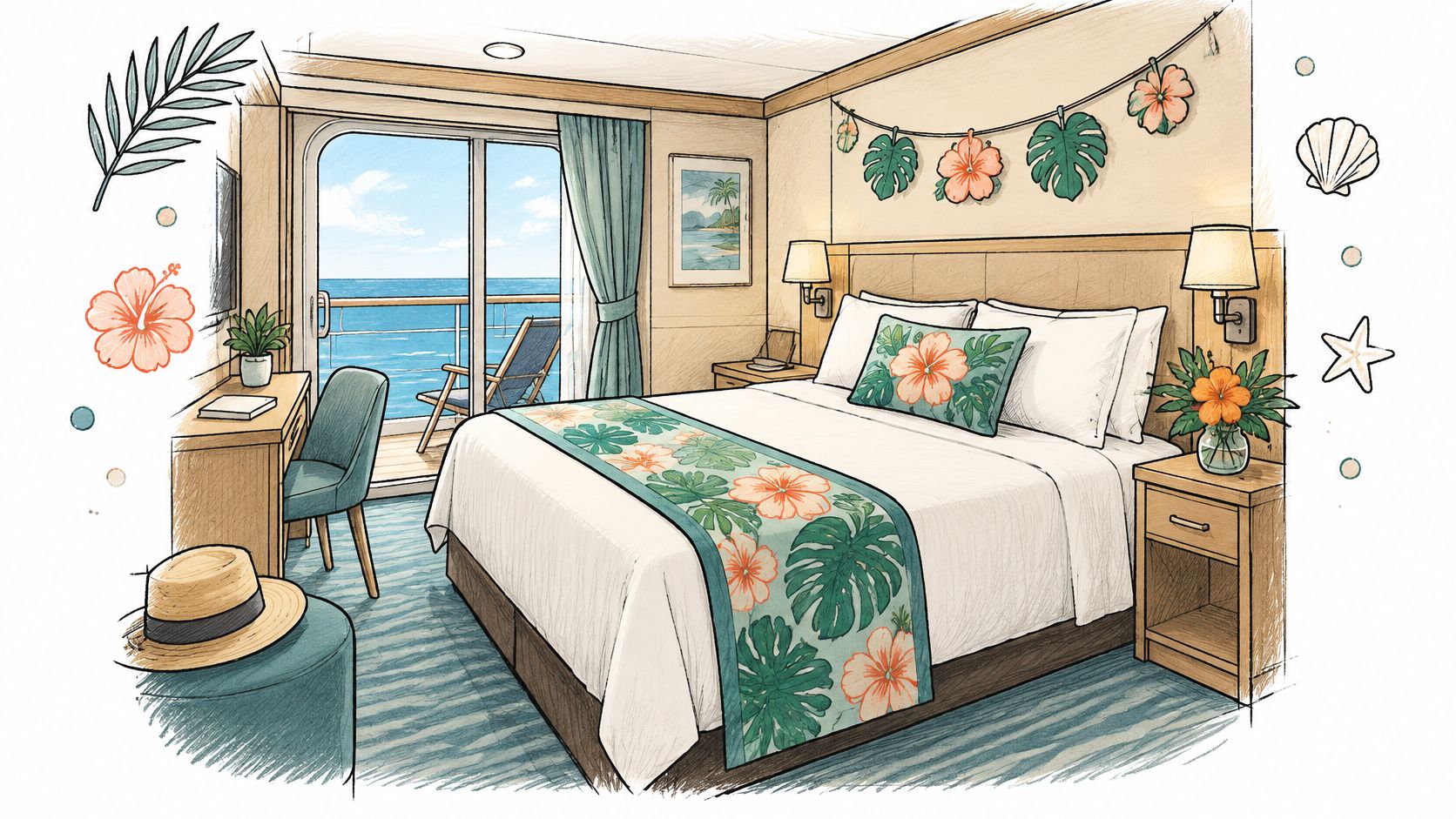
Dwell's history of cruise-ship design traces how decorative materials and leisure amenities developed together. In a cabin, keep the theme practical: use small accents that leave furnishings and access routes clear.
Build the theme around what the cabin already provides
Keep the supplied bedding, curtains, and furniture in place. Choose accents to suit the bed configuration you booked, and avoid packing replacements that use space without adding much.
An interior cabin has few surfaces to decorate. In a family cabin, leave room to convert beds and reach storage. In a balcony cabin, let the view carry much of the visual interest.
Check the cruise line's decoration rules before packing. At home, lay color swatches against bedding similar to yours, then photograph the combination. This makes mismatched colors easier to spot before you sail.
The video below shows a decorated cruise cabin. Watch for how the accents fit around the bed and available surfaces, then use your own cabin layout to decide what will fit.
Skip loose glitter, confetti, ceiling displays, and open-flame accessories. They create cleanup or safety issues without making the cabin more usable. Before sailing, set out the pieces you plan to bring and remove duplicates or anything that depends on an attachment method you haven't checked. If you're considering a cruise-line celebration package, confirm what it includes and where it can be placed.
4. Rechargeable Magnetic Night Lights and Ambient Lighting
Check permission before choosing a light. A rechargeable magnetic night light may be useful as a cabin accessory, but electrical decoration policies can be restrictive, and a battery-powered product isn't automatically exempt.
The aim is a quiet route to the bathroom, not a brightly illuminated cabin.
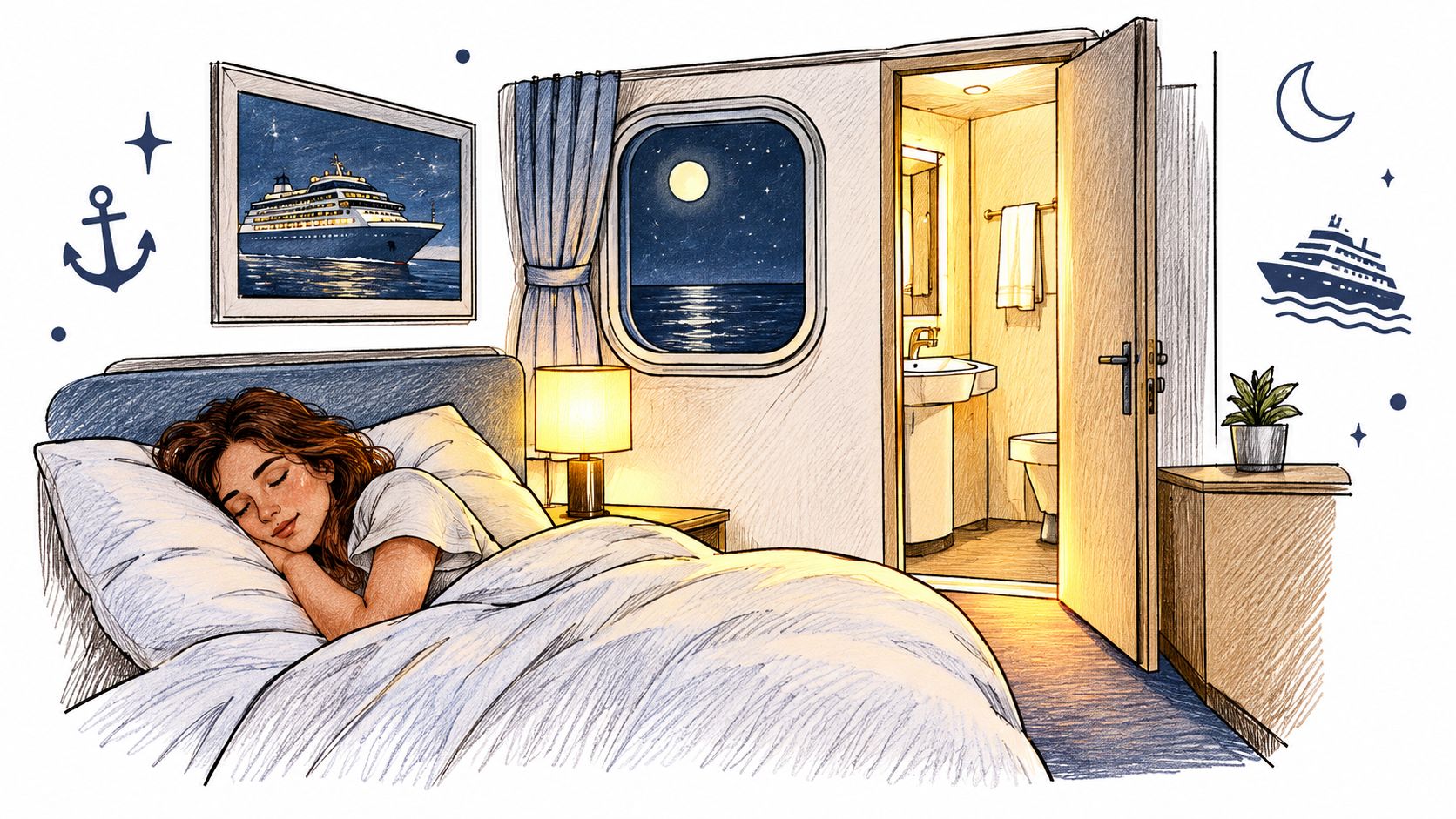
Accessibility planning should start with the room's usable routes and fixtures. The ADA Southeast cruise-accessibility overview highlights accessible doorways, bathrooms, and alternatives to stairs, all features that decorations and accessories should leave unobstructed.
Where the operator permits a portable night light, choose a low-glare, non-flashing setting. Position it to reveal the floor without shining directly into a sleeping companion's eyes.
Rehearse the bed-to-bathroom route
For a couple with different sleep schedules, test the light from both sides of the bed. Check whether the bathroom door hides it, whether a mirror reflects it toward the pillows, and whether motion activation triggers every time someone turns over.
- Keep it out of the doorway. Don't attach it to a hinge, latch, door seal, or moving edge.
- Avoid trailing cables. Charge it using the permitted method, then keep charging leads out of walking routes.
- Check the controls. Make sure brightness and motion settings are usable in the dark.
- Have a fallback. Learn the cabin's built-in lighting controls before bedtime.
The rechargeable night-light guide can help you compare placement considerations before packing.
A useful night light shows where to put your feet. It doesn't need to illuminate the whole room.
If the policy prohibits the light, leave it home. Never substitute string lights or hide an unapproved device behind furniture.
5. Compact Cabin Textile and Bedding Accents
A familiar throw can make a standard cabin bed feel more welcoming, but bulky bedding is a poor trade for suitcase space. Start with a washable pillow cover or compact throw rather than a collection of decorative cushions.
For a traveler who gets chilly while their cabin companion prefers cooler air, a personal throw offers a simple compromise. It's also easy to fold away when the bed becomes daytime seating.
Keep textile accents on furniture where they belong. Don't turn a throw into a curtain, hang a bed runner on the wall, or drape fabric over a lamp to soften its light.
Choose comfort that earns its packing space
A pillow cover takes less room than a stuffed cushion, but it's only useful if it fits the pillow you intend to use. A throw adds warmth, while a decorative runner mainly adds color. Choose according to the problem you're trying to solve.
- Check the fabric. Avoid shedding fibers, loose embellishments, strong fragrances, and dyes that transfer onto pale bedding.
- Keep floors clear. Fold excess fabric onto the bed rather than leaving it where someone may step on it.
- Plan daily storage. Give the accent a dry place when housekeeping makes the bed.
- Skip improvised grip. Don't add adhesive-backed pads or liners to keep a decorative textile in position.
Pack the textile in its intended travel pouch at home. If it takes up room needed for clothing or accessibility essentials, choose a smaller accent.
A passenger-environment study published through Aalto University found positive associations between onboard surroundings and passenger happiness, though its observational evidence doesn't establish that decorations cause satisfaction. The practical lesson is to judge the accent by comfort and usability, not appearance alone.
If you keep moving it out of the way, it isn't improving the cabin.
6. Stateroom Door Decorations
A flat cabin marker can make the right door easier to spot in a long corridor. Choose a simple shape or color, and leave names, travel schedules, and other personal details off the outside.
Keep the door number, peephole, handle, lock, frame, and operating edges clear. Check the latch and frame clearance with the door fully open and closed, so the sign cannot catch or shift into the doorway.
Carnival's cabin-decoration guidance permits decorations only on the stateroom door, requires fire-retardant materials, and prohibits balcony decorations and string lights. A small sign is easier to keep within those limits than a large display.
Separate a door sign from a storage accessory
A lightweight sign and a loaded organizer may be treated differently under a ship's rules. Permission for one does not automatically cover the other.
The Magnetic Cruise Door Organizer is designed to hold toiletries, documents, sunglasses, chargers, and daily essentials on many metal cabin walls and doors. Nordmoose recommends its magnetic setup where possible. Check the ship's rules before placing an organizer on the cabin door, and use it inside the cabin if exterior-door storage is not allowed.
For a family trip, choose an approved flat symbol and keep storage inside. Make sure younger travelers can match the symbol to the cabin number.
Follow section 1's general magnet-testing method for the sign's attachment. At the door, prioritize clearance: the sign must not obstruct the handle, latch, peephole, frame, or door swing. Remove it before disembarkation.
7. Balcony and Window Privacy Decor
Use the supplied curtains and balcony furnishings before adding anything. A balcony is exposed to wind and weather, and a window surround isn't necessarily a suitable magnetic mounting surface.
For a couple hoping to create a private breakfast spot, the practical choice may be to arrange the existing chairs comfortably and keep the view clear. If the balcony doesn't provide the privacy you need, homemade screening isn't a reliable fix.
Don't pack fabric screens, string lights, railing banners, or clip-on shades on the assumption that securing them makes them acceptable. Where balcony decoration is prohibited, clips and weights don't change the rule.
Treat privacy as a cabin-layout question
Before sailing, review the booked cabin's window covering and balcony arrangement. If privacy is important, ask the operator about that specific cabin rather than relying on a staged photograph of another ship.
Inside, close the supplied curtains and check how they work with the room's lighting. Don't attach decorative film, suction accessories, or additional fabric to the glass without explicit permission.
- Leave curtain hardware alone. Don't hang decorations from tracks, pull cords, or fittings.
- Protect the exit. Keep the balcony-door handle, threshold, and opening path clear.
- Keep accessories indoors. Don't leave lightweight items outside unattended or assume a magnet will withstand wind.
- Preserve safety features. Never cover signs, drains, ventilation openings, or emergency equipment.
For a window-side color accent, place a permitted textile on the interior seating rather than attaching something to the window. Remove it if it slips onto the floor or obstructs access.
The pre-sail test here is mostly a permission test. Confirm the exact intended item and location before packing. If you can't establish that they're allowed, leave the outdoor area undecorated and personalize a safer part of the cabin instead.
How the Seven Cruise Ship Decoration Approaches Compare
| Item | Mounting Method | Surfaces Needed | Best For | Packing Impact |
|---|---|---|---|---|
| Magnetic Wall Art and Removable Decor Panels | Magnets; test the hold on a permitted metal surface before sailing | Steel walls or doors | Personalizing a cabin or marking an occasion | Lightweight panels pack flat |
| Magnetic Cabin Organizers and Vertical Storage Decor | Magnetic backing or hooks; check the organizer's hold when loaded | Metal walls, doors, or closet interiors | Storing toiletries, documents, sunglasses, chargers, and daily essentials while keeping counters clear | Compact; some designs fold or nest |
| Themed Cabin Decor Packages | Use magnets for permitted metal surfaces; place other accents on bedding or furniture | Cabin walls, bedding, or furniture, subject to cruise line rules | Creating a coordinated cabin atmosphere | Takes more space than a single accent |
| Rechargeable Magnetic Night Lights and Ambient Lighting | Magnetic mount on a permitted metal surface | Metal walls or doorframes | Lighting cabin corners or bathroom doorways without bright overhead lights | Compact; requires charging |
| Compact Cabin Textile and Bedding Accents | Place on bedding or furniture; avoid attaching fabric to windows or balcony fixtures | Bed or seating surfaces | Adding comfort and color to standard bedding | Foldable, though textiles can take up luggage space |
| Stateroom Door Decorations | Magnets on the metal door, subject to cruise line rules | Stateroom door | Identifying a cabin or marking a celebration | Usually light and easy to pack |
| Balcony and Window Privacy Decor | Do not mount without written permission for the specific item and location | Balcony or window area | Privacy or shade, only when expressly permitted | Compact items take less space; cushions and fabrics take more |
Pick Two Upgrades and Test Them Before You Sail
Choose two upgrades that solve different cabin problems. Pair a magnetic organizer, which frees counter space by using a metal wall, with one personal accent, such as a compact throw or permitted decoration. If a cabin mate gets up before you do, a rechargeable magnetic night light may be more useful than artwork.
For mounting ideas, revisit Magnetic Cabin Organizers and Vertical Storage Decor and Rechargeable Magnetic Night Lights and Ambient Lighting. Check your cruise line's rules for the specific item and location, especially door displays and balcony decor.
Pack decor in the order you'll install it, then remove it in reverse. Keep mounting pieces with each item in a labeled pouch. That way, the last piece installed is the first one packed away, and smaller attachments are less likely to get separated.
Keep your chosen upgrades clear of doors, walkways, supplied equipment, and surfaces housekeeping needs to reach. If two items compete for the same wall space, keep the one that solves a daily problem and leave the other at home.
Nordmoose offers magnetic cabin organizers, rechargeable night lights, and compact cruise accessories designed around limited storage and metal cabin surfaces. Visit Nordmoose to choose an upgrade that fits your routine, then confirm your ship's rules and test it before you sail.