

Cruise Packing List for Men: 5 Smart Essentials
Embarkation day starts before you see your cabin. Your larger luggage may be handed over for delivery, while you keep the documents, medication, chargers, and anything needed for the first afternoon in a personal bag. Once inside the stateroom, the closet and open surfaces feel smaller than expected, formal nights call for a different clothing strategy, and damp swimwear needs somewhere better than the bed or a chair. A cruise packing list for men has to solve those moments, not just assemble vacation clothes. This list focuses on five practical categories: airflow, low-light movement, drying wet gear, motion comfort, and compact cabin organization. Use a simple keep, compress, and skip rule. Keep items that solve a recurring cabin problem, compress clothing into versatile outfits, and skip duplicates or bulky gadgets with one narrow use. Cruise-line luggage and prohibited-item rules vary, so check your line before departure. Review medication instructions with a qualified healthcare professional, and keep prescriptions accessible throughout travel.
Table of Contents
- 1. Magnetic Fan for Cruise Ship Cabin
- 2. Magnetic Motion Sensor Night Light for Cruise
- 3. Magnetic Clothesline for Cruise Ship Cabin
- 4. Sea Sickness Patches for Cruise
- 5. Magnetic Cruise Fan with Remote Control
- 5 Cruise Cabin Essentials Comparison
- Build Your One-Bag Cruise System
1. Magnetic Fan for Cruise Ship Cabin
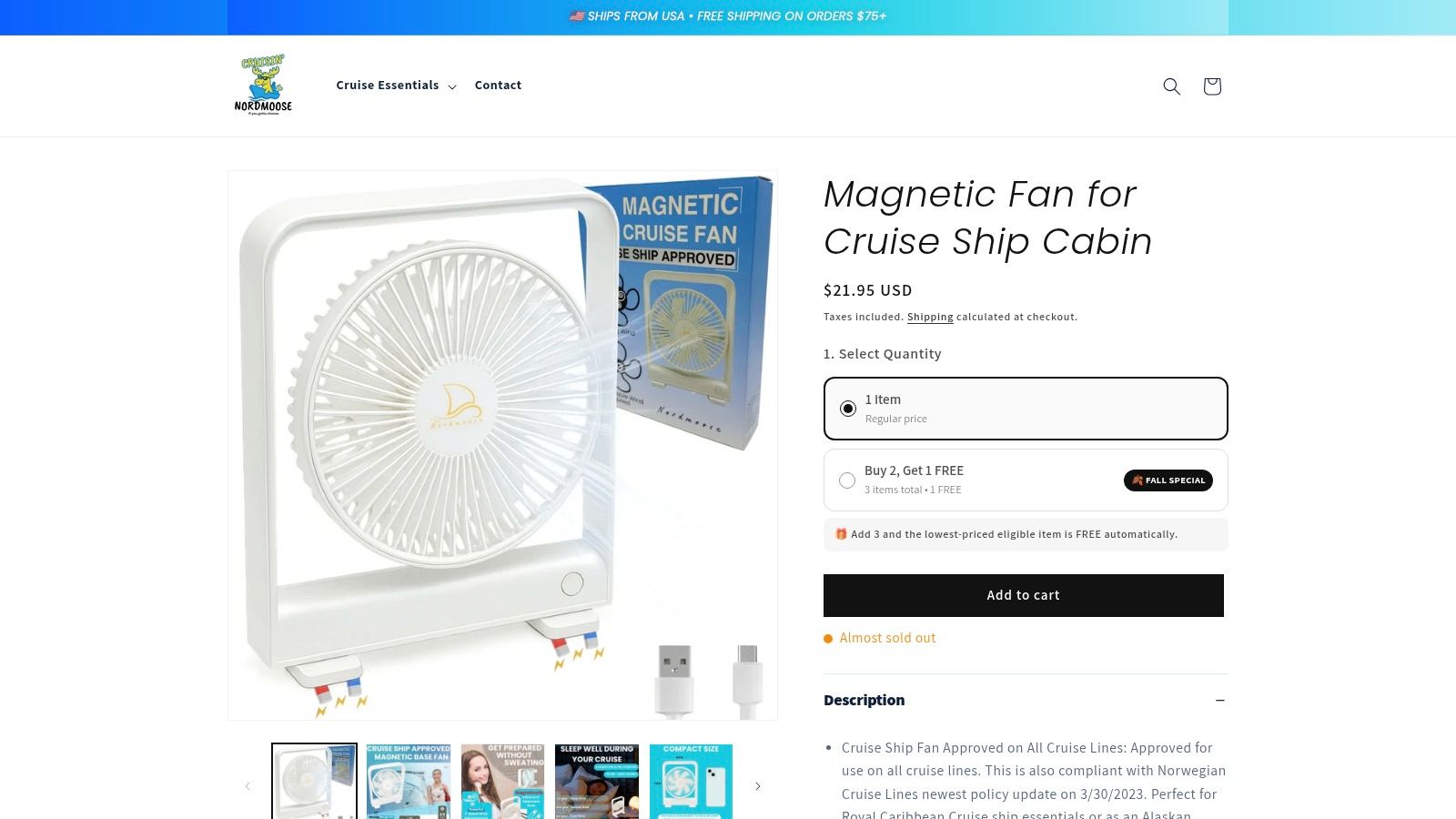
A stuffy cabin can make a long sea day feel longer, especially when one person wants airflow and the other wants quiet. A compact rechargeable fan earns space because it can serve during sleep, reading, changing clothes, or getting ready for dinner without taking over the bedside table. It also fits the broader logic of a men's cruise packing list, where compact, multiuse gear matters more than packing volume.
The Magnetic Fan for Cruise Ship Cabin is designed around that constraint. Its magnetic base can attach to suitable metal surfaces, including many stateroom walls or ceilings, while the slim body is easier to pack than a conventional floor or desk fan. The product listing describes a tested seven-blade rotor, a high-efficiency motor, three speed settings, USB-C recharging, and cordless use for four to twelve hours depending on speed and light settings. Those are useful features, but they don't remove the need to check your specific ship's policy and identify a safe mounting surface.
Where it belongs and how to pack it
Put the fan in the carry-on or personal bag if you want airflow soon after boarding. That also protects it from rough handling and gives you access if checked luggage arrives later. Pack the charging cable beside it, not loose in the main compartment, so the fan becomes a ready-to-use cabin kit rather than another item to find.
Mounting high can improve circulation, but don't place a device where it can fall onto a bed, obstruct a doorway, or interfere with cabin fittings. A bedside or desk position is less dramatic but often more practical if the metal surface is uncertain. The trade-off is straightforward: a magnetic fan saves counter space, but it still needs a suitable surface and a full charge.
Practical rule: Treat “cruise approved” as a product description, not a substitute for checking the current prohibited-item policy of your ship.
For travelers who prefer a hanging setup, Rechargeable Cruise Fan with Magnetic Hook to Hang on Cruise Walls & Ceilings is a separate compact option with a rechargeable design, a magnetic hook, and timer or multiple-speed controls on selected models. Choose one fan, not several. If a standard cabin already feels comfortable and you don't sleep with airflow, this is an easy skip. If you share a small room, sail in warm conditions, or want to avoid sacrificing a nightstand to a bulky appliance, it has a stronger case.
Use this charging guide for a rechargeable fan before departure. The useful habit is to charge it before boarding, then keep the cable in the same pouch as your phone and watch cables. That prevents the common mistake of packing a comfort tool but leaving its only useful accessory in a checked bag.
2. Magnetic Motion Sensor Night Light for Cruise
Cruise cabins become awkward at night because the route from bed to bathroom is short, dark, and full of unfamiliar corners. Turning on the ceiling light wakes the other person and destroys your night vision. A phone flashlight works in an emergency, but it needs to be found, opened, and aimed every time you move.
The Magnetic Motion Sensor Night Light for Cruise addresses that specific problem with a rechargeable design, magnetic placement, motion-sensor mode, and an always-on setting. The product is available in one-pack, two-pack, and three-pack configurations, so the right choice depends on the cabin layout rather than a generic idea of what every traveler needs. A single light may cover the bed-to-bathroom route. More than one can be useful when the bathroom entrance or cabin pathway stays outside the first light's detection area.
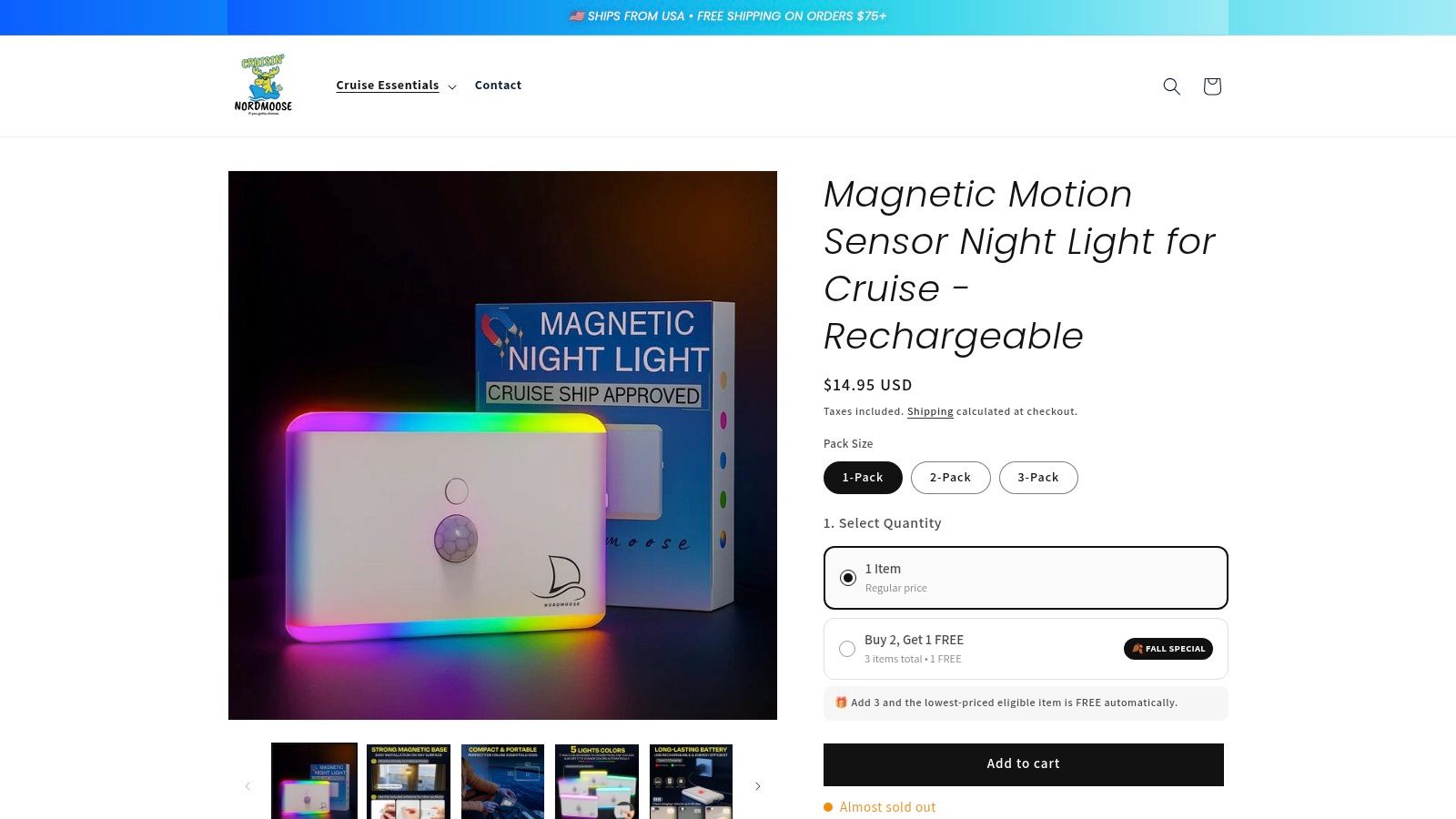
Placement matters more than brightness
Attach it low enough to guide your feet, but not so low that luggage or clothing blocks the sensor. Test the position after the cabin lights are off. A dim setting is usually more useful than maximum brightness because the goal is orientation, not illumination for dressing.
The magnetic format helps in a metal-surfaced cabin because you can adjust placement without adding adhesive hooks or using counter space. Still, don't assume every panel is suitable. Keep the light away from wet areas unless the product instructions specifically permit that use, and don't place it where a swinging bathroom door can knock it loose.
When to choose one, two, or none
A one-pack is the lean choice for a solo traveler who can place it beside the bed or near the bathroom route. A two-pack makes more sense for couples with different sleeping positions or a cabin where one light can't cover both ends. A three-pack is harder to justify for a minimalist men's cruise packing list unless the lights will also serve a second travel purpose after the voyage.
Use the motion mode for nighttime movement and always-on mode when you're reading a cabin map, organizing medication, or looking for a cable. The device doesn't replace a proper flashlight for excursions or emergencies. It solves a narrower task, and that's why it works when packed deliberately.
For setup and charging details, use this guide to a rechargeable night light. Charge it before boarding and store it in the cabin-comfort pouch. If you already sleep with a mask and don't move around at night, skip it. If you share the room, wake easily, or dislike searching for objects in darkness, the small footprint is easier to defend than another piece of clothing.
3. Magnetic Clothesline for Cruise Ship Cabin
Wet swimwear exposes the limits of a compact stateroom. After the pool, a beach excursion, or a quick rinse of a lightweight shirt, you need somewhere to dry the item without covering a chair or leaving fabric on the bathroom floor. A clothesline assigns wet gear one location and keeps the rest of the cabin usable.
The Magnetic Clothesline for Cruise Ship Cabin uses rubber-coated magnets, a retractable line, and hooks. Its listing describes a lightweight design that fits into a carry bag and attaches to suitable metal cabin panels. The magnets are also described as intended to avoid scratching wall panels. Use the line only where the ship permits, and keep it clear of passages, doors, sprinklers, fixtures, and crew access points.
Pack it beside the wet-use items
Store the line with your swimwear, compact laundry bag, and wet-item pouch instead of burying it under formalwear. That placement lets you set it up as soon as you return to the cabin. Wring water out carefully, shake each garment open, and leave space between items. See this guide to hanging clothes on a clothesline for spacing and knotting details.
A line suits lightweight pieces such as a swimsuit, rash guard, or thin shirt. Heavy towels, thick denim, and a full load of laundry put more strain on the setup and dry slowly.
Hang wet gear as soon as you return, and keep dry clothing away from the bathroom floor and shower edge.
The trade-off is capacity. A retractable line takes little room in the bag, but it does not add ventilation or guarantee rapid drying. It also does not replace the ship's laundry service or make sink-washing every garment practical. Its value is narrower and more useful: it keeps a few wet items off the bed while you use the cabin.
The line versus more clothes
The right question is whether the line helps you pack fewer duplicate garments. A compressed wardrobe, including two swimsuits and layered clothing, makes a drying line more useful because rinsed pieces can be reused instead of replaced. Quick-drying swimwear and shirts work especially well when you move between sea days, pool time, and shore excursions.
If you never swim, do not plan to rinse clothing, and expect to use the ship's laundry service, leave the line at home. If wet gear is part of your daily routine, its small packed size can justify the space.
The magnetic clothesline is the catalog option that matches this use case. The listing also describes use in RVs, indoor spaces, and camping setups, which may matter if you want the accessory to earn space beyond a single voyage. Check current ship rules before packing it, then confirm that the magnets hold securely before hanging anything.
4. Sea Sickness Patches for Cruise
You can feel fine during embarkation, then notice motion discomfort after the ship leaves port. Keep motion support in your personal bag, where you can reach it before symptoms interfere with a meal, excursion, or sea day. A compact stateroom gives you little reason to bury small items in checked luggage.
The Sea Sickness Patches for Cruise are listed for cruises, car rides, flights, trains, and ferries. The product description presents them as non-drowsy travel support that is waterproof and all-natural, supplied in multi-patch boxes. These are product attributes, not a medical guarantee. Read the packaging, check the ingredients, and ask a pharmacist or clinician whether the product suits you, especially if you take medication, have allergies, or have a relevant medical condition.
Where they earn space
Store the patches with prescriptions, any motion-sickness medication, and your travel documents. Use one small pouch for that group, then keep it in your day bag during embarkation and shore excursions. The pouch should remain easy to identify in a dark cabin or crowded personal bag.
A patch can reduce the need to carry a bottle or remember repeated dosing, but convenience does not make it suitable for everyone. Waterproof construction may help during a wet-deck walk or shore excursion. Follow the product's application and replacement directions, and do not describe any motion-sickness product as guaranteed relief.
A practical kit can include:
- Personal suitability: Check ingredients and directions before the voyage, rather than waiting until symptoms begin.
- Easy access: Keep patches near your passport, prescriptions, and phone, not inside the main suitcase.
- Backup planning: Carry any clinician-approved alternative that you already know works for you.
- Excursion awareness: Consider the day's route, time away from the ship, and access to your cabin before leaving.
Major cruise packing guidance recommends keeping personal medication and motion-sickness support accessible, because replacing essentials onboard may be inconvenient as reflected in this cruise cabin packing guide. For a traveler who never feels motion discomfort, patches may not justify even their small footprint. Someone who has previously felt sick on boats may value that compact backup more than another bulky comfort item used only at night.
Keep the product in its original packaging so its instructions and ingredients remain available. Pack it as one part of a responsible travel plan, and verify medication or supplement decisions with a qualified professional before departure.
5. Magnetic Cruise Fan with Remote Control
A compact cabin can feel different at bedtime than during embarkation. Luggage, damp swimwear, and limited storage quickly make loose accessories inconvenient. The first fan in this list suits travelers who want simple airflow. A remote-controlled model earns space when you want to adjust the breeze from bed, set a timer, or combine circulation with low-level cabin lighting. Those features address a specific routine, not every man's cruise packing needs.
The Magnetic Cruise Fan with Remote Control is described as an ultra-slim rechargeable fan with a magnetic base, remote control, timer, adjustable airflow direction, and a multicolor night light. The listing describes the battery capacity and a dimmable LED display, so check the current product page for exact specifications before you buy. Store the remote with the fan in a small zip pouch, not loose in a toiletry bag. It earns its place only if you can find both parts quickly in a dark cabin.
Decide between control and simplicity
Choose this model when changing speed without leaving bed matters, when you want scheduled operation, or when one device can handle airflow and soft lighting. The controls add flexibility, but they also add another piece to store and another device to keep charged. If your only goal is a quiet breeze at the desk or beside the bed, a simpler rechargeable fan uses less physical and mental space.
Pack the fan near the top of your cabin-access bag during embarkation if you expect to use it before your main luggage arrives. Once inside, mount it on a suitable metal surface only after checking that the base is secure. Aim airflow across the cabin, away from wet swimwear, paperwork, and loose items. Set the light before sleeping, especially if darkness helps you rest or motion makes you sensitive to interruptions.
Pack one fan, not two
The magnetic fan with remote control and the simpler magnetic cabin fan overlap heavily. Packing both defeats the keep, compress, and skip framework unless two people need separate airflow zones and the cruise line permits both. One fan is usually enough for a compact stateroom, while the unused model consumes storage that could serve clothing or excursion gear.
Cruise cabins already have limited outlets, so rechargeable devices should enter the cabin charged and travel with a shared charging plan. Keep the cable beside the fan in the same pouch, then choose the model whose controls match how you sleep. Leave the other fan at home.
5 Cruise Cabin Essentials Comparison
| Item | Implementation Complexity 🔄 | Resource Requirements ⚡ | Expected Outcomes 📊 / Quality ⭐ | Ideal Use Cases 💡 | Key Advantages ⭐ |
|---|---|---|---|---|---|
| Magnetic Fan for Cruise Ship Cabin | 🔄 Low, magnetic mount, charge & set speeds | ⚡ USB‑C rechargeable battery; magnetic metal surface | 📊 Provides steady cooling; quiet; 4–12 h runtime, ⭐⭐⭐ | Small cabins, sleeping, general cabin cooling | Thin & packable; cruise‑approved; 3 speeds; quiet |
| Magnetic Motion Sensor Night Light for Cruise | 🔄 Very low, stick to metal, choose mode | ⚡ Rechargeable; magnetic surface; compact | 📊 Hands‑free illumination; motion + always‑on; dimmable, ⭐⭐⭐ | Cabin bathrooms, hallways, night safety for kids | Motion sensor; multiple colors; dimmable; packable |
| Magnetic Clothesline for Cruise Ship Cabin | 🔄 Low, attach magnets, extend retractable line | ⚡ No power; rubber‑coated magnets; carrying bag | 📊 Enables drying of small items; space‑saving, ⭐⭐ | Drying swimwear, kids' clothes, RV/camping | Scratch‑proof magnets; portable; retractable; cruise‑approved |
| Sea Sickness Patches for Cruise | 🔄 Minimal, apply patch to skin before travel | ⚡ No power; waterproof adhesive patches (box of 12) | 📊 Non‑drowsy nausea relief; waterproof; travel durable, ⭐⭐⭐⭐ | Motion sickness on cruises, boats, cars, flights | Non‑drowsy; waterproof; all‑natural; easy to use |
| Magnetic Cruise Fan with Remote Control | 🔄 Low–Medium, mount, pair/use remote, manage timer | ⚡ 4000mAh rechargeable battery; magnetic mount; remote | 📊 Stronger, adjustable airflow; timer & light features, ⭐⭐⭐⭐ | Cabins needing adjustable airflow and timed use | Remote control; 6 speeds; large battery; timer; LED light |
Build Your One-Bag Cruise System
A good cruise packing list for men isn't a pile of individually useful products. It's a small system that works from the terminal to the cabin, from the pool to dinner, and from bedtime to the next morning. Start by separating embarkation-day items from everything that can wait. Your personal bag should hold travel documents, medication, phone, charging cable, a change of essentials, and anything you need before your luggage reaches the room. Cruise lines impose different handling rules, and MSC Cruises, for example, publishes limits covering checked suitcases, hand luggage, individual bag weight, and total cabin baggage, so check the current requirements for your sailing on the cruise line's luggage guidance.
Build clothing as complete outfits rather than isolated categories. A button-down should work with more than one pair of trousers or shorts. A light layer should cover a cool interior, a breezy deck, and an excursion morning. Cruise-focused checklists commonly emphasize two to three button-down shirts, one to two evening outfits, one light sweater, and one pair of dress shoes, along with hats, sunglasses, and belts that serve more than one setting in this men's cruise packing list. Keep formalwear compact by choosing one polished combination that can be refreshed with a different shirt or belt.
Use one pouch for cabin comfort tools. Put the fan, night light, clothesline, charging cables, and any small accessories together, then place that pouch on top of the luggage. If you choose the remote-controlled fan, don't also pack the simpler fan unless you have a specific shared-cabin reason. If you choose a clothesline, pack fewer redundant swim or lightweight garments instead of adding both.
Finish the audit before leaving home:
- Check prohibited-item rules: Verify the current policy for fans, lines, chargers, and other electrical or magnetic accessories.
- Confirm medication plans: Review prescriptions, patch ingredients, dosing directions, and access requirements with a qualified professional.
- Protect documents: Keep passports, identification, booking details, and required travel documents in your personal bag.
- Test every rechargeable item: Charge it, locate its cable, and confirm that you understand its controls.
- Remove duplicates: One tool that solves a recurring cabin problem beats two tools that perform the same task.
- Leave room for wet gear: A compact bag or dedicated section keeps damp swimwear away from formal clothing.
Before you close the bag, compare every item with the moments of your actual itinerary. A warm-weather sea day may favor airflow and drying space. A cold-weather excursion may favor layers and weather protection. A shared interior cabin may make a night light more valuable than another casual shirt. Check travel documents and prescriptions once more, then pack the comfort pouch where you can reach it without unpacking everything.
Nordmoose offers compact cruise accessories built around real stateroom problems, including magnetic rechargeable fans, night lights, clotheslines, organizers, and motion-support patches. Visit Nordmoose to choose the cabin tools that match your itinerary, storage limits, and comfort needs before you sail.