

Terraces Restaurant Menu Guide and Dining Tips
You've just arrived at a sunlit terrace after a long day of sightseeing or cruising. One table is ordering chilled drinks, another is sharing plates, and a nearby couple is studying a menu that looks shorter than the one inside. The waiter asks whether you'd prefer sun or shade, while a breeze changes the temperature from comfortable to cool in minutes.
That moment captures what makes a terraces restaurant menu different. It isn't an indoor menu moved outdoors. Weather, daylight, noise, pacing, table turnover, and the habits of social groups all shape what appears on the page and what works on the table. The best choices are usually easy to understand, quick to serve, pleasant in the prevailing conditions, and flexible enough for different appetites.
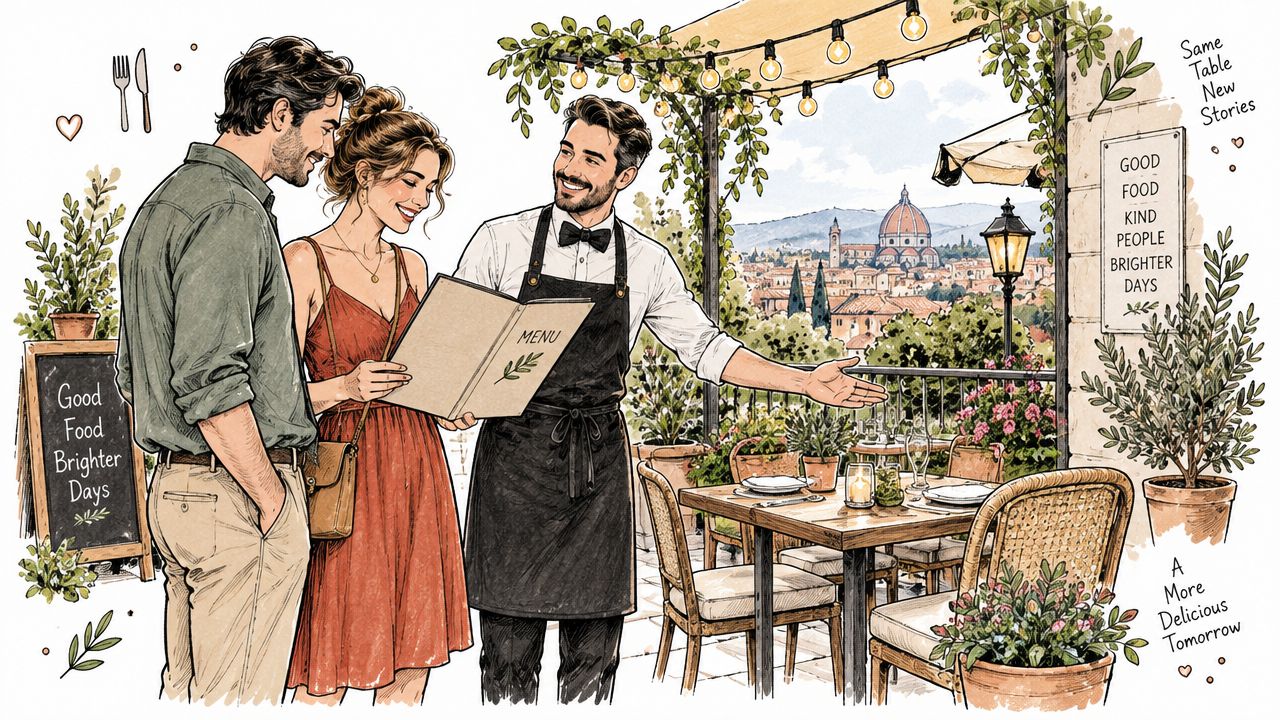
This guide will help you read the menu like a hospitality professional. You'll learn why certain dishes appear repeatedly, how to compare terrace dining styles, what to ask about allergies, and how to plan a reservation when weather or seating matters.
Table of Contents
- Introduction to the Terraces Restaurant Experience
- How Terrace Dining Works and What Shapes the Menu
- Typical Dishes You Will Find on a Terraces Restaurant Menu
- Sample Menus and Dining Styles Compared
- Reservations and Dietary Requests Made Simple
- Making the Most of Your Terrace Meal
Introduction to the Terraces Restaurant Experience
A terrace restaurant usually feels more spontaneous than an indoor dining room. You might sit down for a coffee and stay for small plates, or arrive intending to have a full meal and change your plan after seeing the view. The menu supports that flexibility with a blend of shareable food, lighter choices, familiar comfort dishes, and drinks designed for lingering.
Outdoor service also changes the rhythm of a meal. Sunlight can make a menu harder to read, wind can affect napkins and delicate presentations, and open-air acoustics can make conversation less convenient. A restaurant may therefore favor dishes that arrive quickly, remain enjoyable while guests talk, and don't demand complicated coordination between several courses.
The word “terrace” can describe several formats. A hotel terrace may offer polished all-day dining, a winery terrace may emphasize local ingredients and pairings, and a cruise terrace may connect casual food with sea views and changing weather. The setting changes, but the ordering principles remain similar: identify the service style, scan for food that suits the conditions, and ask early about anything that affects your meal.
A useful mindset: Treat the menu as a guide to the experience, not a test of culinary vocabulary.
Reservations deserve attention because the most attractive outdoor tables may be limited. If you need shade, a quieter corner, wheelchair access, or a place suitable for a dietary restriction, mention it before arrival rather than hoping the staff can solve it at the table. You'll make better decisions when you know whether you're choosing a quick lunch, a long social meal, or a structured tasting experience.
How Terrace Dining Works and What Shapes the Menu
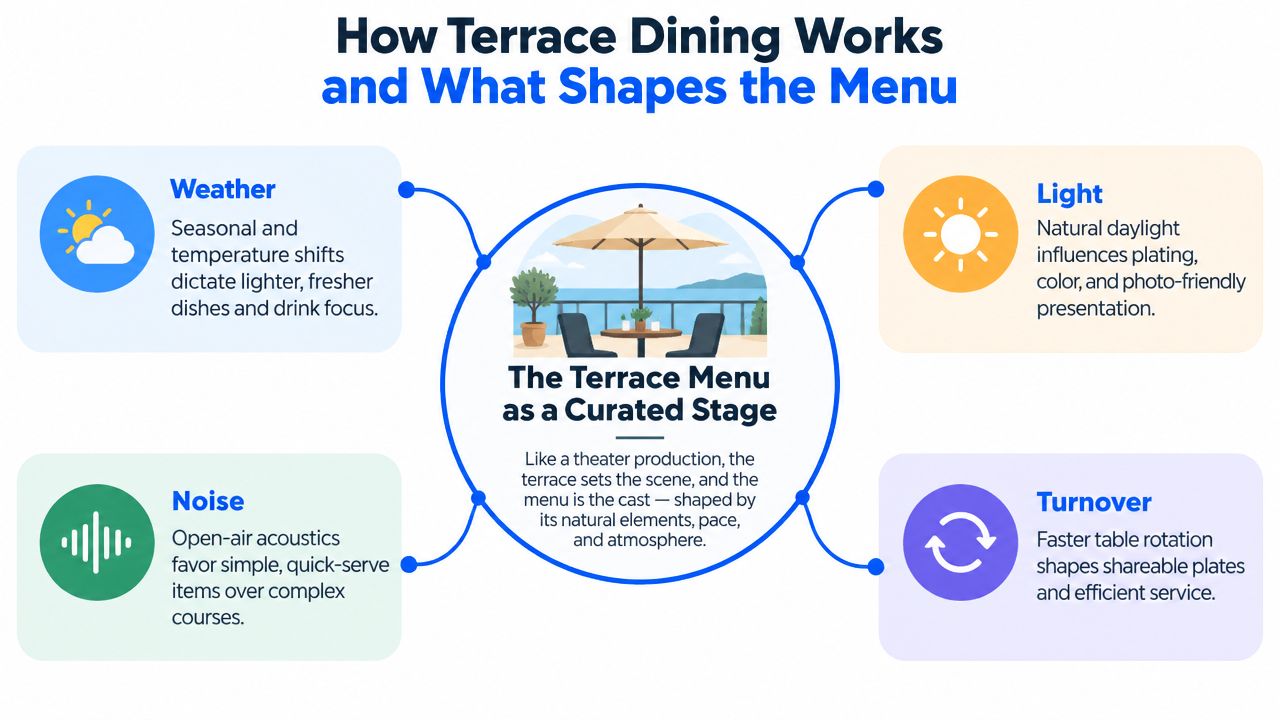
A terrace menu works like a conversion interface. Its job is to help a guest move from curiosity to a clear order, often while dealing with glare, background activity, conversation, and changing comfort. Menu-engineering guidance recommends using sales, cost, and popularity information to place profitable, popular “hero” dishes where guests are most likely to notice them, rather than treating every item as equally important. Tillster's menu-design guidance explains why layout, category structure, and visual emphasis influence what guests see and select.
Weather changes the order
Temperature affects appetite, texture, and drink choice. On a hot afternoon, chilled soups, crisp salads, fruit-forward drinks, seafood, and grilled vegetables may feel more appealing than heavy dishes. On a cool evening, guests may look for warm flatbreads, fries, rich sauces, or a hot drink.
Operators also simplify the menu around items that hold their quality and can be executed consistently in outdoor conditions. Guidance for patio operations recommends reviewing sales volume, food cost, preparation time, and waste so the kitchen can remove slow or inefficient items and emphasize dishes that support reliable service. Toast's patio-season guidance connects this approach with lower kitchen complexity and smoother table flow.
Light and sound affect clarity
A menu with strong headings, consistent prices, and short descriptions is easier to use outside. Glare can reduce legibility, while distance between tables and surrounding activity can make a long verbal explanation impractical. Clear signposting helps guests find sections such as small plates, salads, mains, desserts, and drinks without scanning every line.
Natural light also influences presentation. Bright colors, visible garnishes, and clean plating can make a dish easier to recognize before it arrives. The menu should promise something the kitchen can deliver quickly and attractively, rather than relying on elaborate descriptions that slow the decision.
If you're traveling by ship, comfort outside the restaurant can matter too. For a warm stateroom before or after a meal, the Rechargeable Cruise Fan with Magnetic Hook to Hang on Cruise Walls & Ceilings is described as a compact, rechargeable option for cabins and travel setups, with selected models offering timers and multiple speed settings. For broader cruise comfort planning, see this practical guide to whether you'll get seasick on a cruise ship.
Typical Dishes You Will Find on a Terraces Restaurant Menu
Most terrace menus are built around food that can serve one person, a couple, or a whole group without disrupting the outdoor flow. A guest may want only a drink and a snack, while another wants a substantial meal. The menu needs to accommodate both without creating an unwieldy kitchen operation.
Small plates encourage grazing
Bruschetta, dips, olives, marinated vegetables, croquettes, charcuterie, and regional cheeses are common because guests can share them while talking. These dishes also let a group order gradually. One plate can arrive first, followed by another if the table is still hungry.
Social grazing works especially well for mixed appetites. Someone avoiding a heavy meal can choose vegetables or a salad, while others add richer bites. Clear allergen labels matter here because shared plates can contain nuts, dairy, gluten, shellfish, or sauces that aren't obvious from the dish name.
Salads and bowls suit warm conditions
Salads, grain bowls, vegetable plates, and chilled seafood often fit sunny daytime dining. They can communicate seasonality through ingredients such as local tomatoes, herbs, fruit, greens, or fresh cheese. A concise description can tell you more than a generic “mixed salad” label, especially if it identifies the main dressing, protein, or regional ingredient.
Seasonal sourcing is more than a marketing phrase when it changes the menu. A terrace may rotate ingredients as local produce becomes available, so a dish you enjoyed on one visit may return in a different form later.
Grilled mains provide a strong outdoor identity
Grilled fish, chicken, steak, prawns, vegetables, and skewers give a terrace menu a sense of place. Smoke, char, and open-air aromas reinforce the setting, while repeatable cooking methods can support consistent service.
Comfort food keeps the menu approachable
Burgers, flatbreads, sandwiches, fries, and simple pasta appeal to families, casual groups, and guests who don't want a formal meal. These items also work across different dayparts. A guest arriving late may prefer a familiar dish over a multi-course selection.
Beverages often lead the experience. Research on Dutch terrace culture found craft beer on 39% of terrace menus and regular beer on 36%, according to Roamler's terrace-culture research. That beverage focus doesn't mean food is secondary. It shows why menus often pair drinks with small plates, snackable portions, and dishes that remain enjoyable over an extended visit.
Cruise travelers managing limited cabin storage may find a Magnetic Cruise Door Organizer useful for keeping sunscreen, toiletries, shoes, or other small travel items accessible. The product snapshot describes magnetic attachment, hook alternatives, and 15 mesh pockets, but guests should check their cruise line's rules before using over-the-door hooks.
Sample Menus and Dining Styles Compared
A menu's structure tells you how the restaurant expects guests to use the terrace. An all-day menu supports flexibility, a prix fixe menu creates a planned sequence, and a grazing menu turns the table into a shared spread. None is automatically better. The right format depends on time, appetite, group size, and how much guidance you want from the kitchen.
| Menu Format | Typical Items | Best For | Watch For |
|---|---|---|---|
| All-day casual | Salads, burgers, flatbreads, fries, sandwiches, desserts, cocktails, and soft drinks | Families, informal lunches, mixed appetites, and guests with limited time | Large menus can slow decisions. Check whether some dishes are available only during certain service periods |
| Seasonal prix fixe | A planned sequence of courses using changing local or seasonal ingredients | Celebrations, date nights, and guests who want a curated meal | Confirm the total price, included beverages, substitutions, and allergen accommodations before ordering |
| Social grazing | Small plates, dips, cheeses, charcuterie, grilled bites, and shareable desserts | Groups, relaxed evenings, and guests who prefer to order in stages | Portions may be designed for sharing rather than one person. Ask how many plates the staff recommends for your group |
Reading the price presentation
An all-day menu usually makes comparison easy because each dish stands alone. A prix fixe menu may bundle courses or pairings, so check what the listed price includes. Seasonal changes can also affect availability, particularly when the restaurant builds dishes around local produce or changing weather.
For value, look beyond portion size. A dish that includes a filling grain, vegetable, or protein may suit a full meal, while a smaller plate may be better when several people are sharing. Clear labeling can help guests identify vegetarian, vegan, gluten-free, or allergen-aware options, but labels don't replace a conversation with staff when a serious allergy is involved.
Choosing the right format
A couple with limited time might choose an all-day menu and order one main each. A group celebrating a special occasion may prefer prix fixe dining because the sequence reduces decision-making. Friends meeting for drinks may start with grazing plates and add more only after seeing how quickly the table fills.
The most useful question is simple: Do you want control, guidance, or flexibility? Choose casual dining for control, prix fixe for guidance, and grazing for flexibility.
Reservations and Dietary Requests Made Simple
Outdoor seating is easier when you communicate the details before the restaurant has a full terrace. A reservation request shouldn't read like a long essay. State the practical information in a way staff can act on.
Before you arrive
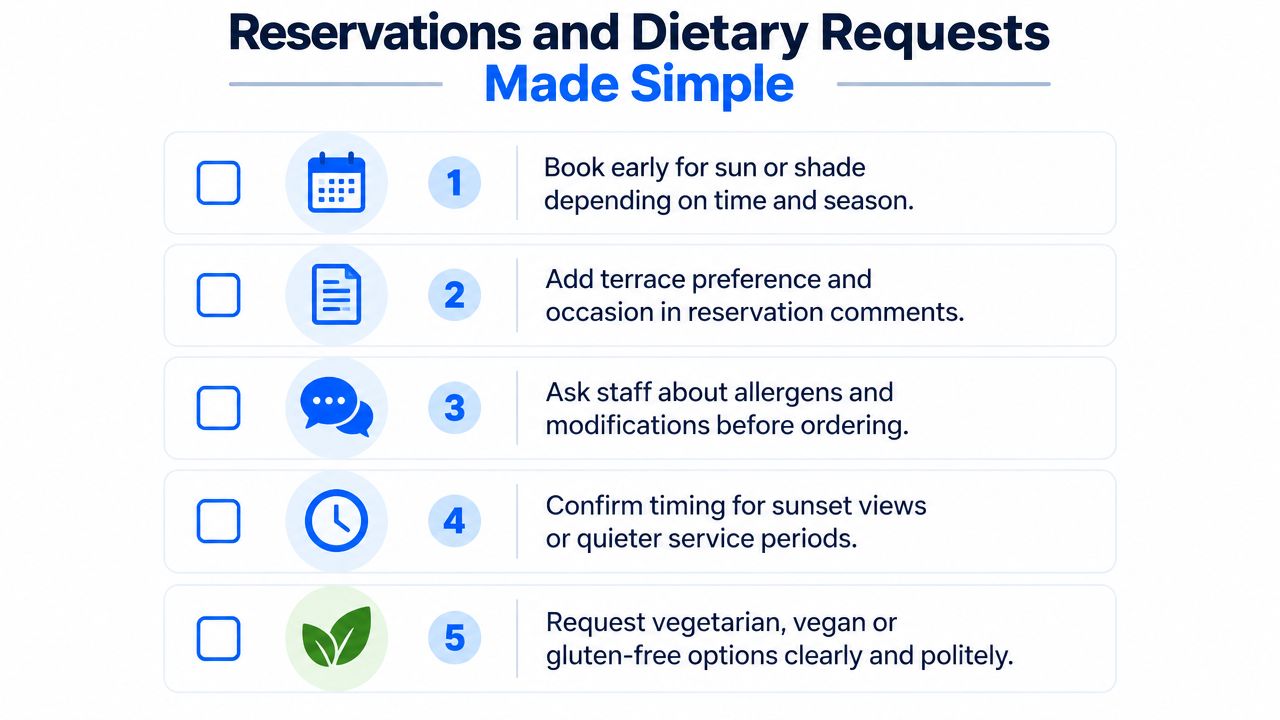
Start with the table requirement. Ask for sun, shade, a quieter area, step-free access, or protection from wind if any of those details affect your comfort. If you're booking around sunset or a particular view, confirm the restaurant's seating policy rather than assuming every terrace table has the same outlook.
Add dietary information to the reservation notes, but keep it precise. “One guest has a severe peanut allergy” gives staff a clearer starting point than “dietary issues.” For preferences, identify whether the request is vegetarian, vegan, gluten-free, dairy-free, or something else.
A concise reservation note might say:
- Terrace preference: Shade if available, with indoor seating as a weather backup.
- Dietary request: One guest needs gluten-free choices, and the table should ask about cross-contact.
- Timing: The group has a limited window and would prefer efficient service.
At the table
Repeat important dietary information to the server before ordering. Ask which ingredients are in the dish, how sauces are prepared, and whether the kitchen can avoid cross-contact. Don't rely on a familiar dish name. A salad may contain croutons, a dressing may include dairy, and grilled food may share a cooking surface.
For serious allergies: Ask what the kitchen can safely prepare, then confirm the answer before placing the order.
Weather can change the experience quickly. Ask what happens if rain, strong wind, or excessive heat affects the terrace. Some restaurants may move guests indoors, while others may pause outdoor service or offer another seating area. Cruise travelers can also review practical guidance on what you can take on a cruise before packing comfort items or food-related necessities.
Before the first bite
When the food arrives, check that the dish matches the request. If something looks wrong, speak up immediately and calmly. Staff can often correct an order more easily before sauces are mixed, shared plates are passed around, or the table begins eating.
Making the Most of Your Terrace Meal
The history of ship dining helps explain why menus still carry so much responsibility. From the 1930s through the 1960s, first-class dinner service on ships such as the SS Europa, RMS Queen Mary, and SS United States often included 12 courses, with 8 to 10 options per course, according to this historical account of cruise ship menus from the past. A 1935 first-class Normandie menu reportedly offered three kinds of consommé, six types of ham, and five ice cream choices.
Modern terraces usually trade that display of abundance for a more focused selection. The Northwestern University Transportation Library's menu collection contains more than 400 menus from 54 national and international airline carriers, cruise ships, and railroad companies, with coverage from 1929 to the present, as described in its culinary arts menu archive. Those records show how dining menus became part of the travel experience, not merely a list of available food.
Use that legacy thoughtfully. A terrace menu still communicates hospitality through choice, but good outdoor dining depends on selection rather than excess.
A simple ordering routine
- Read the format first. Decide whether the menu is casual, prix fixe, or designed for sharing.
- Check the conditions. Choose lighter, chilled, grilled, or warming dishes according to the weather and your appetite.
- Order in a sensible sequence. Start with drinks and a small plate if you're grazing, or choose a complete main if time is limited.
- Ask about labels. Confirm allergens and substitutions before the order reaches the kitchen.
- Pace the table. Don't order every dish at once unless the menu is designed for a full spread.
- Review before leaving. Make sure the bill reflects what you ordered and that any service charge or tipping expectation is clear. Cruise guests can compare general guidance on how much to tip on a cruise.
The most successful terrace meal treats the menu as flexible. Let the setting, weather, group, and timing guide the order, while using clear questions to protect comfort and dietary needs.
Nordmoose offers cruise-focused accessories such as compact magnetic organizers and rechargeable cabin fans for the practical realities of ship travel. If you're preparing for a cruise and want to keep small cabins more comfortable and organized, visit Nordmoose to explore the available travel solutions.