

Beach Towel Clips for Cruises: A Practical Guide
You've found a lounger, spread out your ship-provided towel, and settled in with a drink. Then a gust rolls across the open pool deck. One corner lifts, the towel slides toward the next chair, and suddenly you're using your book or sunglasses as makeshift weights. A small pair of beach towel clips can stop that nuisance, but cruise life adds an important complication: keeping a towel in place isn't the same as claiming a shared lounger.
The useful question isn't just whether a clip is “windproof.” It's whether the clip suits the towel, chair, and conditions you'll encounter, and whether you're using it in a way that respects the ship's pool-deck rules.
Table of Contents
- What Beach Towel Clips Are and Why Cruisers Use Them
- How Beach Towel Clips Work
- Key Features to Look for Before You Buy
- Matching Clip Styles to Cruise and Beach Situations
- Cruise Etiquette and Pool Deck Policy Boundaries
- Packing, Attaching, and Caring for Your Clips
- Putting It All Together for Your Cruise
What Beach Towel Clips Are and Why Cruisers Use Them
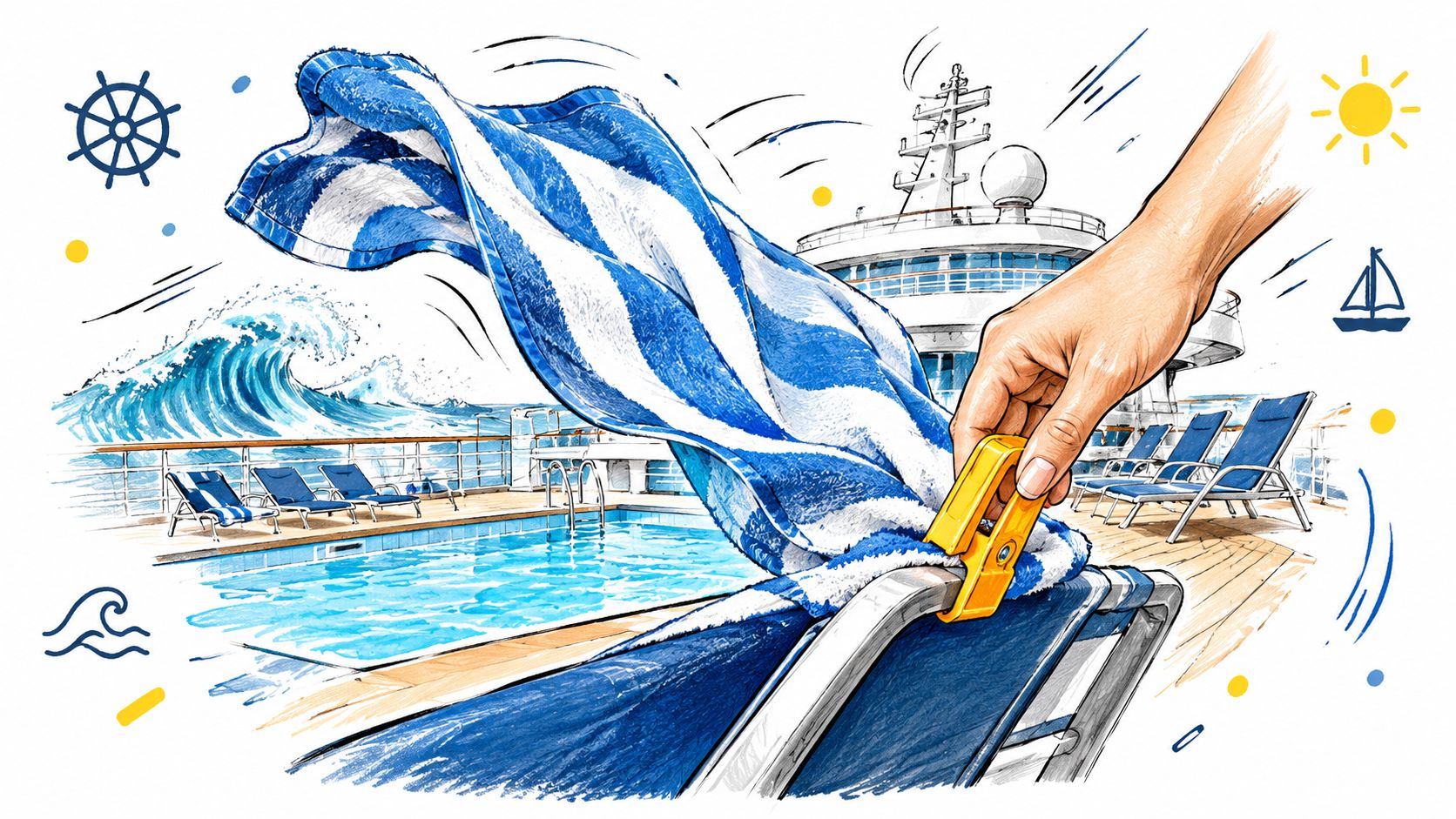
You have settled into a lounger with a ship-provided towel when wind lifts one corner and sends the fabric sliding across the chair. A beach towel clip attaches the towel to part of the lounger, keeping it positioned while you sit, recline, or leave briefly for a nearby swim. On an exposed sea deck, that small connection can matter because towels may be thin, slippery, or damp.
The useful benefit goes beyond wind resistance. A clip can make a ship's shared seating easier to manage responsibly. It keeps your towel with the lounger while you are actively using it, helps distinguish your towel from similar ship linens, and avoids using personal belongings as makeshift weights.
Cruise ships commonly provide pool or beach towels, so bringing a bulky personal towel is usually unnecessary. Clips earn their place in a bag because they are compact, reusable, and designed to work with the towel already available onboard. Their usefulness still depends on the chair. A clip suited to a broad, flat edge may not hold well on a narrow tube or a flexible sling frame.
The everyday cruise use case
Use a clip while you are actively using a lounger and want the towel to remain attached. It can also serve as a visual marker among closely spaced chairs. A bright color or distinctive shape makes your towel easier to recognize than a folded corner or a personal item, while still leaving the lounger available under the ship's rules when you are finished.
The product category has a longer history than many travelers realize. U.S. design patent USD311836S lists a filing date of February 23, 1988, and a publication date of November 6, 1990, for a clip intended to secure beach towels to chairs or similar seating. The record names Martin L. Dala and William H. Baxter as inventors. The 1996 chair-attaching patent describes separate chair-mounting and towel-engaging functions, as shown in The later patent record.
Cruise reality: A towel clip helps secure fabric. It does not reserve a lounger, protect valuables, or override the ship's conduct policy.
First-time cruisers may find clips useful on breezy pool decks, shared seating areas, or beach excursions with lightweight towels. They may be unnecessary for a sheltered private balcony. Choose one that matches the towel and chair you expect to use, then remove it when you leave the lounger for an extended period.
How Beach Towel Clips Work
A gust catches the towel as you settle into a lounger. One corner lifts, the fabric slides, and the chair beside you suddenly looks identical. A beach towel clip addresses both problems by fastening the towel to a support and making your position easier to identify without treating the lounger as reserved.
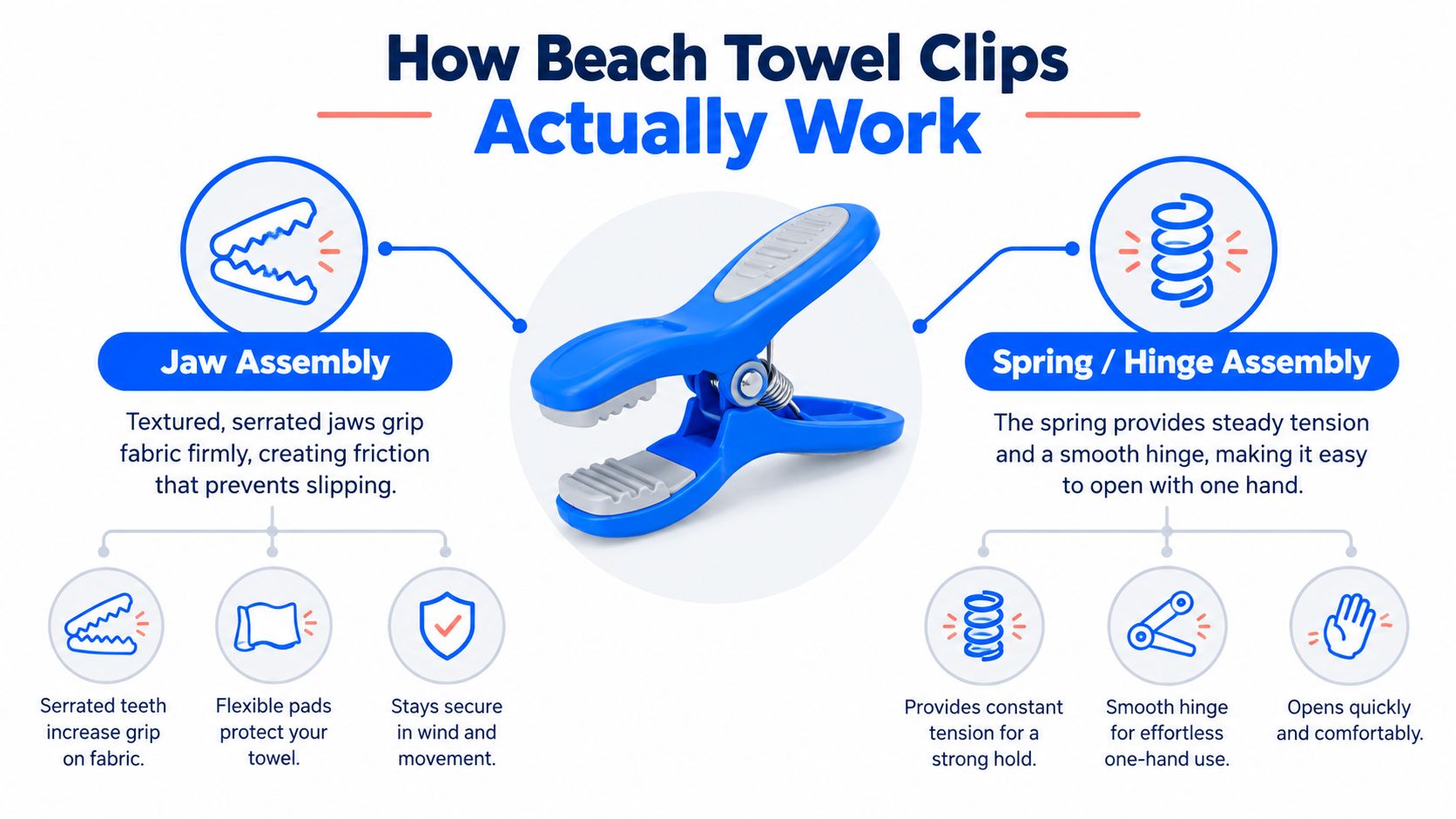
A clip uses two related functions. One part connects with the chair or another support, while the other grips the towel. Some designs combine both actions in one broad clamp. Others hook over a chair edge and pinch the fabric separately. The difference matters on a cruise ship, where loungers may have flat resin edges, narrow rails, tubular frames, or flexible mesh.
The 1996 U.S. chair-attaching towel clip patent describes this arrangement as a mounting assembly for the chair and an engaging assembly for the towel. That patent record helps explain why purpose-built clips can look different from ordinary clothespins. One mechanism connects to the furniture; another holds the towel in place.
Start with the chair connection
Check the opening before judging the color or branding. A clip made for a wide, flat edge may wobble on a narrow tube. A mesh or sling lounger can be harder still, because its surface flexes instead of providing a firm edge.
The jaw opening sets the range of chair shapes the clip can reach. The spring or hinge provides closing force. If the jaws open easily but close weakly, wind or a damp towel may make the clip slide. If the spring is excessively stiff, it may hold firmly while pulling or creasing a thin ship towel during removal.
Then assess the towel grip
The surfaces touching the fabric matter as much as the spring. Smooth plastic may work with a dry towel on a steady chair. Textured pads or soft liners can improve contact with less pressure than sharp teeth, which may mark thin, wet fabric.
Fold the towel edge before clamping it. The extra layers give the jaws more material to hold and spread the pressure across the fabric. Give the attachment a gentle tug before reclining. If the towel bunches sharply, move the clip or choose another chair edge.
Later patent work describes ring-shaped and chair-attaching approaches, along with flexible channels and clamp members intended to limit towel movement across different surfaces, as shown in A later international patent application. The practical lesson is simple: match the clip to the ship-provided towel and the specific chair frame. Wind resistance matters, but reliable fit also supports clear towel identification and responsible lounger use.
Key Features to Look for Before You Buy
The right clip is the one that matches your actual towel and chair. Marketing language about strength matters less than whether the jaws can reach the frame, hold the fabric without marking it, and survive the conditions around a pool deck or beach.
Jaw width and opening range
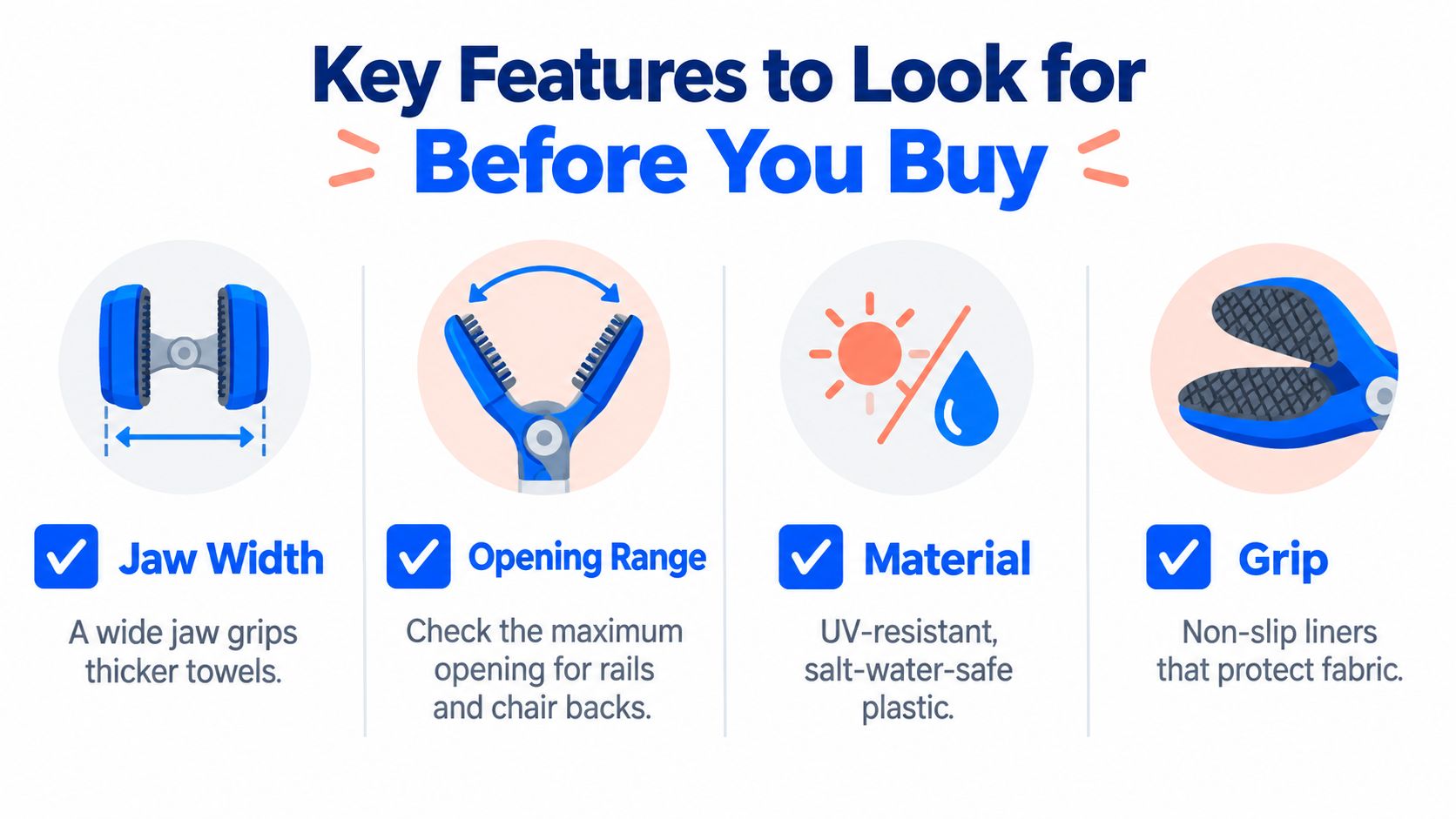
A wide jaw is useful for thick personal towels or a folded edge wrapped around a broad lounger. It can be less suitable for a thin ship towel on a narrow rail, where the clip may have too much empty space and fail to close firmly.
Check both the jaw width and the maximum opening. The first tells you how much fabric the clip can cover. The second tells you whether it can reach the chair edge, rail, or back section you plan to use. A clip that closes tightly on a folded towel but can't open far enough for the frame is the wrong tool for that chair.
Spring tension and grip surface
Spring tension should feel deliberate, not brutal. You want enough force to keep the towel from creeping under ordinary movement, but not so much that removing the clip requires yanking the fabric.
Textured pads can improve contact, while soft liners help protect fabric. Inspect the edges for sharp moulding or exposed teeth. For ship towels, especially thin ones, a broad padded contact area is often more forgiving than a tiny, highly aggressive point.
Materials and exposure
Pool decks expose accessories to saltwater spray, sunscreen residue, moisture, and strong sunlight. Corrosion-resistant metal components and durable plastic can be sensible choices, but material alone doesn't guarantee long service. Rinse the clip after a beach day and let it dry before putting it back in a pouch.
UV-resistant, salt-water-safe plastic is useful where the clip will live in a warm, bright environment. A spring should also close evenly rather than leaning to one side. If the hinge feels gritty or the jaws no longer meet, replace the clip rather than trusting it on a windy deck.
Packability and cabin organization
A pair of compact clips takes little room, but loose accessories can disappear quickly in a shared cabin. Look for a loop, small case, or shape that's easy to spot in a beach bag. Keep them with your sunglasses, ship card, or swimwear rather than leaving them on the lounger.
If you're also managing airflow in a compact stateroom, the Magnetic Cruise Fan with Remote Control is a separate cabin accessory with a rechargeable battery, magnetic base, remote control, timer, six speeds, adjustable airflow direction, and a multi-color night light. It doesn't replace a towel clip, but both products illustrate the same packing principle: choose small equipment designed around ship spaces.
Before buying, ask four simple questions:
- Will it open around my chair frame? Consider flat edges, tubular rails, mesh, and sling fabric.
- Will it hold my towel thickness? Thin ship towels and thick beach towels need different jaw behaviour.
- Will it touch the fabric gently? Prefer broad, textured, or padded contact over sharp points.
- Can I rinse and store it easily? A clip that stays damp in a cabin bag will age faster.
Matching Clip Styles to Cruise and Beach Situations
Different cruise settings call for different clip characteristics. A thin ship towel on a smooth plastic lounger needs a more delicate grip than a thick personal towel folded over a sturdy beach chair. The most useful choice depends on the contact points, not on a generic promise of maximum strength.
| Situation | Towel Type | Chair Frame | Recommended Clip Style |
|---|---|---|---|
| Ship pool deck, sheltered area | Thin ship towel | Smooth plastic lounger | Medium jaw with soft or textured contact surfaces |
| Open sea-day deck | Thin or medium towel | Wide lounger edge | Wider opening with reliable spring tension |
| Port beach or excursion | Thick personal towel | Tubular or rigid beach chair | Broad jaw with corrosion-resistant materials |
| Mesh or sling lounger | Thin or damp towel | Flexible fabric over a frame | Clip that reaches the rigid edge, not only the mesh |
| Balcony drying | Damp swimwear or small towel | Suitable rail or drying line | Light, fabric-friendly clip used only where permitted |
| Calm private balcony | Light towel | Stable chair or rail | Compact clip, with no need for heavy-duty jaws |
Thin ship towels versus thick beach towels
Ship-provided towels are often easier to mark because they can be relatively light and smooth. Use a broad contact surface and clamp a folded edge. A large, highly aggressive clip may be excessive if it bites into the fabric.
Thicker beach towels create the opposite problem. A narrow clip may close before it has captured enough material. Look for a larger opening and jaws that remain aligned when they hold several layers.
For port days, keep your towel, clips, sunscreen, and other small items together in a compact carry solution such as a packable beach tote. The clip still needs to suit the destination chair, but organized storage reduces the chance of leaving it behind.
Smooth loungers, mesh frames, and balconies
Smooth plastic offers a firm surface, but it may provide little friction. Mesh chairs flex, so attach the clip to a rigid side rail or top edge whenever possible. Don't assume a strong spring can compensate for a frame that bends beneath the load.
Wet swimwear also changes the equation. Water adds weight, and sunscreen can make fabric or plastic feel slippery. Use two attachment points when the towel is broad, then check that the fabric isn't pulling the clip sideways.
A balcony can be useful for drying a small towel or swimsuit, but rules and safe attachment points vary. Never place an item where it could fall overboard, obstruct a walkway, or interfere with ship operations. A light clip is usually enough for fabric on a sheltered rail, while a heavy-duty model adds little value if the support itself isn't suitable.
No clip can guarantee retention in severe gusts. Keep phones, cameras, wallets, and other valuables in safe storage rather than treating a towel attachment as a security measure.
Cruise Etiquette and Pool Deck Policy Boundaries
A clip keeps a towel from sliding. It does not turn an empty lounger into your reserved seat.
This distinction matters on busy pool decks. Cruise guidance commonly treats clips as useful when passengers are actively using a lounger, while cautioning against leaving a towel unattended for an extended period to claim shared space. Cruise towel guidance for passengers makes the practical boundary clear: securing the towel during genuine use is different from marking a chair and disappearing.
Use the clip while you're actually there
If you're reading, swimming nearby, or sitting with your group, a clip can keep the towel identifiable and reduce wind-related movement. If you leave for a meal, excursion, appointment, or lengthy cabin break, remove your belongings and give someone else the opportunity to use the lounger.
A short restroom or drink break isn't the same as abandoning a chair, but there isn't one universal timing rule that applies to every ship. Staff may clear unattended items, and passengers may reasonably interpret a towel left for a long period as an attempt to reserve space.
Shared-deck rule: Attach the towel for comfort and identification, not as a substitute for being present.
Check the policy for your sailing
Guest-conduct policies vary by cruise line and can differ between the main pool deck, an adults-only area, a private beach club, and a port facility. Read the policy before sailing, and follow signs or instructions from crew members onboard.
Don't let the availability of ship-provided towels create false confidence. The towel belongs to the cruise operation, and a clip doesn't give you ownership of it or the chair beneath it. For broader packing questions, review what you can take on a cruise before placing accessories in your luggage.
At a private beach or excursion venue, local staff may apply different expectations. Ask before attaching anything to a rented lounger, especially if the surface is delicate or the venue uses its own towels. Courtesy costs nothing and avoids an awkward conversation later.
Packing, Attaching, and Caring for Your Clips
Treat clips as part of your swim-deck kit, not as loose objects scattered through the cabin. Place them in a small pouch inside your carry-on or beach bag, where you can reach them after boarding without unpacking your main luggage.
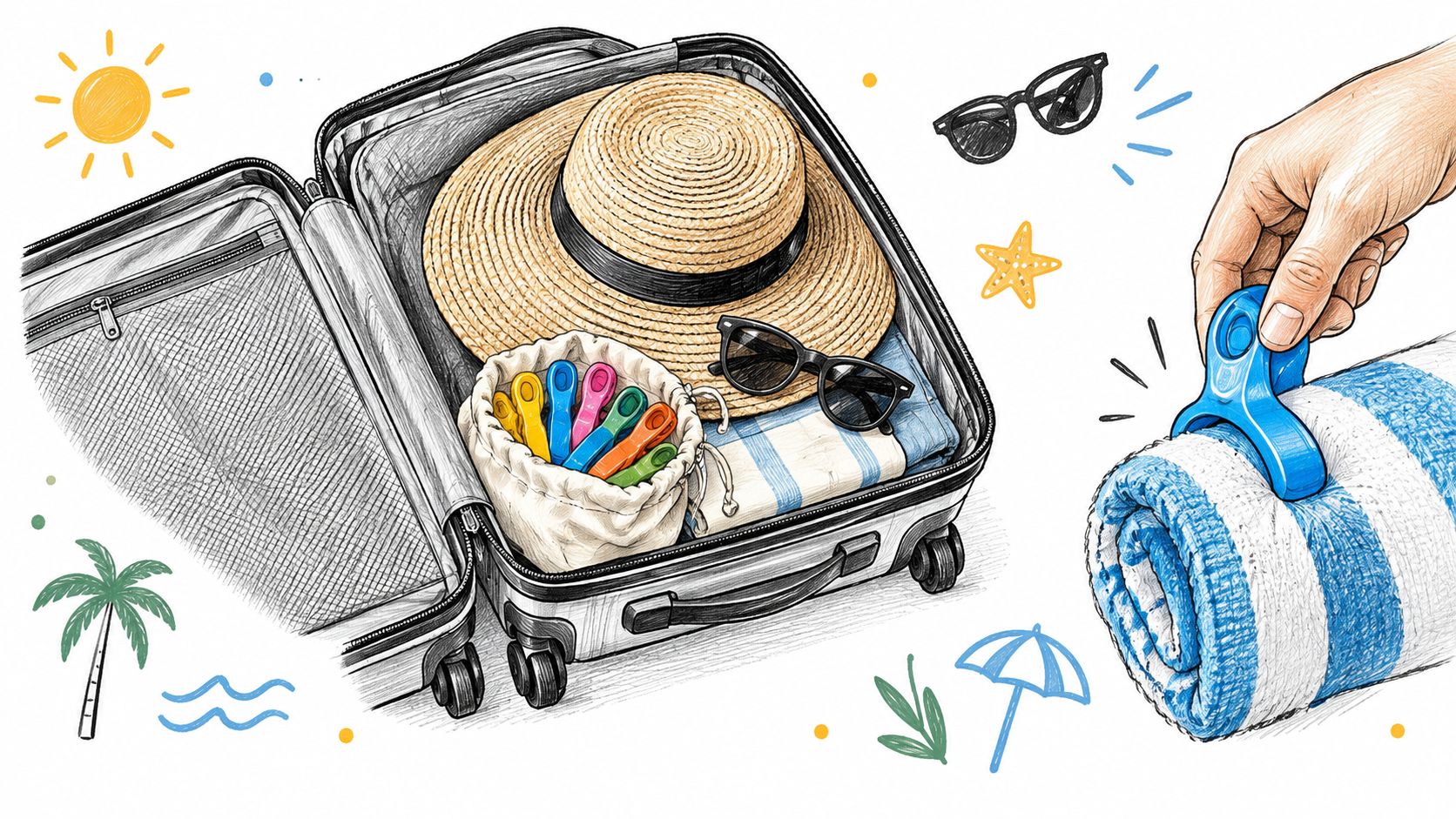
For solo travel, pack a pair if you want two attachment points or a spare. Couples and families may prefer additional pairs, but match the quantity to the number of towels and loungers you'll use rather than packing a large collection. The ship usually supplies the towels, so you're adding fastening hardware, not building a second linen set.
Attach the clip over a folded towel edge and a firm part of the chair. Open the jaws fully, position them without trapping straps or clothing, and close them slowly. Before walking away, give the towel a light pull. To remove the clip, open the hinge first rather than dragging the jaws across the fabric.
After a beach day, rinse away salt and sand with fresh water. Let the clip dry completely, then check that the spring closes evenly and that no grit remains around the hinge. Store it dry in the pouch before returning it to your luggage.
A compact cruise ship essentials checklist can help you group clips with swimwear, sun protection, and other small items instead of leaving them behind on the final day.
Here's a short demonstration of the basic attachment motion:
Putting It All Together for Your Cruise
Before you buy, make three decisions. First, identify the chair frames you're likely to use, because a clip that suits a wide lounger may slip on a tubular or flexible frame. Second, match the jaw and grip to the towel supplied by the ship or the thicker towel you plan to carry. Third, decide how many attachment points you'll use without treating the clips as permission to leave a lounger claimed.
Beach towel clips are a small convenience, not essential cruise equipment. They make the most sense for breezy open decks, shared-looking towels, and travelers who want a simple way to keep fabric positioned while present. Pack them if that solves a problem you regularly encounter, then use them lightly, respectfully, and with the ship's own policy in mind.
Nordmoose offers compact cruise accessories designed around ship cabins and travel routines, including magnetic organization and rechargeable comfort equipment. Visit Nordmoose before your sailing to compare practical items that can sit alongside your towel clips in a neatly planned cruise kit.